
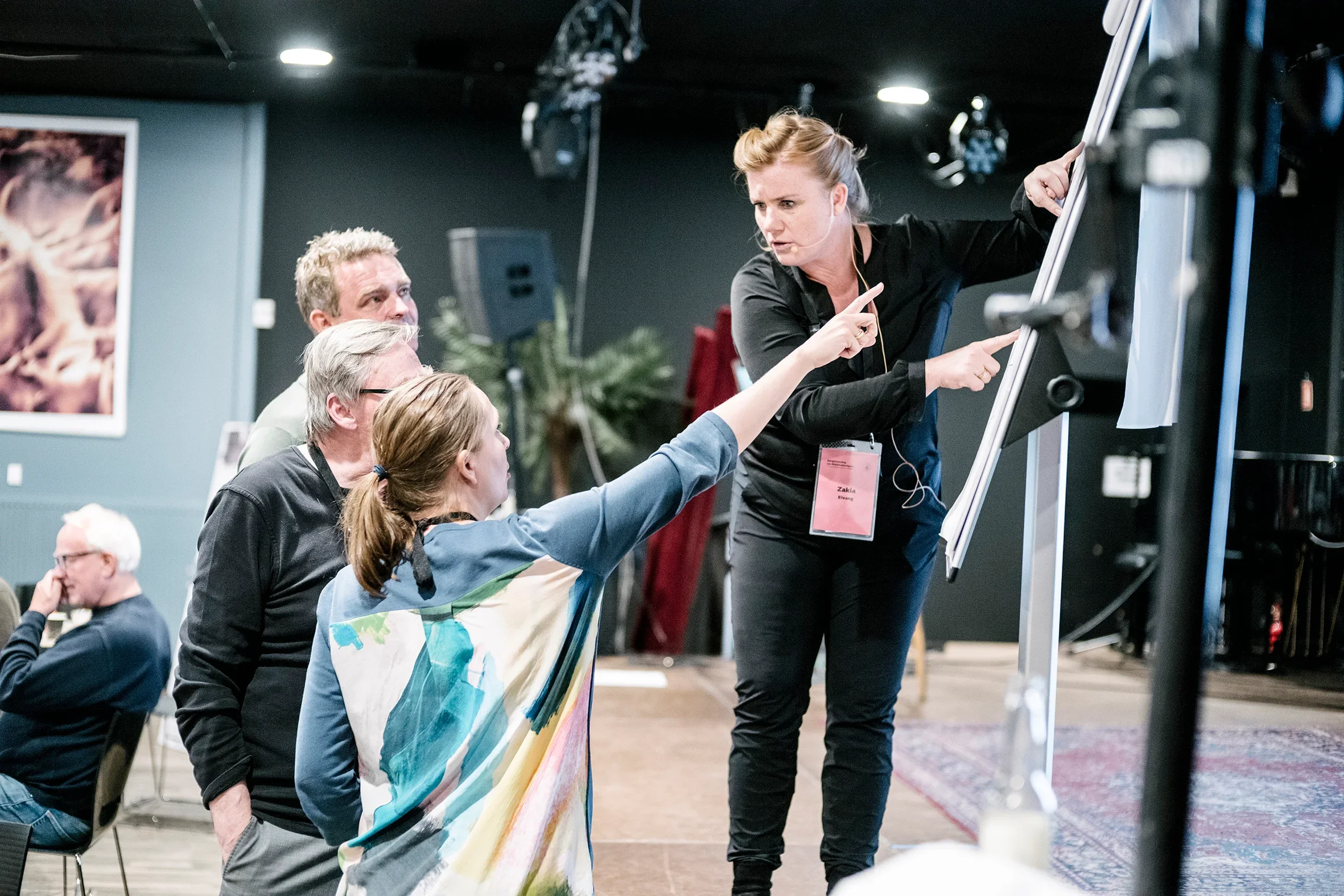
DELIBERATIVE FACILITATION TRAINING
DELIBERATIVE FACILITATION TRAINING
Equipping the next generation of deliberative facilitators, in partnership with

Quality deliberation depends on quality facilitation. We offer facilitators and practitioners the space, tools, and connections to develop the skills and shared standards the field needs.
-
For participants working in participation, community organizing, or stakeholder involvement who are new to deliberative democracy and want to enter the field.
See our Citizens’ Assembly Schools
-
For facilitators with basic deliberative knowledge and some experience in assembly teams as co-facilitators, table moderators, or project team members.
Coming soon
-
For experienced professional facilitators with deep knowledge of citizens’ assemblies, ready to take the overall responsibility for designing and leading a deliberative process.
Picture the path to becoming a lead deliberative facilitator as a ladder. This program is composed of three levels. We offer training at every step – according to your experience.
THE COMPETENCE MODEL
The curriculum is structured around the six competence domains of the Competence Model for Lead Deliberative Facilitators. It sets out what we believe a lead facilitator needs to know and be able to do.
Foundations
Belief in the capabilities of ordinary people.
Macro Process Design
Design a process that achieves real impact. Navigate governance. Protect integrity. Know when conditions aren’t right.
Micro Process Design
Turn a remit into a run sheet. Build the line of inquiry. Choose the right voting procedure.
Process Facilitation
Host strangers through difficult conversations. Push beyond easy answers. Handle conflict. Build trust.
Project Leadership in Deliberative Contexts
Champion the process with a client. Manage power dynamics. Build a team.
Knowledge Curation, Expert Input & Stakeholders
Design a learning experience for people with different backgrounds. Curate balanced information. Help members think critically.
Communication & Presentation
Translate complexity for members, commissioners, experts, and the public — all at once.
UPCOMING TRAININGS
Deliberative Facilitator Masterclass
Level 3
DESCRIPTION
Washington, D.C. – October 15-17
San Francisco, CA – October 22-24
A 3-day masterclass for practitioners ready to take responsibility for the integrity of a full deliberative process. This edition tailors to both people with substantial general facilitation training and those who are looking to get their deliberation career started.
It is an opportunity for a step-change. A place to sharpen judgment against peers who do the same work, pressure-test your own practice against a shared reference, and contribute to defining the craft as it expands across the US.
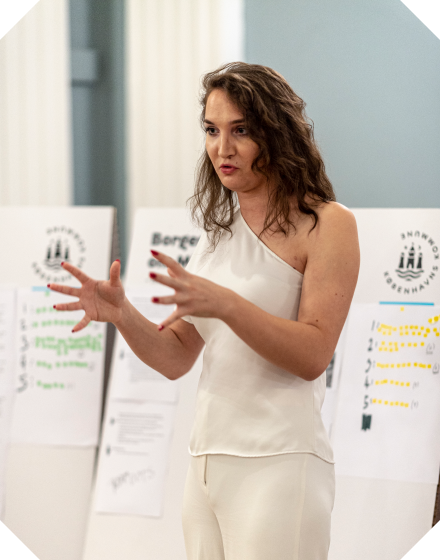
LEARNING GOALS
30% listening, 50% doing, 20% reflecting
Participants can expect to leave the training with:
The skills to design a citizen assembly from start to finish
A clear understanding of the lead facilitator role and the skills it requires
The ability to design a team, program, and run-of-show
A practical toolkit for supporting high-quality deliberation
An understanding of how to design effective learning journeys for assembly members
Hands-on experience with facilitation skills, including managing dysfunction, mediation,
large-scale dialogue, deliberation, and voting
Feedback from an international team of facilitator trainers to help identify strengths and
areas for growth
Connections to an international community of practice for deliberative facilitators
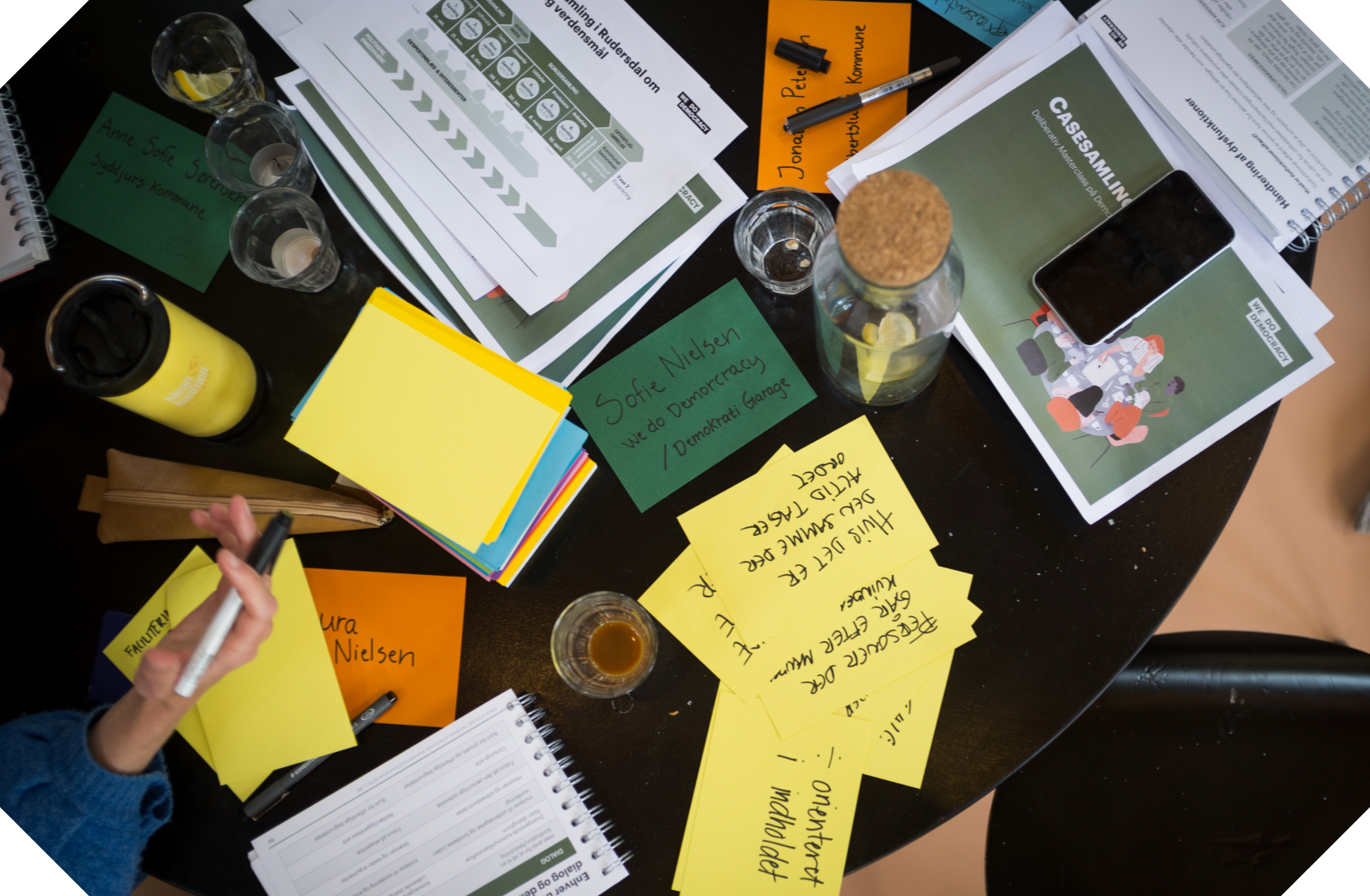
THE CURRICULUM
Based on the competence model for lead deliberative facilitators.
-
Deliberative facilitation and the lead facilitator role
Principles, methodology, and design starting points
-
Macro- and micro-design
Learning design and knowledge curation
Working with commissioning authorities and teams
-
Dialogue, deliberation, and group dynamics
Mediation and dysfunctions
Leading teams and spotting facilitation in the room
The facilitator as an instrument
-
Voting, editor groups, and finalization
Reflection and practical application
Wrap-up and next steps
INSTRUCTORS
WE DO DEMOCRACY – DENMARK
GERMANY
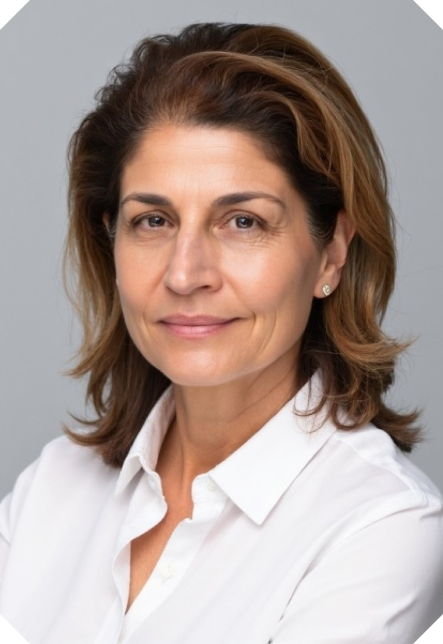

FIDE NORTH AMERICA
MASS LBP - CANADA

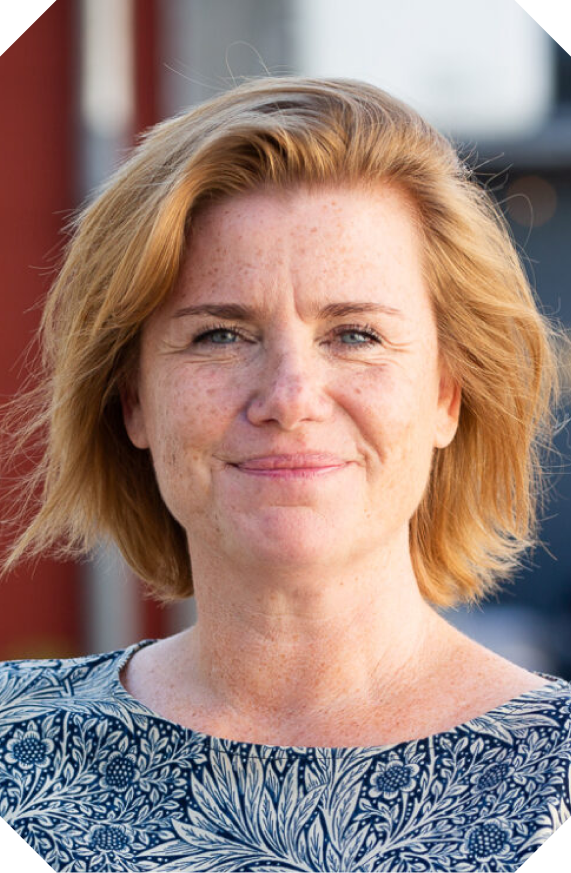
Jacob Birkenhäger
Zakia Elvang
Expert and advisor to the european commissioneXECUTIVE DIRECTORPeter MacLeod
Marjan Ehsassi
PRINCIPALExecutive directorHOW TO APPLY
Acceptance is based on relevant experience, not ability to pay. Your ticket tier can be confirmed after you're accepted.
Delivering this training costs roughly $1,800 per seat. However, we don’t want to turn away anyone for lack of funds.
The AI & Democracy Foundation is helping to support low- and no-cost tickets, so we ask you to respond to the option that best fits your situation.
Fill out a short form sharing your facilitation background, your deliberative experience, and which competence domains you most want to develop. We review applications on a rolling basis.
-
If you or your organization can cover the full cost, we encourage you to choose this option.
-
A limited number of scholarship seats are available. Please select this or the other scholarship options below if a reduced price would meaningfully help you take part.
-
-
-
This directly helps us offer reduced-price seats to others; accepting this option helps ensure that this kind of program can become sustainable.

Supported by
Note that participants are responsible for their own travel and lodging costs. A light breakfast, refreshments, lunch, and one dinner will be provided during training.
Our goal is to build a diverse learning community and make this training accessible across a range of backgrounds and organizations. Thank you for helping us make that possible.