
Climate Citizens’ Assemblies - Interview with Graham Smith
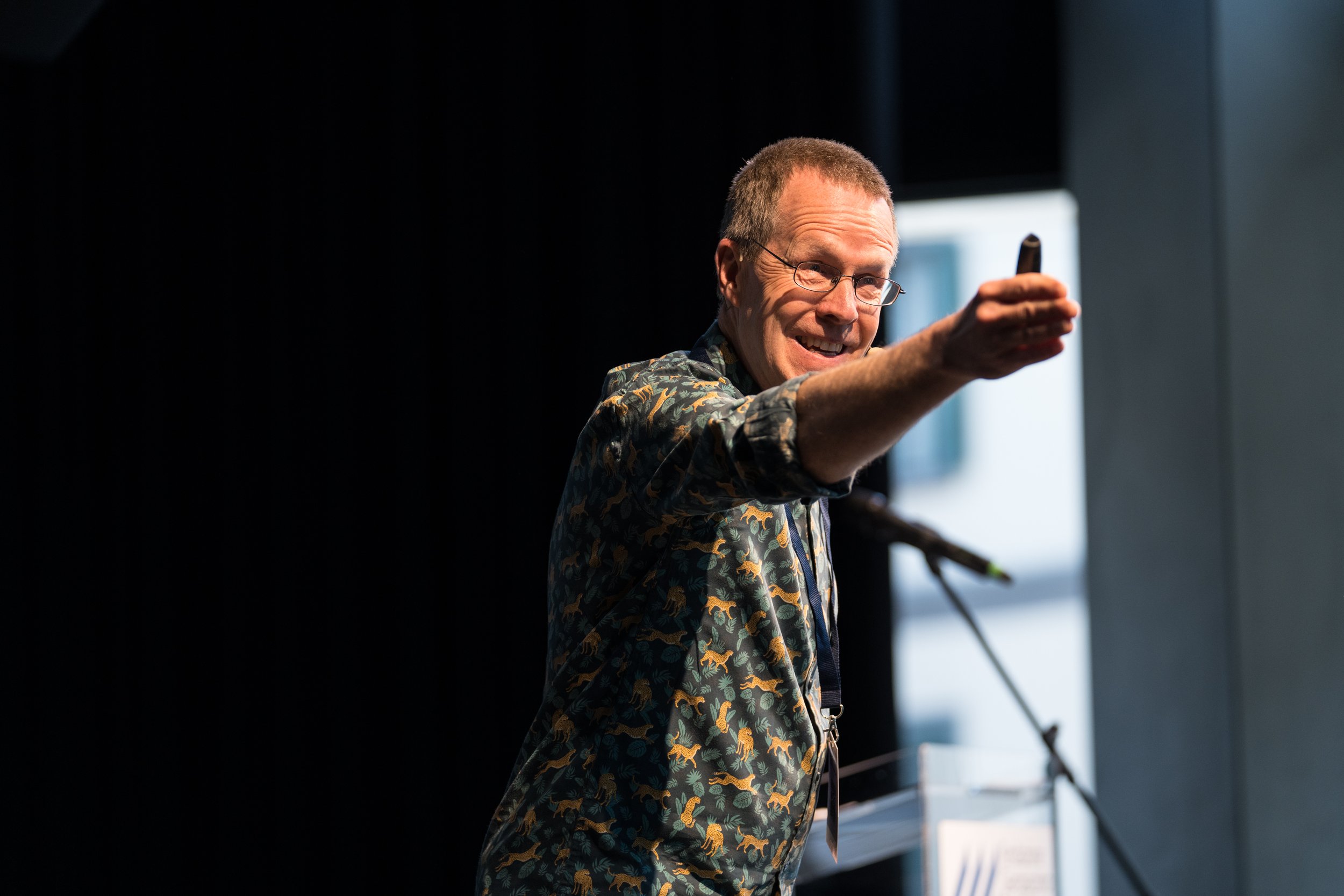
Graham Smith: ‘’Climate Citizens Assemblies are one of the most exciting developments in climate governance''
Graham is a professor of politics at the University of Westminster and the founding chair of the Knowledge Network on Climate Assemblies (KNOCA), which is funded by the European Climate Foundation. KNOCA aims to improve the commissioning, design, implementation, evaluation and follow-up of climate assemblies. The Network helps to create more robust climate governance through citizen engagement. We are delighted to be partnering with KNOCA for the Spring School on Climate Citizens’ Assemblies in Milan on April 27th-28th.
In the run-up to this event, we talk with Graham about the current state of affairs in Climate Citizens’ Assemblies.
Question: How did you get into Deliberative Democracy?
Graham Smith: It's a really interesting question, and the short answer is that in 1992, at the Rio Earth Summit, a long time ago, I was working for a local authority, and I was asked to do public engagement around Agenda 21, which came from the UN Earth Summit. And I did it really badly. I didn't really know what I was doing. I made all the mistakes that everybody makes, and it was a really poor exercise. But it got me thinking about how we can do public engagement better. And since then, I have studied, practised and given advice on public engagement, in particular in relation to climate. It's been from that moment of failure. The last 30 years have been me trying to figure out how to do public engagement well around climate.
Your early work on deliberative democracy was focused on citizens' juries. Can you explain what they are and how they helped kick-start the conversation around citizens' assemblies and deliberative democracy?
G. S.: I was doing a PhD on these ideas about deliberative democracy in the relationship between deliberative democracy and environmental politics. I was invited to a meeting in London, which was with Peter Dienel, who invented planning cells, and Ned Crosby, who invented citizens’ juries. And what they had done was take the idea of using random selection and then combine that with facilitated deliberation as a way of ensuring that you brought everyday people through a process of learning through deliberation and recommendation writing.
At that point in the UK, we saw the rise of New Labour, interested in engaging citizens. There was a mini-wave of citizen juries around the late 1990 and early 2000s. And that kind of died down. But very often, these things are cyclical. And I think when the wave of citizens assemblies and climate assemblies emerged, there was some experience of having done those juries before. And I don't think the recent wave would have happened without that earlier experience.
And so, what's different about the current wave?
G. S.: The main difference is in terms of scale. This goes back to an experiment in the early 2000s in British Columbia where they tried to look towards getting a new electoral system. Someone in British Columbia came up with the idea of a citizens’ assembly. They realised that trying to change an electoral system would require a constitutional change for that province, in turn needing a larger process for legitimacy’s sake.
It was a really good process, but there was a referendum afterwards, which they narrowly lost. And I think it's interesting that, had they won that referendum, I think the deliberative wave would have happened then. Subsequently, some academics took this idea to Ireland — including David Farrell, who was one of the people that had given evidence to the British Columbia Assembly. Their academic experiment took off, and we now know what's happened in Ireland. So, primarily before it was used on climate, it was very much being used around these kinds of big constitutional questions, like electoral systems, same-sex marriage, and abortion issues. Then, that idea of these larger assemblies spread into the climate world.
In your book, ‘Can Democracy Safeguard the Future?’, you outline how certain aspects of the decision-making processes in liberal democratic institutions generate an incomplete understanding of the environmental problems we face. Could you explain the flaws in this institutional framework to tackle today’s environmental problems?
G. S.: The book starts with the question about why there is a tendency towards short-term decision-making in a democracy. And before we move on, I just want to clarify that democracies still outperform autocracies and outperform authoritarian regimes in relation to these long-term issues. They are just not dealing with these long-term issues well enough.
I focus on four drivers of short-termism. One of them is the simple problem that future generations are not present, and we know that presence is really important for affecting political change. For example, we can look at how the women’s movement succeeded in increasing women in parliaments and how it made them more responsive to women's issues. Not good enough, but better. With future generations, there's no simple way of making them present.
Secondly, there is the role electoral systems play. Politicians have to get elected in very regular cycles, which means that they need to do things that result in outcomes that are clear before elections. The problem of dealing with the climate crisis and other major challenges is that these are long-term issues, and so they don't fit within that model. Then, we've got really established and entrenched interests that simply don't want to see change happen. Our economy is very much focused on the burning of carbon, and there are certain industries that really do very well out of that and want to resist change.
Finally, I guess that ties in with broader questions about the nature of our economy, accumulation and consumption. That drive to ever-increasing consumption. All these things mean that we tend to be short-term in our decision-making. What's really interesting is that question about how we can start to reshape democratic institutions and democratic culture so that they're able to take a long-term view.
That is why I don't think citizen assemblies alone are going to solve this problem. I don't think they're a magic bullet. But they are one of those institutions that can actually help democracy orientate towards the long term, alongside things like independent offices for future generations and other innovative institutions. We’ve got a political system that basically has had a history of 200 or 300 years and was not designed to deal with the problems we are facing now. We're trying to deal with 21st-century problems with 19th-century institutions.
Keeping those considerations in mind, how can climate citizens' assemblies bridge those mismatches, and what are their limitations?
G. S.: There are two elements of the design of assemblies that help us ameliorate them to a certain extent. The first is the use of a civic lottery, random selection is necessary because it gives us a diverse body of participants. That means that you have a room filled with people who don’t have to worry about their re-election. The second aspect of this is that it increases diversity. You're actually bringing into these spaces a diverse range of insights, attitudes and perspectives, which you don't get in most democratic decision-making processes.
Then, link that with deliberation. One of the things that deliberation does is that it forces us to slow down, to take on board the needs of other people, and the diversity of people starts to get us to think about the future. In psychological terms, it is referred to as “system one” and “system two” thinking. System one thinking is the way we react every day, it is how we navigate around the world. We simply react to things. We have got in-built ways of dealing with the issues we face. Very rarely do we do system two thinking, which is where we stop and reflect. We think, ‘Is this what we are doing, the right kind of thing?’. And I think that's exactly what assemblies do.
The last few years have seen an emergence of interest in climate assemblies, both at the political and the activism level. What is your account of the experiences so far? What are the failures, successes and potentials for change?
G. S.: Most of the deliberative projects have only happened in the last ten years. And most climate assemblies only happened in the last three years. So, we've got to really recognise that we're learning as we're doing. During the first cycle, a lot of the assemblies were very similar to each other but did not learn much from one another. Now we are just starting to see people learning from that first wave. So, for example, the Brussels Permanent Climate Assembly is learning from what happened before. I was part of that design team. We were sitting in a room reflecting on what we had learned, whereas, in most of the early stuff, I think there was a bit of a rush.
What do I think happened? In the political context, for example, in the UK, a lot of the activity that happened was in response to the Extinction Rebellion. So, a lot of local authorities declared a climate emergency and then thought: ‘Oh, what do we do next? Extinction Rebellion talks about climate assemblies. We better run one of those.’ And I think what happened was people were thinking more about the idea of running an assembly without thinking about how it was going to fit with their decision-making. I think people like me are probably a little bit to blame as well because we're very much focused on the process of engaging the citizens and not enough about how we help decision-makers to think about what's the role of this within broader climate governance. That, for me, has been the downside of this rush. We've hurried to run the assemblies without thinking about that.
I've used the word “landing” these assemblies or “embedding” them, and I think that's where KNOCA is focusing much of its work at the moment, thinking about what it means to land an assembly for it to actually have an impact. We have got an idea about how to run these assemblies well now. What we're learning is how to embed them better in the system.
One crucial driver for impact you just emphasised is landing climate assemblies. What are the challenges there, and what ways of tackling them have been explored?
G. S.: There's a really big challenge here. We have the logic of public governance, which has a specific logic and set of practices. Then, you have the logic of party politics. Public administration and party politics have come to an accommodation and a way of working. And suddenly, there's this new kid on the block, this deliberative moment appears. It isn’t a surprise that we have trouble integrating a different logic. We've seen some really interesting developments in trying to embed better. An example would be the French Assembly and the Scottish Assembly. Both had an additional weekend, 6 to 7 months later, where the citizens came back to review what the government had been doing.
Then, there are some really basic things that we can do to ensure that the people who will deal with the recommendations are actually brought into the process. I have been in situations where I've talked to public officials, and they said: ‘The first time I knew about the assembly was when the recommendation landed on my desk. And now, what am I supposed to do with this?’ We need to think quite creatively about the monitoring process and about responses.
Now, that's only one part of it. That's just the administration’s action. But many of the recommendations are to stakeholders. We need to make sure they're in the process so that they're ready for it. For example, there's a German city, Erlangen, where they did some really interesting work where the citizens’ assembly spent time on an issue. Then a stakeholder body came in, and then the Citizens Assembly responded to the stakeholders.
People are investing a lot of money, a lot of time and a lot of energy into this. And so, you want to create the best possible conditions in all of its domains.
Another crucial driver for the impact of climate assemblies is communications. How can climate assemblies spark a wider public conversation around democracy and the environment? And what is the role of media outlets and social media in such a process?
G. S.: The media is not very good with innovative things because they don't necessarily fit in with their way of dividing the world up. So, there's actually a really basic education role in relation to journalists of exactly what these things are. Sometimes you see people say, ‘Oh, these assemblies, they're full of climate activists.’ And you say: ‘Well, of course, they're not, because many of them have been stratified to ensure that they look like the broader population in relation to attitudes towards climate’. So, we know that it isn't the case, but it's too easy to say that.
So, I don't think we have worked out how to communicate about climate assemblies because I think we often overcomplicate things. We need to get much simpler messaging. We actually need to reach out to communication specialists to do this. We have seen certain assemblies work well where they specifically target certain journalists, bring them into the process, almost train them and build their capacity. We need to spend time with them to help them understand how these processes work.
Another upcoming challenge, as these things become more well-known, is the resistance from political actors and social actors who don't want these things to succeed. We’ve seen some backlash, but not as much as we're going to see, and I think we're not ready for that. And we're not ready to communicate that. If I'm honest, it's one of the things that concerns me the most.
In the book 'Democracy in a Pandemic', of which you are a co-author, you analyse the COVID-19 response to understand how we can better prepare for future crises. In the current socio-political era in which we muddle through, what is in deliberative methods that can help us better tackle a crisis?
G. S.: The overall lesson that came out of this, if you think about the response to the pandemic, was often a problem of groupthink. A very small group of people from a particular social class, with particular social experience, making decisions for society very quickly and often making decisions that completely fail to recognize the lived experience of many people within society.
In the UK context we did not have the participatory architecture in place in order to engage and understand the lived experience and the issues that everyday people were facing. And you cannot construct that during a pandemic. The Government tried to in various ways, but then all the people in these organisations didn't trust the government. They hadn't listened to them before. ‘Why do you suddenly want to talk to us during a pandemic?’ So, it really pointed us to the need to build that participatory infrastructure. It isn't something that you can just switch on when a pandemic happens. It has to be a way of doing things. Part of that would be institutionalising assemblies, but also have a much more engaged relationship with particular user groups, vulnerable communities, etc.
There's a really nice piece of research which I like to quote, which was discussed in the book from an organization called Big Local. They gave £1,000,000 to particular locations in order for them to build civic infrastructure. It didn't tell them what they had to do, but it worked with them to build that infrastructure. It became a natural experiment when the pandemic hit, and some communities had built some civic infrastructure. What they found was suddenly that the community centres, the place where the scouts met and the people who did the embroidery met, suddenly became the food hub for the town. In other places where they had no civic infrastructure, there was just nothing happening. And so, I think that's the key lesson: you can't just have this stuff at crisis moments, you have to build it, and it has to become part of the way that we do things.
If you were given the possibility to make one decision that would favour a democratic shift towards deliberation, what would that be?
G. S.: Two things, actually. One: broader deliberation. That's about changing the media landscape in order to support better public discourse. And that's all sorts of things around changing the way the algorithms that govern social media and the way that social media operates, but also questions of media ownership. I think the power of social media and the power of traditional media to be a force for democratic positivity and good is really there. It's just the way that it's structured, and the kind of logic it reproduces is just not conducive to democracy.
In relation to assemblies, I would like to see assemblies much more embedded within legislative processes. Both in terms of a requirement for using these processes in the development of legislation as well as in legislation revision.
Lastly, if you have to pitch to a person to convince them to come to the Spring School, why should they come back?
G. S.: The headline is ‘Climate Citizens Assemblies are one of the most exciting developments in climate governance’. The Spring School is a place to learn about how they work, the challenges and the opportunities. If we unpack that a bit. I think that the transitions we're going to face in relation to the climate crisis are going to require us to engage everyday people in those processes of change because it's going to radically affect their lives. This can be a top-down process, but it's not going to be a legitimate process if that's the case. Climate Assemblies are one of the best options we have at the moment to bring people into that transition process. The Spring School is going to be an exciting opportunity as a crash course in learning how these things work and learning how to embed them within our political systems.
And you get to spend time with us! What else can you ask for?
NEW PUBLICATION
Putting inclusion at the core of deliberative processes
Deliberative democracy is based on equal participation, but structural inequalities can hinder diverse representation, leading to biased decision-making. This paper explores methods for increasing inclusivity, focusing on the recruitment and deliberation phases. While the range of strategies may seem overwhelming for smaller municipalities or those with limited resources, a thorough review can help identify ways to maximize inclusivity within available resources.