
The Lynetteholm Assembly — Interview with Zakia Elvang
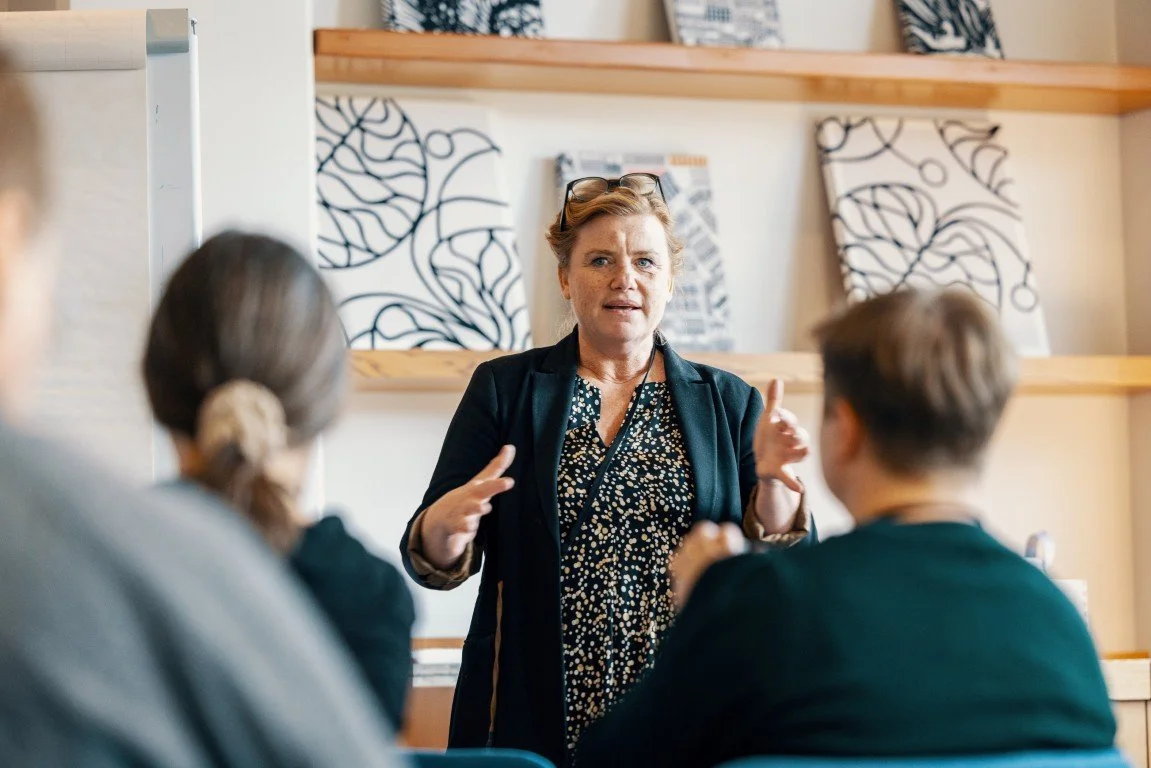
Zakia Elvang: ‘’The Lynetteholm assembly has reached almost unanimous recommendations on something that has been tearing Copenhagen apart for ten years''
Zakia is the founder of the Danish consulting agency, We Do Democracy. She is a member of FIDE’s Advisory Board and also leads the democracy innovation house in Copenhagen - Demokrati Garage.
As one of the main characters behind the growing Danish deliberative movement, she has extensive experience as a designer and practitioner. Join Zakia in her facilitation workshop at the upcoming Autumn School on Citizens’ Assemblies. On this interview, we explore the core elements of good facilitation and her experience in different Citizens’ Assemblies.
Question: What's the role of facilitation within deliberative democratic processes?
Zakia Elvang: Facilitation is about driving processes in which people can deliberate together in order to help them achieve their goals or the task they are assigned. Deliberative democracy can very easily become something very theoretical, an abstract democratic phenomenon. But the bottom line of almost everything is: people in a room that have to talk to each other, learn from each other and agree on relevant recommendations. Facilitation is making that happen. I would say that you cannot make deliberative democracy without high-quality facilitation.
In your presentations, you often mention the facilitator mindset. What does being in the room actually require from you?
Z.E.: The facilitator mindset is a it's not about me, it's about us. It's about ensuring that the group is using their potential and reaching a shared commitment. It's not just finding agreement on a recommendation, but actually listening out. Deliberation is about genuinely hearing different opinions on something and agree on a good solution that would work for everyone.
One of the things I do in order to get into that mindset is to learn everyone's names. No matter whether you have 24 people in the room or 99. What's on their mind? Where do they come from? What's their learning style? Are they shy? Are they open minded? Be genuinely interested in getting to know them and making them feel very welcomed and listened to.
Lynetteholm is an strategic and crucial project for the city of Copenhagen. Before the assembly started, there was already a polarized debate shaping the conversation. How did that affect the deliberation in the room?
Z.E.: After 30 years of facilitation, this has been the most difficult project I've done as a facilitator. People crying, people leaving, people getting very angry, people being very silent. Emotions in many directions.
We spent more time on building the foundation for the deliberation. Creating the team and building trust, finding a working culture in the group: ‘How do we work together?, how do we treat each other?, how do we talk to each other?’. I think in that assembly, what we did in large parts was more in the category of large-scale mediation, our role was to constantly try to mediate the conversation to make them find common ground. So, in cases like that, you can't just have posters on the wall for people to vote. You really need to have a group conversation that's alive and large scale. I think that handling that has been the most difficult thing I've done as a facilitator.
Crucially, now the process has just finished, the assembly has reached almost unanimous recommendations on something that has been tearing Copenhagen apart for ten years. So, it's a big step. The next step is, of course, whether the city developer company is actually going to listen.
What does the follow-up process look like?
Z.E.: There's a signed mandate by the initiating parties of this assembly that is as strong as it can be without giving the assembly control over the project. This is a public-private company that is the largest city developer company. You are giving 36 people control of a project that will be the single most affecting project for the Copenhagen economy for the next 100 years. That's big. So, it's a process mandate where they have agreed on how to respond, when to respond, transparency and communication. It's a strong process mandate that's signed and public, accompanied by a very strong advisory group that will be following the process during next year.
Given what you just said about the challenges during the process. What have you learned from this experience?
Z.E.: I have learned a lot about how and how not to communicate about citizen assemblies. In the initial stage of the assembly work, we received death threats from extreme activist groups and we needed to hire someone to handle our social media. I haven't tried something like that before. We've learned something around highly frustrated polarized cases. It's a different gear, it's a different setup you need to establish in order to be able to handle the communication. We also had guards, security guards on the first round of assembly work because we didn't know what would happen. We've also learned something from that.
Then, I think we've learned something about the power dynamics of urban development. It's really big power, it's big money, and it's not just complicated in the room with the citizens. The broader context is also complicated. In this case, we have the government involved, the parliament, the Citizen Council, the largest urban city development company, the Ministry for Traffic and Transportation, the Environmental Ministry, the Swedish government, the European Parliament and the European Environmental Agency. The power complexity of this has been extremely complicated because not only do we need to moderate the conversation with the citizens in the room, our role is also to help them navigate this complexity. So how should they understand a report from a given organisation? Within these two years we have had to become semi-experts on urban development because it's been the only way in which we could guide the citizens on who to ask and how to understand the contextual setup. And I think if I should run this again or have a similar case, I think we would need to include other competencies in the advisory board to confront these challenges.
A growing number of deliberative processes are being implemented in Denmark. Among them, the Copenhagen Assembly has just finished its first iteration. What is the relevance of this project within the democratic innovations being explored in Denmark?
Z.E.: Copenhagen is really embracing deliberative methods and trying to learn how to implement them. The Copenhagen municipality has been running two temporary citizen assemblies. One on the medieval city and one on a district called Østerbro. Then, the Lord Mayor as a part of a democracy innovation strategy initiated this Copenhagen assembly, which is a long-form assembly. It’s a three-year pilot project where they want to experiment and test models like this. Lastly, before the summer, they just initiated a permanent climate assembly. That’s the context to understand what's happening in Copenhagen, it's both the Copenhagen Assembly, but it's actually also a handful of other things.
The aim is to have a solid basis from which you act on moving forward. In the Danish context, I'm not sure whether I think the permanent model is the right way to go ahead. So instead of just doing something and making it permanent upfront, we've decided together with Copenhagen municipality to try to first run some really serious, long-form experiences and see how that's working before we start deciding on where to go next.
Can you tell me a little bit about how the first year has run on the Copenhagen Assembly and what are the mechanisms by which these recommendations will now be embedded in the policy-making of the city?
Z.E.: Copenhagen is exploding in growth, very expensive housing and overtourism are some of the arising problems squeezing citizens with different backgrounds out of the city. Therefore, this iteration has focused on diversity. Topics like homelessness, people with disabilities and discrimination were at the core. At the assembly, we also had a very strong focus on how to recruit and onboard citizens with other profiles.
On a formal level, the whole project has been initiated by the Lord Mayor and the City Council together with five political boards: Labor Market, Education, School, Environment and Culture. They have signed up a specific mandate on their board, which basically means that five of the working councils in the municipality have agreed to process and respond to the recommendations. The Copenhagen municipality is an organization with 55,000 people employed. So, making sure that these recommendations are actually used in different divisions of the organization has been a key part of the governance design of this assembly. That was reflected at the political advisory board, with politicians from all these different boards guiding and observing the entire process.
Lastly, we often mention that citizens who participate in assemblies become more engaged in the public sphere. As a facilitator, is that your experience and what does that tell us about broader democratic transformation?
Z.E.: We ask the citizens before and after their participation in the assemblies. According to our data, more than 85% of the members of the assemblies declare to be more active in democracy after participating in a deliberative democratic process. A large majority of the people participating want to do it more. Some of them even came up with the expression ‘Tuesday Democracy’ because we've been running some of the assemblies on Tuesday evenings. And when they finished, they went: ‘So, what are we now going to do on Tuesdays? We can't just start playing tennis or something.’
Nothing can really replace what they’ve been doing during the assembly together, so they've been trying to find new ways to participate in democracy.
Introducing Nabila Abbas, our research officer

Nabila has joined our team to strengthen one of our three work axis: Research & Documentation.
''For several years now, I've been keen to put my experience, knowledge and analytical skills at the service of research directly involved in the transformation of our societies. I'm convinced that FIDE, as a non-profit organization with an international and interdisciplinary team, is the ideal place to develop tools and expertise to effectively address the challenges European democracies are currently facing.''
Previously, in her binational doctoral thesis in political science (JLU Gießen and University of Paris 8), Nabila examined various participatory models of democracy called for by Tunisian activists during the 2011 Arab revolts. Building on this, she engaged in the analysis of democratic innovations, especially citizens' assemblies and councils.
As a lecturer, she has taught courses on deliberation and citizen participation at Sciences Po Paris, Sciences Po Rennes, Paris Est-Créteil, Paris 8 and RWTH Aachen Universities.
EUROPE, FOR A CITIZENS-LED POLICY
''We are at a crucial moment for citizens' assemblies and deliberative democracy.''
That was one of the conclusions drawn from the many thought-provoking conversations hosted at FIDE's annual event in June. Things are moving fast, and we must ensure they do so along quality principles and reaching the broader public debate. The event presented deliberative democracy to the EU bubble and explored the challenges facing the 'deliberative wave'.
▶ If you missed it, rewatch the plenary sessions on our YouTube channel
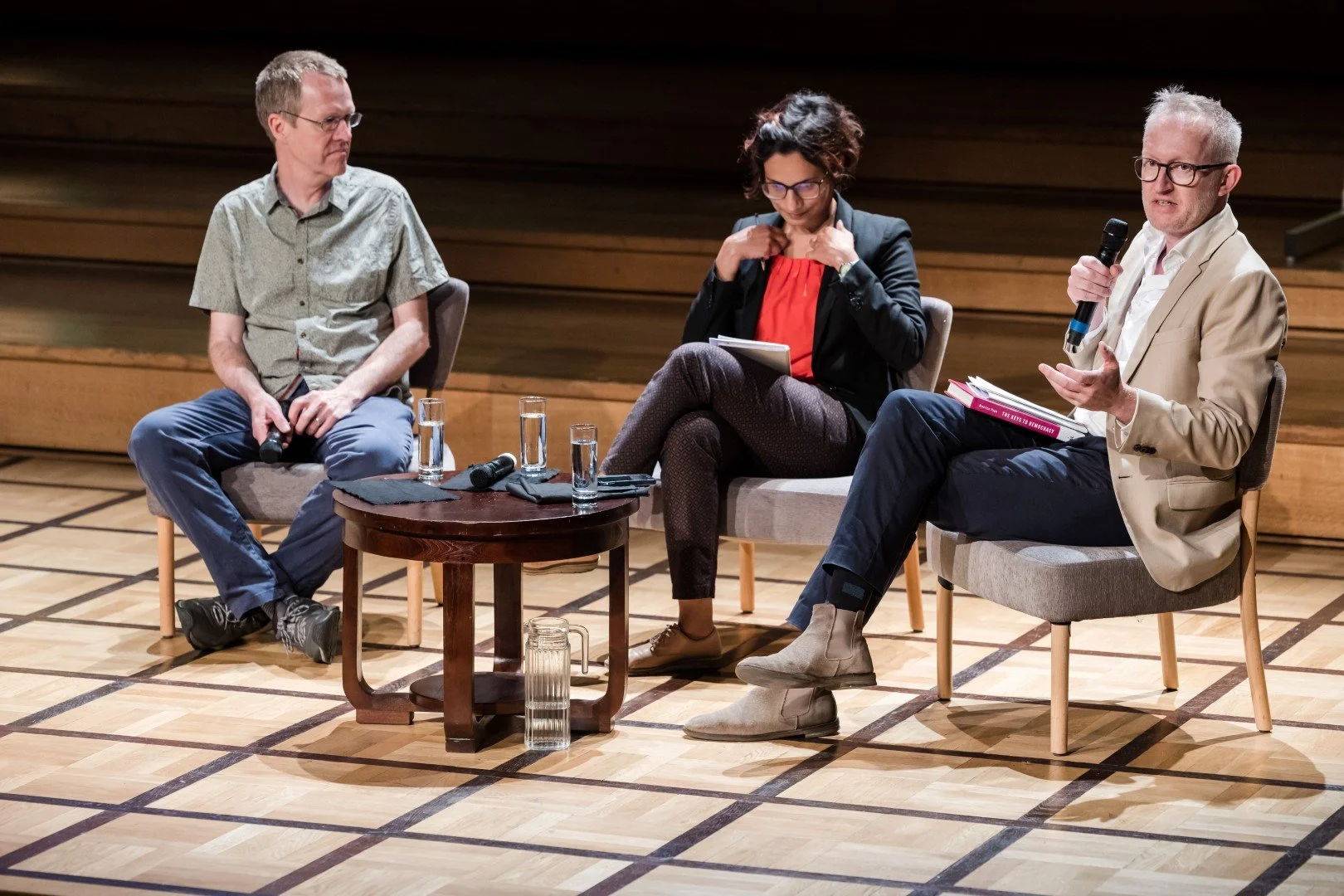
FIDE’s Annual Event in Brussels, June 2023