
4 Questions for Our Innovation Fellow and Democracy Interns
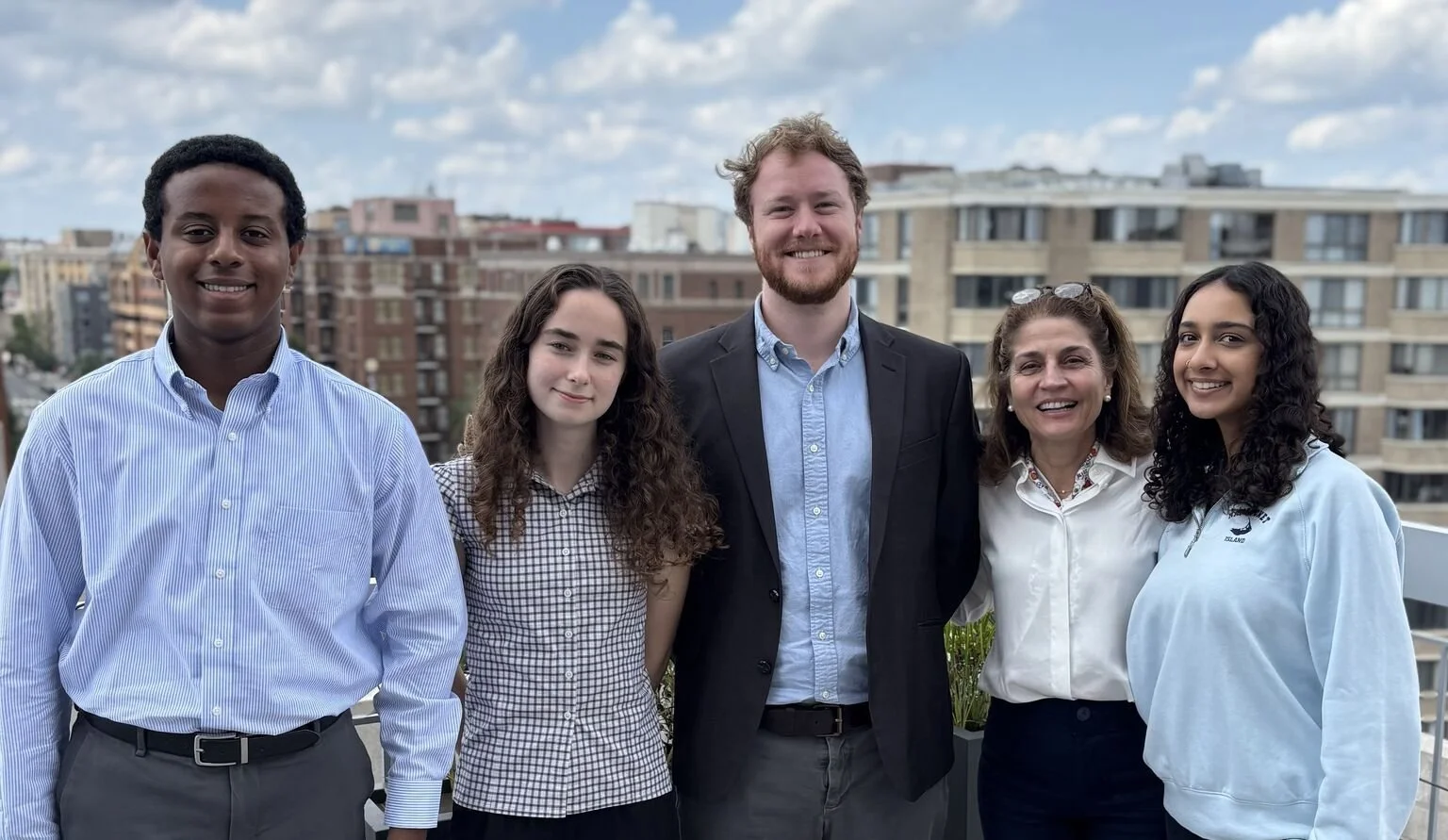
From left: Eyob Sissay, Paige Margie, Diya Kuma
FIDE - North America advances a democratic culture that is inclusive, responsive, deliberative and holds government accountable in between elections. Committed to a democratic process through narrative change, systems change and impactful citizens’ assemblies, FIDE – North America strengthens the deliberative community, advocates and raises awareness, provides technical guidance and builds capacity, develops independent case studies and best practices through a rigorous learning series. We hope you find this newsletter useful and informative. —Ansel Herz
We hope our readers have had a wonderful summer of sunshine and relaxation! At FIDE - North America, the terms of our three excellent summer interns are drawing to a close.
As they move on to new chapters, we asked them to weigh in on what they learned and their hopes for the future of our politics. Some 57 percent of Americans ages 18-24 are dissatisfied with American democracy, but amongst our small sample size of fellows, there’s still a sense of optimism about what lies ahead. In Europe, where there’s more survey data on CAs, one study suggests that while young people are less engaged with the existing political systems, they are more strongly supportive of CAs than other groups.
Our Democracy Interns are Eyob Sisay and Paige Margie (above, left), both rising seniors at Sidwell Friends School, along with Diya Kumar (above, right), our inaugural Innovations Fellow, an undergraduate at George Washington University studying International Affairs and Public Health.
They joined FIDE - North America to assist us with research and analysis on voice insecurity, contextualizing deliberative democracy, understanding FIDE - North America’s impact, and more. We’re grateful for their interest in citizens’ assemblies and support for our work, and wish them the best.
1. During your time with FIDE - North America, what did you learn about democracy that you didn't know before?
Diya Kumar: Prior to joining FIDE- North America, I thought I had a strong grasp of democracy’s basic challenges—polarization, misinformation, voter apathy, and so on. But what I’ve come to understand more deeply is the disconnect between lived experience and institutional response. It’s not just that people feel unheard; it’s that the limited chances they have to participate rarely lead to meaningful influence. What I’ve learned is that Americans aren't disengaged by choice, but are reacting to institutions that disengaged from them first. This understanding reframed how I conceptualize democratic legitimacy, not as something preserved through process, but earned through responsiveness.
Paige Margie: During my time with FIDE - North America, my view of democracy was reshaped. Prior to my internship, I viewed it as a more fixed system. Over the weeks, I realized that democracy is much more flexible and adaptive, able to evolve to meet the needs of the people it serves.
After learning about the numerous different models, especially of deliberative democracy, I came to understand the many ways citizen participation can be made more effective. Deliberative democracy is not just one method; it is an umbrella term for endless ways of bringing people’s voices into decision-making processes. This experience challenged my prior assumptions and changed my understanding of democracy as a practical tool for advancing public participation.
Eyob Sisay: Democracy is a verb. During my time with FIDE - North America, I came to understand the action and intentionality required to sustain and improve democracy. The conventional understanding of democracy in the United States primarily focuses on elections and the federal government, with most citizens' primary form of democratic engagement consisting of voting in major national and statewide elections. Alternatively, citizens' assemblies represent the effort and intention required both by citizens to engage in democratic processes and governments to make a conscious effort to offer more forms of civic participation. FIDE - North America's work advocating for and assisting the design and evaluation of citizens' assemblies demonstrates the potential and necessity of citizen participation outside the framework of electoral politics.
“I intend to work towards a future where citizen deliberation is a standard component of the legislative process.” —Eyob Sisay
2. How do you see yourself applying these learnings in your civic life or career?
Diya: Far from the regular focus on which policies we should pursue, I’ve become interested in how decisions were made and who was included in shaping them. This experience made civic life feel less abstract, and more urgent. Whichever path I take, I want to help create systems where listening leads to action and participation shapes outcomes. That doesn’t always require large-scale reform. Indeed, sometimes it’s a matter of asking different questions, designing better processes, or making space for voices that are too often ignored.
Paige: I hope to apply these learnings by participating more fully in American politics, despite not yet being an adult. Even though I am not yet eligible to vote, learning about the many forms of deliberative democracy—several of which are open to minors—has shown me that there are still plenty of ways to be an active citizen. In the future, I hope to take part in more youth-focused deliberative processes and contribute to discussions on issues in my community. I also plan to bring these learnings into my daily life, whether by encouraging informed and respectful conversations among my peers or otherwise. By practicing these habits now, I will be better prepared to engage in the political process as I become older, and to approach it with a mindset rooted in careful deliberation.
Eyob: In the future, I intend to apply the knowledge I've gained from my time with FIDE - North America to further my civic participation and work towards a future where citizen deliberation is a standard component of the legislative process. However ideal the implementation of deliberative democracy practices may be, the realization of this ideal can not come about without citizen advocacy to governments and institutions. As young people, it is crucial that legislative bodies, and their increasingly older legislators, have access to forums that enable them to receive policy recommendations that reflect the diversity of experiences and worldviews of their constituents. In my civic life, I will continue to inform my peers about deliberative democracy practices and maybe even participate in a citizens' assembly myself!
3. What are your hopes for American democracy in the future?
Diya: Far from the regular focus on which policies we should pursue, I’ve become interested in how decisions were made and who was included in shaping them. This experience made civic life feel less abstract, and more urgent. Whichever path I take, I want to help create systems where listening leads to action and participation shapes outcomes. That doesn’t always require large-scale reform. Indeed, sometimes it’s a matter of asking different questions, designing better processes, or making space for voices that are too often ignored.
Paige: When I think about the future of American democracy, the area I most hope to see improved is inclusion. True inclusion means having access to balanced information, time to reflect, and the opportunity to think deeply about the issues at hand. Without these conditions, participation risks becoming performative rather than impactful. However, when citizens are able to participate, the difference is apparent. In learning about Citizens’ Assemblies, I admired how deliberately they work to prevent that. One of their most valuable features is inviting experts to inform participants before deliberation begins.
If American democracy is to thrive, it must make this kind of informed, substantive participation the norm, rather than the exception.
Eyob: American democracy is experiencing a moment of incredible fragility and duress. Our institutions and systems of governance face a crossroads between making deliberate choices to uphold democratic norms and choosing political convenience at the sacrifice of Americans' trust in government. Therefore, my hopes for the future of American democracy lie primarily in citizens and local governments making conscious decisions to utilize their power to uphold democracy. I am excited by the implementation of citizens' assemblies by cities and towns across the country. The expansion of deliberative democracy practices represents a growing understanding among governments of the importance of a citizen's "fourth branch" in strengthening the democratic core of the legislative process.
4. What was your favorite FIDE - North America moment?
Diya: One of my favorite FIDE moments was pitching merchandise ideas with the interns during a team meeting and getting to laugh with everyone at some of the more over-the-top ideas.
Paige: Although it might sound simple, my favorite part of the internship was FIDE–North America’s weekly Wednesday meetings. Despite everyone’s busy and often conflicting schedules, that one hour was always engaging and informative, and I felt fortunate to be part of it. I especially enjoyed hearing about the wide range of personal projects people were working on and watching their progress unfold over the course of the internship. Specifically, my favorite moment was when the interns presented our work and ended up spending nearly half the meeting on it. The discussion was thoughtful and encouraging, and the feedback offered new perspectives. Being part of such an enthusiastic, collaborative, and knowledgeable group was a highlight of my time with FIDE - North America.
Eyob: My favorite moments with the FIDE team were our weekly time-wide calls. I thoroughly enjoyed learning about what other members of the team were working on, presenting and receiving feedback from the group, and brainstorming ideas for projects!
FIDE - North America at the National Conference on Citizenship!
Marjan Ehsassi and Cole Speidel were at the National Conference on Citizenship this September 16, 2025 at the Planet Word Museum in Washington, DC. This year’s NCOC focusesd on ways to strengthen civic infrastructure and rebuild trust in democratic processes.
We contributed to the agenda with a session presenting - for the first time - a theory of change for Citizens’ Assemblies! The Theory of Change is informed by consultations with implementers, advocates, and funders in the CA space here in North America. A theory of change identifies a problem and a corresponding solution to that problem (in this case, Citizens’ Assemblies). We outline the outcomes we have seen from CAs (effects on individuals, institutions, and society), risks to achieving those outcomes, and how we can design CAs to mitigate that risk. We used this session to gather feedback on our draft TOC and strengthen it!
New Webinar: Democracy Beyond Elections - Citizens’ Assemblies and Institutional Reform
The U.S. has a surprising history of deliberative democracy—from bold experiments in sortition to grassroots-led reforms. Most failed to take root. Citizens' Assemblies - such as those in Bend and Boulder - are part of deliberative democracy’s latest comeback.
Columbia World Projects, New America’s Political Reform program, and FIDE - North America explored the past, present, and future of assemblies in America, and their role in broader institutional reform movements. Alongside leading democracy scholars and changemakers, we looked at what worked, what didn’t, and how today’s efforts at every level of government are reshaping the movement for a more inclusive and responsive democracy.
Speakers:
Jenny Mansbridge, Adams Professor of Political Leadership and Democratic Values Emerita, Harvard Kennedy School
Matt Leighninger, Director, Center for Democracy Innovation, National Civic League
Moderator:
Marjan Ehsassi, Executive Director of FIDE - North America
This event is part of an ongoing series in collaboration with New America and FIDE - North America exploring the opportunities and challenges of using citizens’ assemblies in the United States. These virtual discussions bring together leading researchers and practitioners to offer valuable insights for students, civic leaders, and anyone interested in the future of democratic innovation.
Upcoming Presentation at the Athens Democracy Forum in Greece
Marjan Ehsassi spoke at the Athens Democracy Forum this fall. This year’s forum examined the challenges of the current moment, showcased examples of democratic renewal, and “dreamed up entirely new ways of structuring governments and institutions."
We shared the exciting reality of deliberative democracy and citizens’ assemblies delivering results for communities across North America. A growing number of government champions and advocates are engaging in this field. We showcased the evidence behind this building momentum and the promise shown by our colleagues, partners, and government reformers to address the hard reality of voice insecurity in America and beyond.
📅 1-3 October 2025
📍 Athens, Greece
Join our network
North America is a big place! Are you active in the space of deliberative democracy, or interested in bringing citizens’ assemblies to your community? Contact us at north.america@fidemocracy.org to let us know about your work and your goals.
Interested in contributing to the future of democracy? Contact us if you’d like to join a team of volunteers who are helping support FIDE’s programs.
We hope to see you at an event, whether in-person or virtual! For more, follow us on LinkedIn or join us over at our new account on Bluesky.
Until next time,
The FIDE - North America Team