
Citizens’ Assembly School Builds Momentum for New Assemblies in Akron and Dayton, Ohio
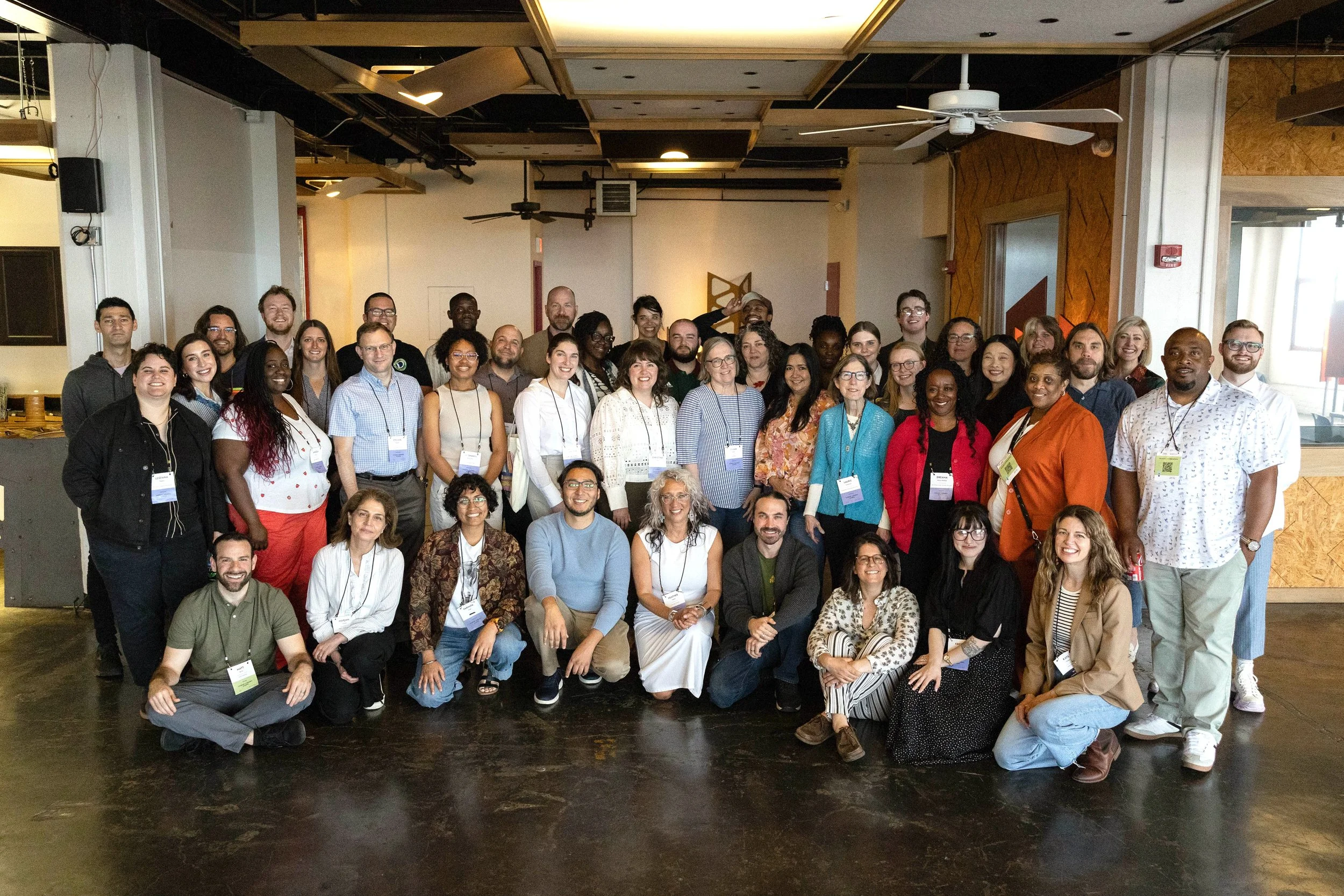
FIDE - North America 2025 Citizens’ Assembly School participants in Akron, Ohio
FIDE - North America advances a democratic culture that is inclusive, responsive, deliberative and holds government accountable in between elections. Committed to a democratic process through narrative change, systems change and impactful citizens’ assemblies, FIDE – North America strengthens the deliberative community, advocates and raises awareness, provides technical guidance and builds capacity, develops independent case studies and best practices through a rigorous learning series. We hope you find this newsletter useful and informative. —Ansel Herz
For the third time since its launch, FIDE - North America organized a Citizens’ Assembly School to raise awareness, propagate best practices, share learnings, and grow the field of deliberative democracy. The school brought together more than 40 elected representatives, public managers, advocates, implementers, citizens, and researchers from around the country in Akron, Ohio, where local momentum has been building for a new civic institution based on deliberation.
The multi-day school included sessions on the nuts and bolts of citizens’ assemblies (CAs) and also on the different methods and approaches of deliberative democracy practitioners such as Mass LBP and Healthy Democracy. Practitioners from the United States and Canada presented case studies of Citizens’ Assemblies in Victoria and Saanich, British Columbia, Bend, Oregon, and Montrose, Colorado. They discussed the key elements of implementing an assembly, including the democratic lottery, framing a good question, and facilitating effective deliberation.
The two days included significant time for small group discussion, where participants compared their experiences and considered how lessons could be applied to their communities. Plenary discussions were augmented by side workshops on effectively facilitating a deliberative discussion, the promises and pitfalls of online deliberation, and how permanent assemblies work in Europe. FIDE - North America Program Manager Cole Speidel led a workshop focused on Belgium’s Ostbelgien model.
The school brought together more than 40 elected representatives, public managers, advocates, implementers, citizens, and researchers from around the country in Akron, Ohio, where local momentum has been building for a new civic institution based on deliberation.
“We specifically looked at the East Belgium example and folks had a ton of good questions about that,” said Morgan Lasher, Chief Community Officer of UnifyAmerica, who’s based in Akron. “Many were like, when can we go to Belgium and tour and ask all of our questions? Is a field trip a next step in our learning process?”
More than half of the school’s attendees were from Akron, including local organizers, students, mayoral staff, local council members, and a senior leader in of the Akron public school district; the rest hailed from 9 different states around the United States, including delegations of municipal officials from Dayton, Ohio and Richmond, Virginia.
City staff from Dayton, Ohio have been exploring how to establish their own CA after a Dayton representative joined us at our previous school in Phoenix, Arizona. The team from Richmond, Virginia, having just completed a comprehensive, city-wide participatory budgeting effort, aimed to understand how a Citizens’ Assembly might augment their engagement. People connected over shared challenges and questions, informed by the school’s setting in the heart of Akron.
“I think it was a really powerful series of moments for the Akronites in the room to be hosting something like this,” said Lasher. “To know that Akron is not alone in its need for better public conversations and to be inspired by the work that is happening in Dayton.”
Lasher and UnifyAmerica have been busy over the past year organizing community-building Civic Saturday events in Akron. The city is a liberal outpost surrounded by conservative suburbs, but the events have helped to bridge partisan divides. For example, a relationship blossomed between a gentleman who was incarcerated for 20 years and a former police officer turned Republican judge. At one event, the man turned to the judge and remarked, “There are streets in Akron where it's easier to get a gun than it is to get a job.”
The judge agreed, and they realized they can’t address the problem if they are silo-ed off from one another. Both came back to the following Civic Saturday and spoke about that moment; the judge brought ten of her Republican friends with her.
Like many midwest American cities, Akron, population 190,000, was once a manufacturing boomtown, but those days are gone. Known as the “rubber capital of the world,” factories have closed; people and jobs left over the past few decades. At times the losses were rapid and severe. Over a seven-year span in the early 2000s, Akron’s plastics and rubber workforce was cut in half. In fact, the FIDE school was held in an old tire manufacturing plant, which has since been repurposed into an events/meeting space.
“We had this huge global industry happening in our backyard and then it just massively fell apart,” Lasher reflected.
Today, Akron faces many of the same challenges as other cities in the heartland, including housing costs that have outpaced wages, public safety issues such as gun violence, and school quality and maintenance. In some neighborhoods, absentee landlords own many homes. Lately, there’s been a push to make Akron a hub for polymer sciences, but so far it’s yielded few jobs, and what growth does occur may present its own new challenges.
These topics are ripe for citizens’ assembly deliberation on effective solutions, to build community trust and increase civic pride in Akron. Lasher reinforced FIDE - North America’s objective to enhance awareness of the Citizens’ Assembly movement across cities. She said the FIDE school had “added momentum, credibility and legitimacy” to the local efforts to establish a CA, with an announcement coming as soon as this fall.
At the conclusion of the school, FIDE - North America was invited to present at Akron's June 7 Civic Saturday organized by Kate Tucker. Our Executive Director, Marjan Ehsassi, took participants through an imaginary Citizens' Assembly on mental health and addiction. When asked how many of the attendees would volunteer to serve on this Akron CA, almost everyone raised their hands.
Lasher said the FIDE school had “added momentum, credibility and legitimacy” to the local efforts to establish a CA, with an announcement coming as soon as this fall.
“We need people here to feel like their voice actually mattered, they met people who were different from them, they could agree on something,” said Lasher. “There's a lot of passion to want to be a national model for something that isn't negative.”
Many people who “got out of Akron” haven’t come back, but Lasher wanted to return after college because she felt she did matter there in a way that she might not in a big coastal city. What Lasher and other Akronites do next — creating and perhaps institutionalizing a model citizens’ assembly — could make a difference not only for Akron, but for places like it across the country.
A big thank you to our Citizens’ Assembly School partners MASS LBP, Healthy Democracy, Institute for Democratic Engagement and Accountability (IDEA) at The Ohio State University, Bliss Institute of Applied Politics and our hosts at Bounce Innovation Hub.
FIDE - North America’s Team Grows!
Innovation Fellow Diya Kumar is an undergraduate student at The George Washington University, where she studies International Affairs and Public Health with a regional focus on South Asia. She has interned for the U.S. House of Representatives and an immigration law nonprofit, and volunteered with grassroots organizations to advocate for foreign aid efforts.
Our Democracy Interns Eyob Sisay and Paige Margie are rising seniors at Sidwell Friends School. Eyob is a passionate advocate of youth civic engagement and wanted to join FIDE-North America to support FIDE’s mission of expanding participatory democracy through citizens assemblies.
All three have jumped in to assist us with research and analysis on voice insecurity, contextualizing deliberative democracy, understanding FIDE’s impact, and more. Our fellows and interns gain experience learning about citizens' assemblies and deliberative democracy, as well as the role of FIDE-North America and partner organizations in advocating and bringing about new ways of doing democracy here in the United States.
Join our network
North America is a big place! Are you active in the space of deliberative democracy, or interested in bringing citizens’ assemblies to your community? Contact us at north.america@fidemocracy.org to let us know about your work and your goals.
Interested in contributing to the future of democracy? Contact us if you’d like to join a team of volunteers who are helping support FIDE’s programs.
We hope to see you at an event, whether in-person or virtual! For more, follow us on LinkedIn or join us over at our new account on Bluesky.
Until next time,
The FIDE - North America Team