
Insights from Yukon: Importance of a Chair and Oversight Committee for a Successful CA

Citizens Assembly members deep in deliberation in Yukon. Credit: Erik Pinkerton
FIDE - North America advances a democratic culture that is inclusive, responsive, deliberative and holds government accountable in between elections. Committed to a democratic process through narrative change, systems change and impactful citizens’ assemblies, FIDE – North America strengthens the deliberative community, advocates and raises awareness, provides technical guidance and builds capacity, develops independent case studies and best practices through a rigorous learning series. We hope you find this newsletter useful and informative. —Ansel Herz
Over the summer of 2024, Canada’s northern province of Yukon convened a major Citizens’ Assembly (CA) to deliberate on reforms to its electoral system.
One feature of the assembly critical to its success was the presence of an Oversight Committee, also known as an Advisory Committee, comprised of a small team of local and international stakeholders and experts.
To better understand the Oversight Committee’s significance, FIDE - North America spoke to Sarah McPhee-Knowles, Chair of the Yukon Citizens’ Assembly on Electoral Reform and Assistant Professor at the School of Business and Leadership of Yukon University in Whitehorse, Yukon.
McPhee-Knowles told us the Oversight Committee functioned in several important ways:
it acted as a sounding board for her as chair on thorny questions;
it added an additional check and balance to the other parts of the assembly,
it enhanced the assembly’s legitimacy in the eyes of the public; and
it operated as an independent outlet for complaints.
In sum, the oversight committee enhanced the legitimacy and democratic functioning of the assembly. To dive into the details, here’s our Q&A with Sarah:
How did the assembly work?
McPhee-Knowles: We had a really tight timeframe, so early on, I started working on setting up our advisory and oversight committee. I wanted a mix of people: local, respected people and experts on citizens’ assemblies. The group was Kevin Leary, a retired Yukon civil servant who was deputy minister of the executive council office, Lindsay Cornell, Executive Director of BGC Yukon, who’s run a lot of youth democracy initiatives in the territory, and Marjan Ehsassi, Executive Director of FIDE-North America and an expert on assemblies.
We met before the assembly got started, at the midpoint, and then we met again at the end. Those meetings were all over Zoom, because some members were far away or traveling, but it worked well. Any time there was an important update, I would keep them apprised of what was happening via email.
We had bios for each of them on the assembly’s public website, along with a unique email address that would automatically go to all three of them, functioning as a hotline for anyone with complaints or concerns. We didn’t have the staff to run a whole separate hotline. To my understanding, they didn't receive any complaints or concerns.
The purpose of this hotline was that if any delegates felt there was a bias or something inappropriate, they could appeal to another party about the issue?
That’s right. We told the Assembly members about it: If you bring your concern to me or the deputy chair and you're not satisfied with the outcome, or you don’t feel comfortable doing it, then this is an option available to you.
In addition, the two local members of the committee were the ones to count secret ballots, once the assembly had narrowed things down to their final choices. That way, no staff who were associated with the Assembly, including me, were touching any of the secret ballots.
What impact did the governance committee have on the assembly?
The group was really important for a couple of reasons. It added legitimacy by having some well-respected local folks and people with expertise in assemblies.
It also made it feel less secretive. There was some criticism from different quarters for not releasing the names of Citizens Assembly members when they were selected. This is a pretty small place. The whole territory is about 45,000 people and the assembly had 38 members. Eighty percent of the population lives in Whitehorse, and 30 of the 38 members were from Whitehorse.
So we were nervous that publishing their names could subject assembly members to lobbying by different groups or stakeholders. We didn't want the members being bothered by people in that way.
It was helpful that when I received phone calls asking who’s on the assembly list (or why a certain person wasn’t picked), I would respond: We’re not releasing it and here’s why. If you have further concerns, please contact the advisory and oversight committee and share your concerns with them.
Did the local members of the oversight committee observe the proceedings in-person?
They were welcome to, but they didn’t end up doing that.
In hindsight, would you have wanted them to come and observe more, or was that not necessary?
That would have been helpful — to be introduced in person and because some people may have felt more comfortable raising issues to them if they’d met.
What kinds of specific things did they advise on throughout the process
We shared the agenda and list of speakers with them, not for their approval, but for them to look at and provide input.
Another example is an interesting situation we had with the media. There was a mailer sent out by an interest group which was somewhat misleading, prompting angry and confused calls from people in the community, who thought the assembly was announcing it had already made a decision.
So we chose to issue a press release clarifying that mailer did not come from the assembly. I bounced that decision and the language of the press release off the advisory group, soliciting their wisdom and feedback. There was also an unusual situation with one assembly member, so I consulted the advisory group about that.
At the tail end of the process, we sent the committee the recommendations that were developed by the assembly so they could give us feedback on readability and coherence.
I think it increases the legitimacy by having a bit of that check and balance on the chair. The committee is totally neutral and does not have a stake in the issue itself. They're concerned with making sure that the process is run well, the accountability for decisions is clear and the rationale that's explained publicly for those decisions is clear.
Would you say governance committees are critical to the success of a CA?
Yes. I had a consultant, Peter MacLeod of Mass LBP, who also provided advice, but I was paying that person. So I think having this group on a volunteer basis, totally separate, was really helpful. Anything you can do to increase trust and transparency and good governance by having that separation of authority is important and helpful, in my view.
We had different political parties and interest groups in Yukon with strong views about the assembly, so in that context, the governance committee takes on arguably more importance. I believe it was crucial.
What happens now?
Our surveys showed that members of the assembly grew their trust in government, were more likely to change their opinion, and were more likely to have higher civic engagement following their participation.
In terms of the broader public having greater trust because the assembly occurred — we don’t know yet. I'm hoping to do a survey project that might shed some light on that question after the plebiscite. The government announced their intention to hold a plebiscite on the assembly recommendations at the same time as the next territorial general election, which should be this November. That will also be a test of the public's faith.
The slides above come from our Learning Series, which includes Case Studies and Independent Evaluations. Read FIDE - North America’s Case Study of this Citizens’ Assembly here.
To read Sarah’s analysis of the Yukon Citizens’ Assembly, see her article analyzing the Seven Principles of Citizens’ Assemblies.
For more information about the Yukon Assembly on Electoral Reform, visit the Yukon Citizens’ Assembly website.
Welcoming FIDE - North America’s New Program Manager!
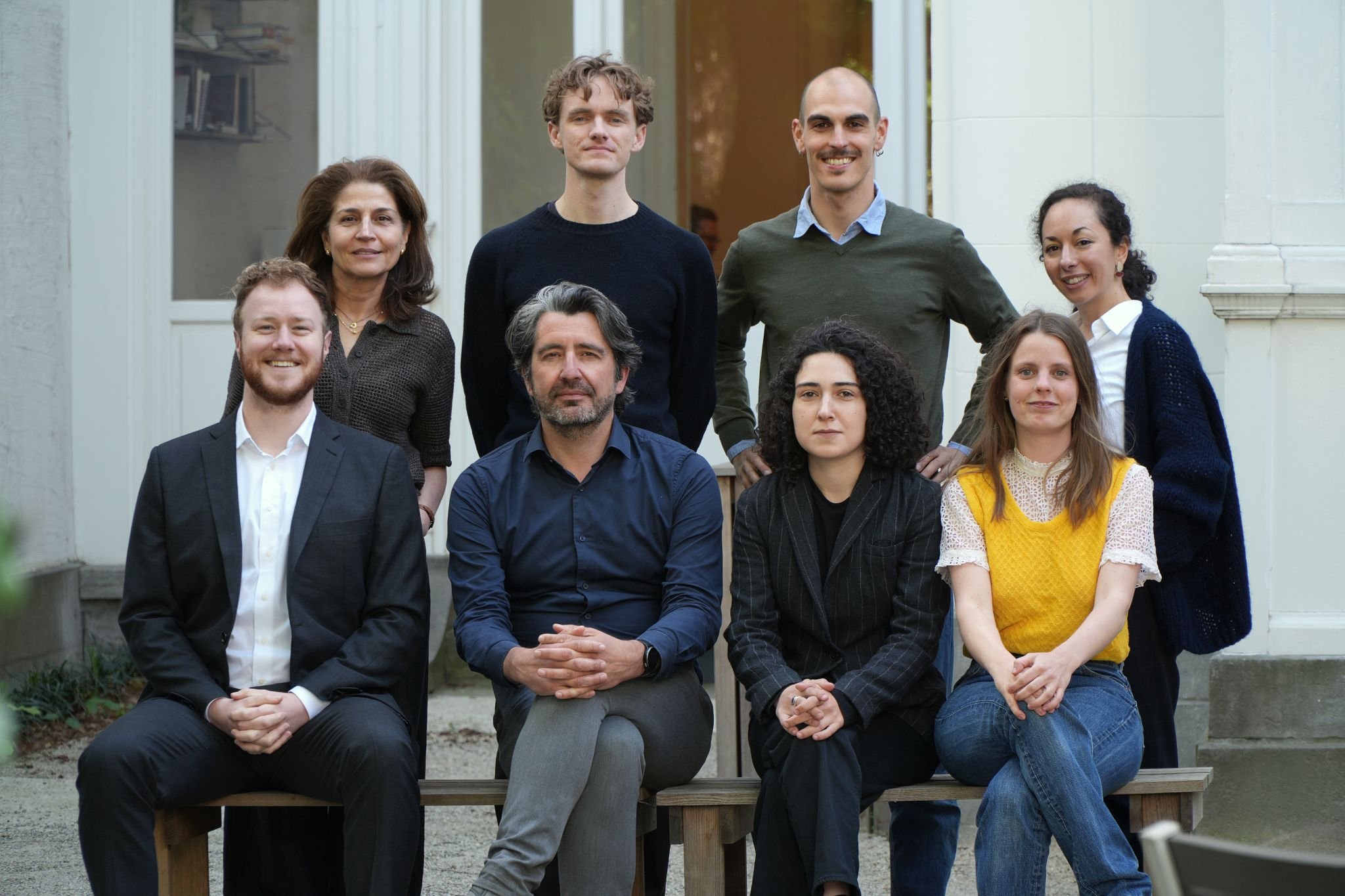
Cole Speidel, far left, with members of the FIDE team last month in Brussels
We’re excited to share that Cole Speidel has joined our team as Program Manager from the National Democratic Institute (NDI)'s global Democratic Governance team. At NDI, Cole focused on strengthening democratic practices in local and regional institutions. He designed participatory decision-making processes with city leaders, local open government action plans, and projects resisting attacks on local democratic institutions.
At FIDE - North America, Cole will play a crucial role in upscaling and supporting our advocacy, capacity and field-building activities.
“After years of working in the democracy and governance space overseas with National Democratic Institute (NDI),” Cole said, “I am eager to keep working on this mission, and grateful for the opportunity to do so in my home country.”
Reserve Your Spot at Our Next Citizens’ Assembly School in Akron, Ohio
FIDE - North America and our partner Unify America are looking for public servants, elected officials, and community leaders interested in bringing citizen assemblies to states, cities, and counties across North America. You’ll hear from and engage with an international group of experts and practitioners about how this form of deliberative democracy can solve public problems, strengthen civic muscle, and give our democracy the renewal it needs.
You'll examine past assemblies and explore innovations to grasp the foundational principles of citizens’ assemblies, including:
– Representativeness and sortition
– A clear remit or mandate
– Ample timelines
– Diverse information and learning
– Deliberation, not debate
– Free responses and final recommendations, and
– Accountability for follow-up and impact
North America is a big place! Are you active in the space of deliberative democracy, or interested in bringing citizens’ assemblies to your community? Contact us at north.america@fidemocracy.org to let us know about your work and your goals.
Interested in contributing to the future of democracy? Contact us if you’d like to join a team of volunteers who are helping support FIDE’s programs.
We hope to see you at an event, whether in-person or virtual, this year! For more, follow us on LinkedIn or join us over at our new account on Bluesky.
Until next time,
The FIDE - North America Team