
How Voice Insecurity Personalizes the Democratic Crisis
FIDE - North America advances a democratic culture that is inclusive, responsive, deliberative and holds government accountable in between elections. Committed to a democratic process through narrative change, systems change and impactful citizens’ assemblies, FIDE – North America strengthens the deliberative community, advocates and raises awareness, provides technical guidance and builds capacity, develops independent case studies and best practices through a rigorous learning series. We hope you find this newsletter useful and informative. —Ansel Herz
What is voice insecurity, exactly? And how does it differ from other terms that political scientists use to describe crises facing democracies today?
Today, we publish Voice Insecurity: Mapping the Consequences of Institutional Exclusion & Charting a Path to Democratic Renewal with Citizens’ Assemblies, a 33-page report written by political scientist Atl Castro Asmussen and FIDE - North America Executive Director Marjan Ehsassi, who coined the phrase in her book Activated Citizenship.
Interview with the author of the report
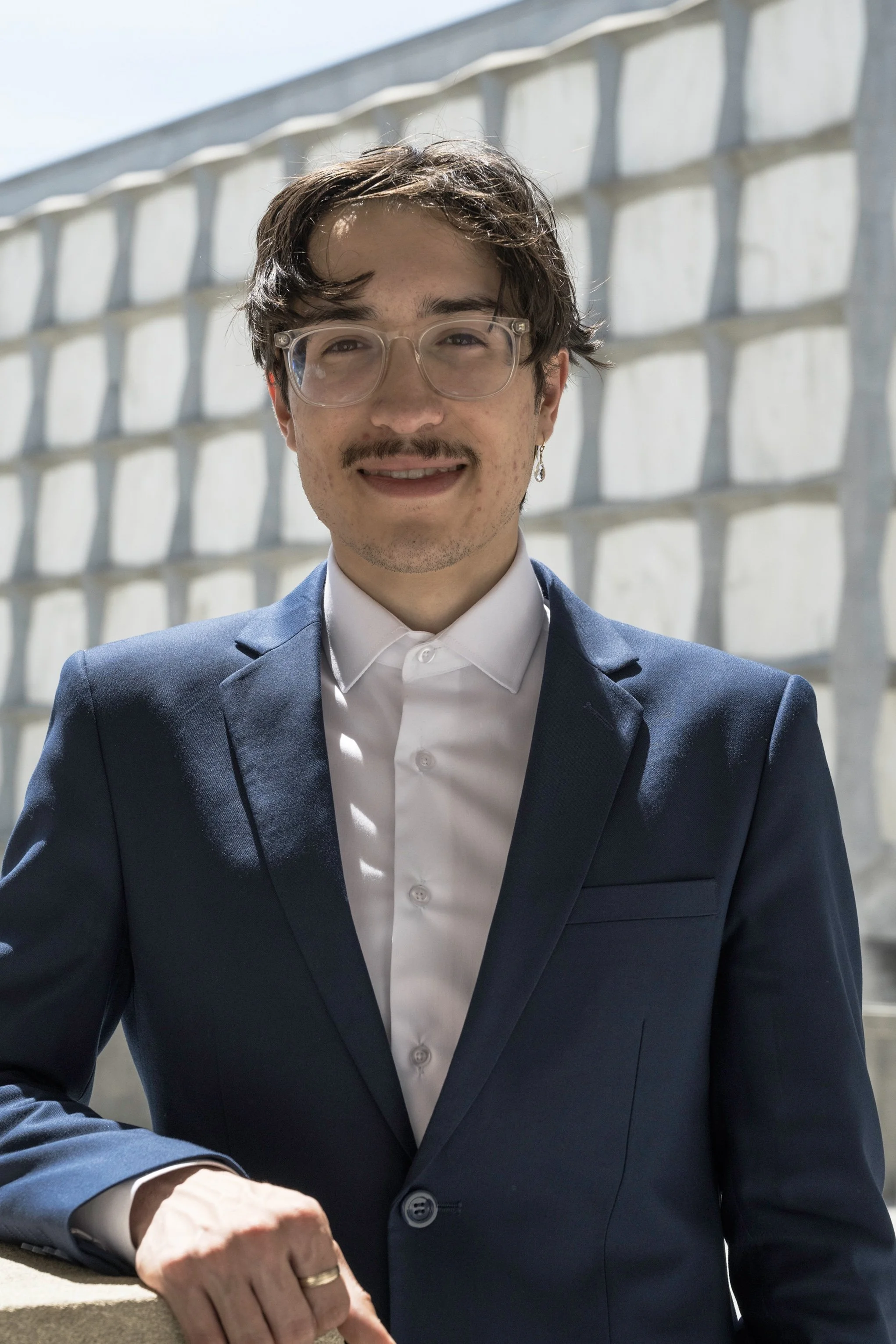
Atl Castro Asmussen is a recent graduate of Yale University. He shared his thinking behind the report with us, and some of his personal story, in this Q&A.
Tell us about yourself.
My name is Atl and I'm from Brooklyn, New York. I became interested in deliberative democracy and democratic innovations in college during a class I took with Professor Hélène Landemore.
I had an interesting upbringing where I would visit my family in a very small town in Idaho, while also growing up in New York City. I consider myself having kind of grown up in both of those places. They have very distinct political identities. I was always grappling with how to talk to my family about politics when they had such different opinions. Christmas dinner is sometimes a little tense. My father grew up in Mexico City and was an immigrant and came to the United States.
I feel many political science students are taught to accept institutions at face value and not really critique them — especially when it comes to representative democracy. Landemore’s class was really eye-opening and challenging because it taught me to think outside of that.
What happened after you took that class?
I worked with Professor Landemore for about a year, as her research assistant. Eventually, I learned about FIDE - North America and began to explore opportunities to collaborate on an initiative. I’ve also been working concurrently with Stanford's Deliberative Democracy Lab, remotely.
How does your experience connect to “voice insecurity”? How do you define that term?
Voice insecurity, which was first introduced in Activated Citizenship, is trying to describe and put a name to some of the terms in the discourse right now, whether it’s democratic decay or the rise of authoritarianism. It tries to tie in all of the institutional failures that lead to this subjective experience that people have of not feeling their input matters.
When people have this subjective experience over time, it becomes a condition of disempowerment. When you vote or protest or use other channels like attending town halls, but you feel that decision makers aren't reflecting your input in policy, you become voice insecure. You internalize this lack of voice because you're seeing firsthand that you're using the avenues meant for you to add input into the system, and they're not listening.
It’s trying to get at the heart of why people are having this subjective experience with democracy right now and why there’s so much institutional distrust.
Food insecurity has become a common way to talk about hunger or lack of nutrition. What does voice insecurity conjure?
Sometimes we get lost in the sauce. When you talk about “democratic decline,” you’re focusing on abstract institutions. You’re not really focusing on how these trends affect Americans, down at the individual level.
You could say there’s a lot of political polarization or apathy, but what does that mean for an individual person and their perceptions of democratic life? It doesn’t convey a lot. Voice insecurity can help describe “the why” at the personal level, not just the way it “is” at the societal level. It describes the subjective experience of a person who doesn’t feel heard because their input is not meaningful, whereas many other terms don't focus on that.
It can be hard to measure or quantify because it's different for every person. But someone in New York who participates in participatory budgeting is probably more voice secure than someone who doesn't have the option to participate in those kinds of democratic innovations.
How do citizens’ assemblies address voice insecurity?
With assemblies, citizens feel more empowered because they’ve been heard — even without their decisions being reflected in policy 100 percent of the time. People just want to feel heard. Once you feel like your voice actually matters, it precipitates into other parts of democratic life. If you feel voice secure, you have greater agency and are more likely to be more involved in politics or your local community. There’s a lot of rich evidence that from citizens assemblies showing that when people participate in a citizens' assembly, they feel empowered about their place in their democracy and become more engaged.
Right now, we have electeds trying to represent hundreds of thousands of people. The relationship between those electeds and their constitutents is weak. But citizens assemblies help people get their own experiences on the table and share their perspectives, as opposed to it being disconnected — as if one person is supposed to hold all of these different preferences together and bundle them into one policy. That's not possible.
The beauty of it is also the element of sortition, because you're not just reaching those people who always go to town halls. I've never been to a town hall. And I’m passionate about politics. Can you imagine who actually goes, who has time to go?
Assemblies will be less skewed. You're having people's genuine opinions on a specific issue and you're reflecting the diversity of the opinions across the electorate. You’re not issue bundling. You’re not having someone say, “I'm going to vote for this person because there's this bundle of issues they're representing… I have to vote for the bundle that may be as closest to mine.” You’re not forced to subvert one opinion about an issue just because they're bundled together, losing your voice in the process.
If a policymaker is interested in taking action based on your report, how can they apply this framework?
I was talking to my friend about this the other day, showing him the report. There’s a lot of uncertainty right now. Electeds and policymakers can begin to recognize voice insecurity as a driver of people's discontent in democracy and talk about it. Then, hopefully the report points out democratic innovations including but not limited to citizens’ assemblies that offer a promising pathway to mitigate the problem of voice insecurity. We can begin to shift people’s perspectives and inspire system-wide reforms.
What do you think your family would make of this concept? Would you consider them to be voice insecure?
We know that social media is built on eliciting anger. And the best way to create anger is to pit people against each other. We know the media tries to divide us.
I received a lot of good advice from members of the FIDE team because we wanted to make sure this concept can resonate on both sides of the aisle. We don’t want people claiming to be voice insecure just because their side is not in power. Even if you’re in a blue or red state, you might have a preference that’s still overshadowed by a corporate interest. These are structural limitations endemic to democracy at large.
For example, on gun control, there’s a good amount of broad agreement across Americans with different beliefs. The same goes for border protection. These aren’t purely left or right issues. But we don’t see those preferences leading to policy change.
What other parts of the report would you like to highlight?
There's been a pattern over time of executive overreach, where the executive is gaining ever more power. Legislatures have been diminished and are not really sites of deliberation anymore. It’s not a left or right thing. The executive and administrative state have grown, which means there are more people who are not accountable in between or via elections, the traditional method we have for democratic accountability.
We’re on a road moving away from democratic accountability, responsiveness and inclusion which contributes to voice insecurity. It's a reinforcing cycle where the less democratically accountable the institutions are, the more voice insecure people feel, the less they interact with these systems, and the more unaccountable these systems become.
We’ve been seeing this cycle for some time and maybe right now we’re seeing the culmination of it. But we need to mitigate that, and the report shows us how we could get back to a more virtuous cycle.
Join our network
North America is a big place! Are you active in the space of deliberative democracy, or interested in bringing citizens’ assemblies to your community? Contact us at north.america@fidemocracy.org to let us know about your work and your goals.
Interested in contributing to the future of democracy? Contact us if you’d like to join a team of volunteers who are helping support FIDE’s programs.
We hope to see you at an event, whether in-person or virtual! For more, follow us on LinkedIn or join us over at our new account on Bluesky.
Until next time,
The FIDE - North America Team