
Supporting Ukrainian communities through deliberation
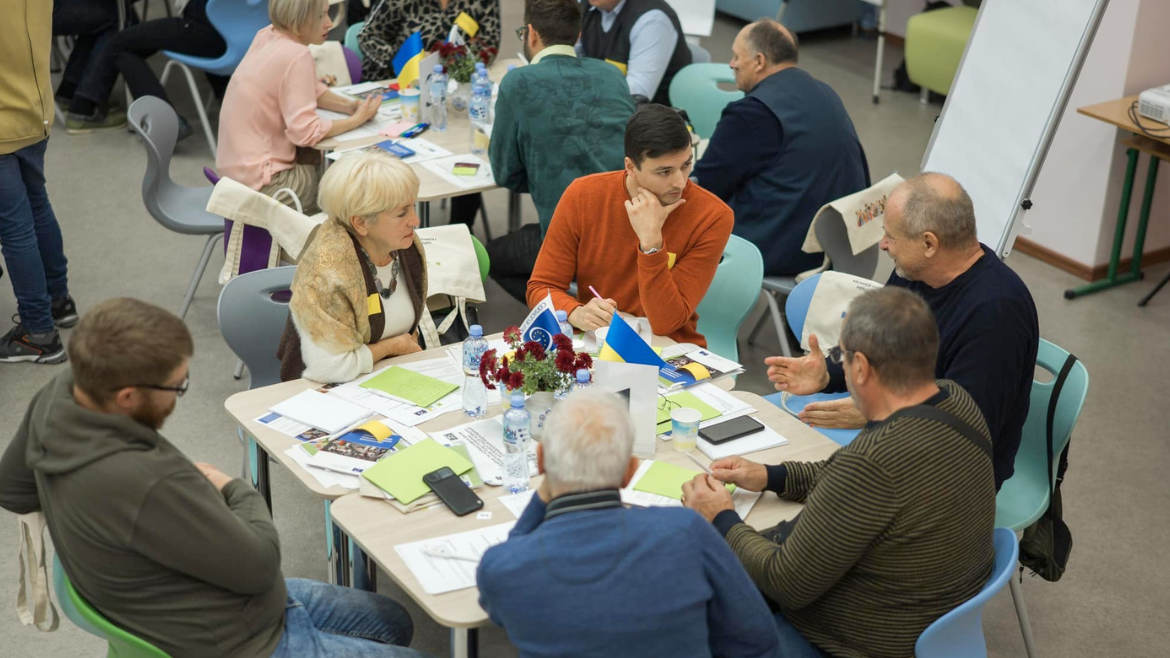
The first-ever citizens’ assembly in Ukraine took place in Slavutych (Kyiv region), supported by the Council of Europe, October 2024
Citizens’ Assemblies have demonstrated their relevance in mending conflicts in post-war societies and facilitating restoration. Organizing assemblies during an ongoing war is a whole new challenge and proposition. The first citizens’ assemblies in Ukraine, held in 2024 in Zviahel (Zhytomyr region) and Slavutych (Kyiv region) with the support of the Council of Europe, were crucial steps to introduce deliberation as a model for post-war recovery. In 2026, three new citizens’ assemblies will take place with the comprehensive support of the Council of Europe. FIDE – Europe is taking part as an expert partner, providing training and design guidance throughout.
The Obolon district, located just 10 km from the center of Kyiv, has been heavily affected since the early days of the war. Recently, a memorial for military units has been erected in the area. The assembly's focus is on the urgent issue of reintegrating veterans into society.
The two other regions in western Ukraine are addressing different challenges. The Lviv agglomeration is exploring how to better manage its shared water resources. Meanwhile, in Rivne, a long-standing issue that predates the war is the fleeing of young people from the region. This trend is expected to significantly affect post-war restoration efforts, which could rely on the local youth. Their preparatory work has already started with the first stakeholder forums held for Kyiv and Rivne.
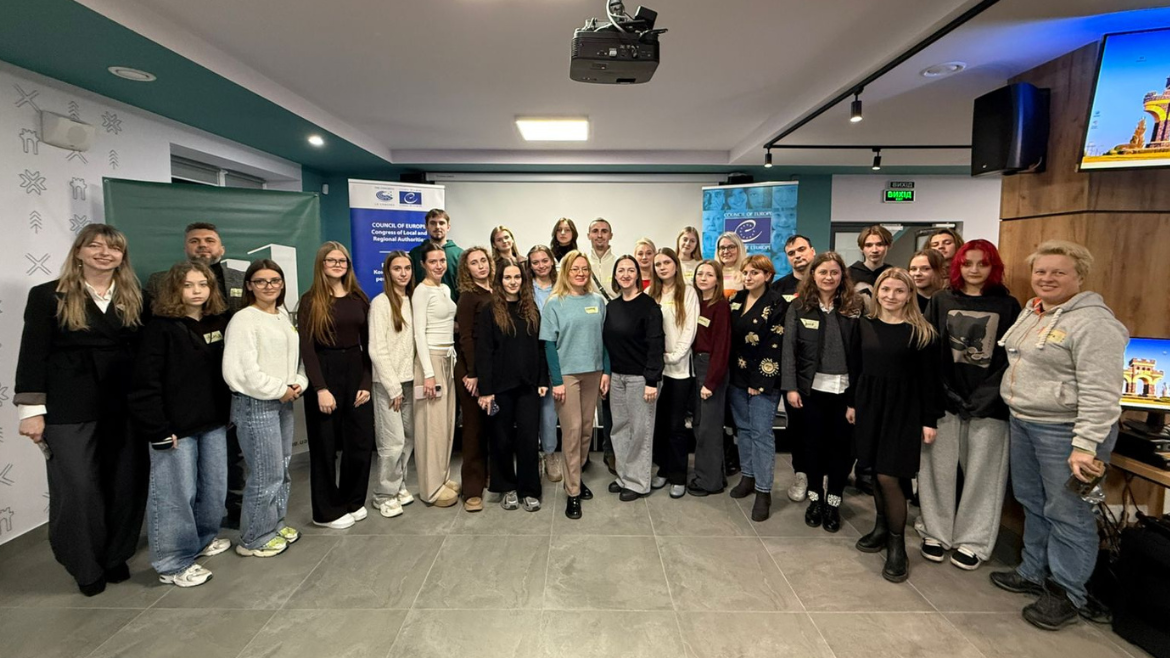
Stakeholder forum involving the youth of Rivne, serving to set the assembly’s priorities, 18th October
Training local authorities
Two large-scale training programs were organized in the first half of 2025 to build capacity for the upcoming assemblies. 35 national experts—including civic participation professionals, facilitators, and civil society representatives—completed a comprehensive three-module course on deliberative democracy. Additionally, a series of online capacity-building webinars convened 48 representatives from local, regional, and national authorities, along with 36 experts in civic participation and civil society organizations.
From this cohort, the Council of Europe opened a call to select the three authorities that will organize the assemblies. Candidates had to demonstrate prior experience in participatory practices and have a local team ready in place to support the process. The teams also had to commit to considering and responding to the recommendations of the citizens’ assembly.
What’s next?
Local authorities are now entering the implementation phase. A stakeholder forum for Lviv is scheduled on 12th December. People will be invited to participate in public campaigns before the random selection of assembly members. Parallel to this, a training for facilitators is planned to precede the launch of the assemblies from early 2026. The deliberation sessions for each project will take up about 2 months before the presentation of their final reports by the end of 2026.
FIDE – Europe will accompany the three assemblies throughout the process, providing advice and guidance during the implementation and monitoring. We are proud to support the Council of Europe in its endeavour to build Ukraine’s democratic future and work directly with the local teams.
The citizens’ assemblies are organised and implemented within the Council of Europe Action Plan for Ukraine “Resilience, Recovery and Reconstruction” for 2023–2026 and the project “Strengthening multilevel governance and local democracy to support Ukraine’s recovery”, implemented by the Council of Europe Centre of Expertise for Multilevel Governance at the Congress of Local and Regional Authorities.
UPCOMING EVENTS
Launching Structuring Participation
A Guide to the Set-Up and Follow-Up of Participatory Processes
On Friday, December 12, from 10:00 to 11:15 CET, the Network on Citizen Participation and Deliberation, led by Bertelsmann Stiftung and FIDE – Europe, will introduce new guidelines focused on creating impactful setups and follow-ups.
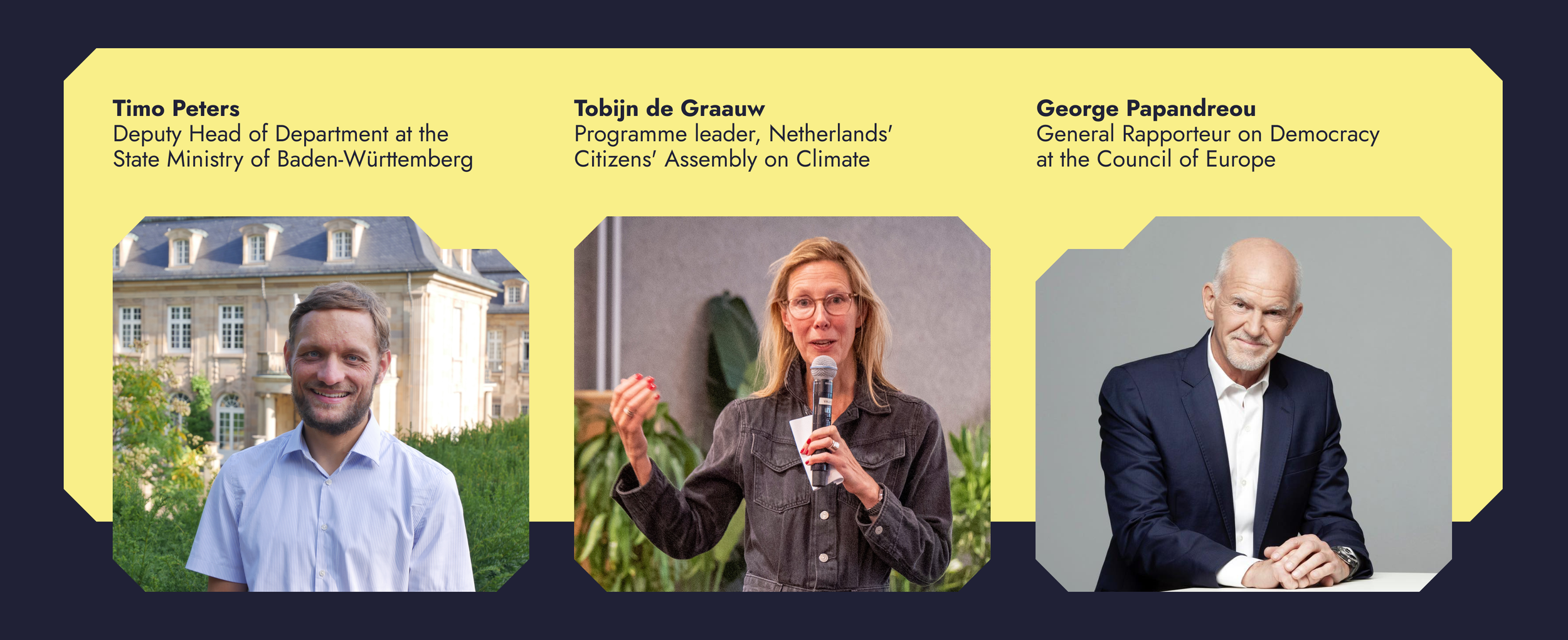
Interventions from Tobijn de Graauw, Programme leader, Netherlands' Citizens' Assembly on Climate and Timo Peters, Baden-Wurttenberg — followed by reflections from George Papandreou, former Prime Minister of Greece and General Rapporteur on Democracy at the Council of Europe.
The Price of Trust
A Conversation about Regions, Democracy, and the EU Budget
In the midst of the negotiations of the Multiannual Financial Framework (MFF)—the EU’s seven-year budget, the Future of Democracy Parliamentary group of civil society partners is hosting a panel at the European Parliament focusing on the transparency and local distribution of these funds.
The panel will consider how the funding can remain transparent and trusted on every level, from the European Parliament to the municipalities. More than a third of the EU budget is executed at the regional level, making regions vital in achieving EU objectives. However, they also face challenges such as mismanagement and democratic decline, which can erode trust in the EU.
Zweig Visitors Centre, European Parliament, Brussels
11th December (Thursday), 10:00–13:00 CET