
Breakthroughs for Citizens’ Assemblies in 2025? An interview with Daniel Stid
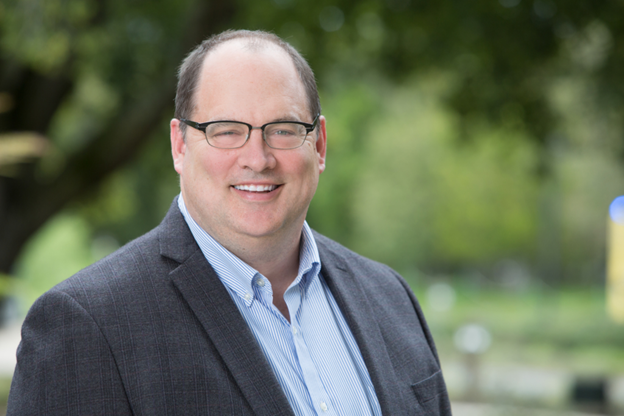
Credit: Nancy Rothstein Photography
FIDE - North America advances a democratic culture that is inclusive, responsive, deliberative and holds government accountable in between elections. Committed to a democratic process through narrative change, systems change and impactful citizens’ assemblies, FIDE – North America strengthens the deliberative community, advocates and raises awareness, provides technical guidance and builds capacity, develops independent case studies and best practices through a rigorous learning series. We hope you find this newsletter useful and informative. —Ansel Herz
For this newsletter, we wanted to bring in the views of a respected leader in the democratic reform movement. While we may not agree with every single point, each one is well worth considering.
Daniel Stid is a democracy reform thought leader with a deep reservoir of insights on governance, leadership, and civic renewal. As a seasoned scholar and the founding director of the U.S. Democracy Program at the Hewlett Foundation, Daniel has explored the intersections of democracy, policy, and public life. He is the Executive Director of Lyceum Labs and a Nonresident Senior Fellow at the American Enterprise Institute, where he writes the Art of Association newsletter.
In a recent conversation with us, Stid shared his reflections on the state of democracy, what’s worked and what hasn’t over the past decade, how philanthropy can help foster civic engagement, and his advice as a “critical friend” for advocates of Citizens' Assemblies:
To begin, Stid shared his takeaways from the 2024 election. Mainly this one:
“At least 50% of my fellow Americans did not see the danger of Donald Trump's re-election in the same way I did.”
“I’ve been part of a democracy reform field for the better part of a decade now,” Stid said. “This field has tended to emphasize high politics — things like the rule of law, the separation of powers, the kind of the processes of democracy.”
In other words, the reform movement has become, Stid said, “a pretty elite and highly educated space,” noting that roughly two-thirds of Americans don’t have a college degree. For them, democracy may have a different look and feel. At a recent reform conference, Stid noticed the homogeneity of the room when it came to college degrees and liberal orientation. “We are getting high on our own supply,” he reflected.
“How can we be developing practical solutions for democracy if we are only engaging a minority of the perspectives in the country?
Stid describes himself as a small-C conservative (he once worked in Congress for GOP Congressman Dick Armey). He disagrees with the direction of the party under Donald Trump, but is reluctant to change his party registration. We asked Stid what the conservative rationale is for major democratic reforms.
He explained: “Conservatism is ultimately about preserving and enhancing the institutions that give constructive shape to our public life. There are times when institutions are in need of updating and revitalizing. If Congress doesn’t exercise the power of the purse, then we are sliding down toward the rule by decree, not simply under Trump, but going back to Biden, Trump, Obama and Bush.”
Stid’s efforts at the Hewlett Foundation were meant to revitalize Congress as a site of political dialogue, negotiation, and fiscal responsibility. The Fix Congress cohort and bipartisan select committee on the modernization of Congress are notable achievements. Still, “even though we had some success,” Stid said, “it is insufficient relative to what's needed.”
Where to go from here? Stid relayed a recent conversation with a city councilperson representing a fractured community, a now-common situation across a polarized country. Asked for help, he introduced “bridge building, depolarization, civic discourse, constructive dialogue and deliberative assemblies” as choices on a menu of different policy solutions. The councilperson honed in on a Citizens’ Assembly as the intervention that would meet their needs.
For Stid, this is promising and intriguing. But he cautions against “if only” thinking. “I’ve been in the field long enough,” he said.
“First, there was campaign finance reform, then nonpartisan redistricting, then ranked choice voting, then it was open primaries. I started to call these the ‘if only’ reforms. ‘If only’ we had this, our problems would be solved.”
Still, Stid has been increasingly convinced of the potential of well-developed and government-supported assembly models, including in Ireland and across Europe. He suspects Citizens’ Assemblies can make a significant contribution solving what ails America: last year, he called them an “an idea whose time has come (again).”
To breakthrough to the mainstream, Stid would like to see assembly advocates find ways to operate in a “lean startup mode” that enables experimentation and reduces hurdles for jurisdictions to get started with deliberative or deliberat-ish governance mechanisms. He’d like to see sortition (random selection) more widely used at the community level, bottom-up, in order to address some of the issues of class and ideological homogeneity. “How can residents of a particular community solve a problem in a way that brings all the relevant perspectives to the table?” he asked. “The standard way in more elite spaces leads to an over-weighting of center or left-of-center perspectives and over-weighting to people with college degrees.” The diverse representation that comes from sortition could be hugely beneficial, both in bottom-up informal settings like bridge clubs and civic associations, and in more formal governance structures.
Stid cautions against six- or seven-figure budgets for such exercises. “Rather than start with the full model with all the bells and whistles, take a leaner approach,” he said. “Maybe you start at the level of the legislative district and it’s informal. We’ve inadvertently begun with, How do we recreate the fully elaborated European model, which is often being underwritten by government? But we’re in a situation right now in the U.S. where this has to come from civil society. That’s a nut to crack.”
“The good news is we have more people working on the infrastructure,” Stid added. “The bad news is, we have more good groups working on it who need to sustain their work. The more you need all this infrastructure, the more expensive those become, the fewer there are, the less learning there is.”
Bottom line? The only way to ward off what Stid calls a “top-down democratic decline” is through a “bottom-up civic renewal.” It’s high time we make it happen.
— Ansel Herz
FIDE - North America’s Learning Series
We agree with Daniel Stid on the need to be nimble and to learn as we go. See our Learning Series, where we analyze real-world examples of CAs and conduct evaluations to uncover what works best—exploring topics like framing, participant engagement, and facilitation techniques that boost inclusivity, legitimacy, decision-making and policy impact.
How do you define a Citizens’ Assembly?
A Citizens’ Assembly meets a specific set of deliberative principles, including representativeness by democratic lottery or sortition, time, information, accountability, deliberation, and a free response. Learn more about the core elements of Citizens’ Assemblies in our Introduction to Definition and Guidelines paper, including how assemblies compare with other deliberative instruments.
Marjan Ehsassi in conversation with John Gastil
In a new interview at the Deliberative Digest, Marjan Ehsassi is joined by John Gastil to reflect on key themes from her book “Activated Citizenship.” Drawing on both their research and life experiences, this conversation is a thoughtful reflection on Citizens' Assemblies covering both the details of the process and the macro political challenges and potentials.
Upcoming event in New York City
In NYC? At Columbia University on April 24, join Marjan for a conversation on Activated Citizenship, The Transformative Power of Citizens’ Assemblies. Marjan will share her extensive field research examining civic engagement across five key dimensions: learning, connectedness and belonging, enthusiasm, political activity, and consequential voice.
We hope to see you at an event, whether in-person or virtual, this year! For more, follow us on LinkedIn or join us over at our new account on Bluesky.
Until next time,
The FIDE - North America Team