
The promise of deliberation in Poland
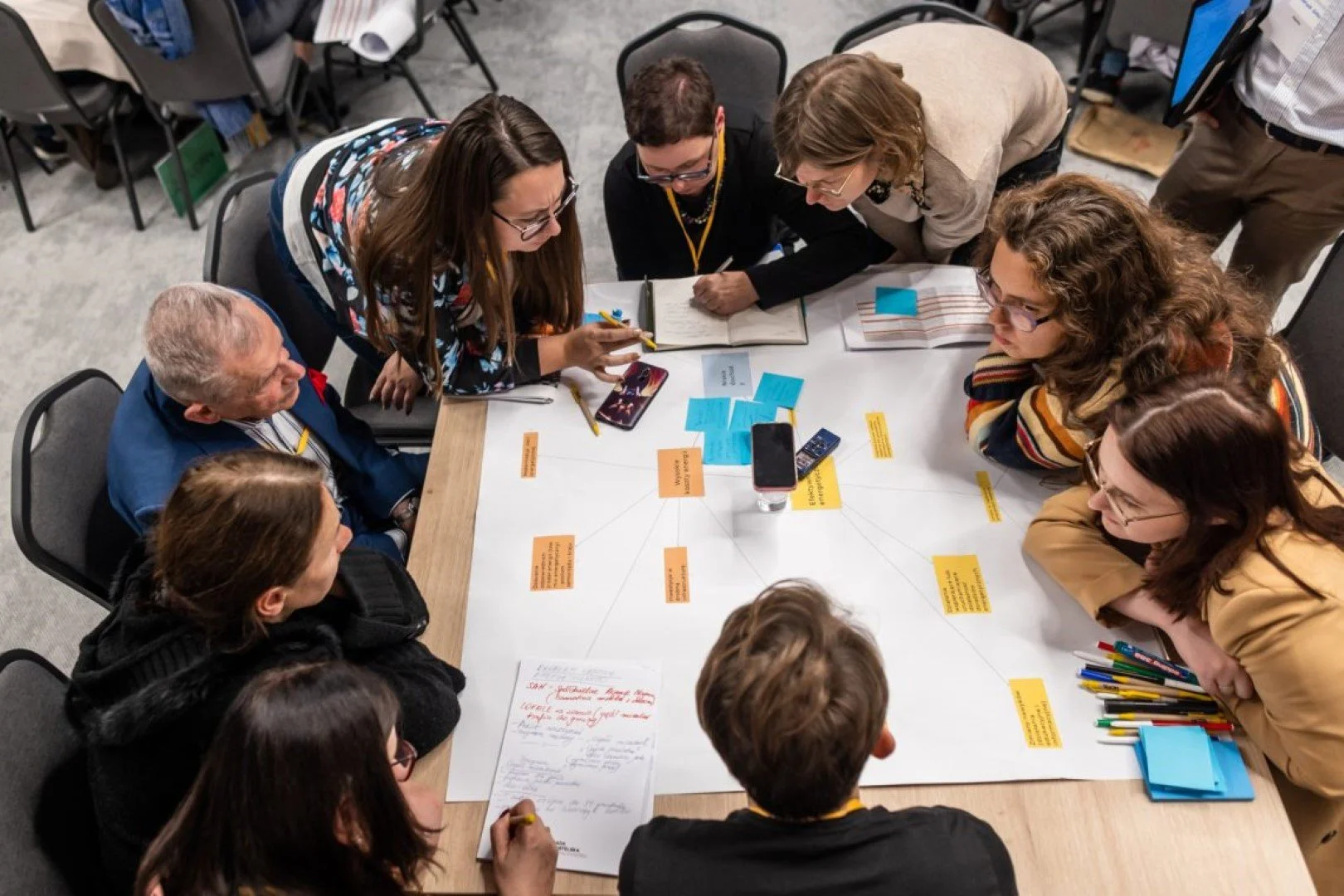
Citizens’ Assembly on Energy Poverty, 2022 – Shipyard Foundation © Wojtek Radwański
How practitioners play the long game of democratic innovations.
Over the past decade, Poland has become the most prolific country in deliberative processes in Central and Eastern Europe, navigating democratic backsliding, political expectations, and an evolving participatory landscape. In the lead-up to our Spring School in Warsaw, we spoke with two key figures working on the frontlines of this transformation: Katarzyna Pawłowska, a civic participation specialist at Shipyard Foundation (Fundacja Stocznia), and Eva Mackeviča, coordinator of participatory and deliberative processes at the Field of Dialogue Foundation (Fundacja Pole Dialogu). Representing two of the country’s leading organizations in deliberative democracy, they shared with us their insights, challenges, and hopes for the future.
"At the very beginning, we didn’t conduct participatory processes at Shipyard. We initially focused on studying and translating international examples and experiences into our Polish context". Kasia explains how their pivotal shift from think-tank to "do-tank" came in 2012, when Shipyard supported a movement addressing Poland's lack of transparent public consultation processes. This initiative culminated in the creation of the "7 rules of public consultations," widely recognized and adopted from local to national administrations. It was a joint effort of public administration and civil society experts. "It became a starting point for quality processes in Poland—a huge achievement that continues to influence processes to date", Kasia adds.
At the time, participatory budgeting was gaining traction in cities like Sopot and Warsaw, while citizens’ assemblies were still a mere prospect. In 2014, Shipyard convened its first Participation Practitioners' Forum, which has grown from about 50 to over 300 participants today. With the change in government the following year, and a bleak outlook for democratic innovations, local governments turned into a fertile ground for deliberative experiments. Driven by the desire to showcase a democratic response to the national government, local politicians were quickly persuaded by deliberative advocates.
"Deliberation promises something unique – and that can be tempting."
Katarzyna Pawłowska
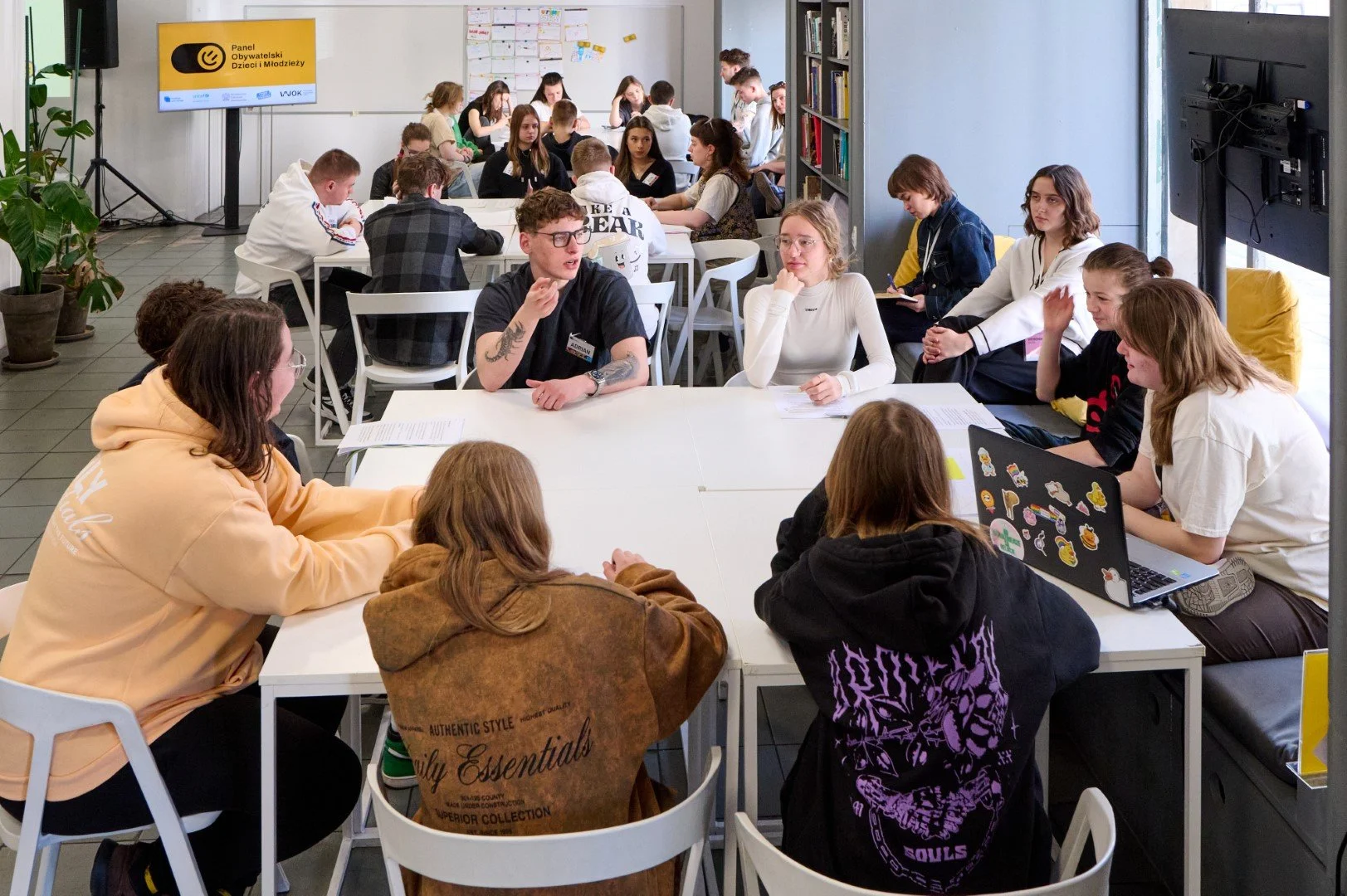
Children and Youth Citizens' Panel on online safety (PODiM) 2025 © Fundacja Pole Dialogu
“Deliberation promises something unique – and that can be tempting,” says Kasia.
But she cautions against launching citizens’ assemblies based more on the appeal of the idea than on having the right conditions in place. This, she notes, can place undue pressure on both practitioners and public authorities. “It became fashionable to organize an assembly,” she says, “but doing it just because it’s trendy isn’t a solid starting point.”
This strong reflection seems to encapsulate a good deal of the current state of affairs for deliberation in Poland. Eva Mackeviča echoes this sentiment, emphasising the need to make the field sustainable for practitioners and civil servants. As the first experiences kicked in, practitioners and politicians’ expectations shifted. The most recent example was last year’s change in the national government. Eva recalls this fleeting glimpse of hope for a government-led national assembly. One of the politicians from the coalition called for a citizens’ assembly when speaking to the media. "They even created a team that was supposed to set up the first national assembly, but then the realisation came—they wanted it to happen in three months’ time. All practitioners were like: ‘Hold up, hold up. This is not happening. We need more time to do it correctly.’ "
A symptom of maturity from a field that has grown in presence and expertise, managing to tame the fast-paced rhythm of electoral politics. "I think we were so successful in convincing them that this is not happening so fast, that now it's not happening at all." On the other hand, a stark reminder of the difficulties in reaching the necessary political conditions for citizens’ assemblies. "Now, during the presidential campaign in Poland and a difficult geopolitical situation, it seems that the window of opportunity for promoting such practices has become very narrow" adds Kasia. "But the team is there, so we have the right people in the right place where they can really make a change. Hopefully, this will eventually lead to a bigger national involvement in deliberation" concludes Eva.
"Conversations are happening at both the local and national level to make permanent citizens’ assemblies a reality in Poland."
Eva Mackeviča, Field of Dialogue Foundation
Both organisations have paved the way with national bottom-up assemblies. In 2019, a historic strike shook the Polish education system. The entire sector self-organised across the country to hold public conversations. "We called them citizens councils. They served to discuss the current state of affairs in education and could be held by anyone". Kasia recalls how these councils brought together diverse profiles, from teachers to parents and pupils.
The energy around these protests was so high, people self-conducted these councils in more than 50 places in Poland, discussing all issues affecting the educational system. Shipyard also supported education NGOs in gathering the results of the councils and developing a report for the Ministry of Education. "This experience taught us how to connect the local-level deliberations with nationwide concerns and inspired the national assembly on energy poverty."
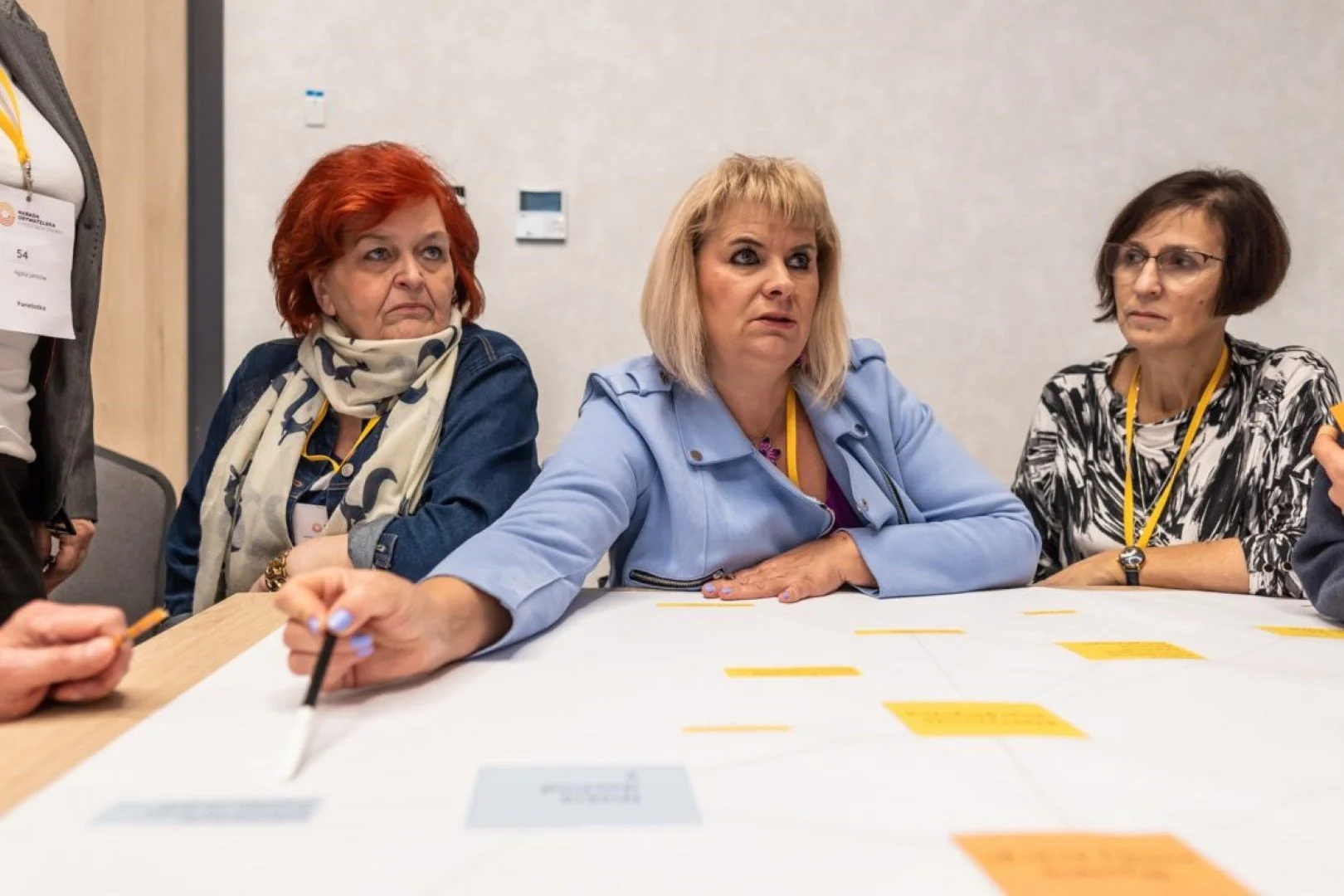
Citizens’ Assembly on Energy Poverty, 2022. © Wojtek Radwański
In 2022, Shipyard spearheaded Poland’s first National Citizens' Assembly together with the Copernicus Science Center and other partners. Following a similar bottom-up approach, with 45 local councils across the country that engaged more than 700 participants. Despite the advocacy efforts, national institutions refused any official engagement with the assembly, but it became a compelling proof of concept for the deliberative movement in the country.
More recently, the Youth Assembly on Online Safety, facilitated by Field of Dialogue, became the first national assembly officially backed by a national institution. Eva emphasises the significance: "It is a big milestone. Youth is such an overlooked group, especially in Poland, and this is also the group that feels least engaged, that their voice doesn't have real power. They do not vote in elections, even when they're eligible to do so".
Ensuring an official link with the Ministry of Digital Affairs is another consequential step for the entire field. "The fact that the budget was provided by People Powered was a huge help. The topic of digitalisation was central, directly connecting with the Ministry’s new focus on participation". Eva admits the difficulty of such commitment and how the necessary factors aligned in this project, while the question about financial sustainability remains.
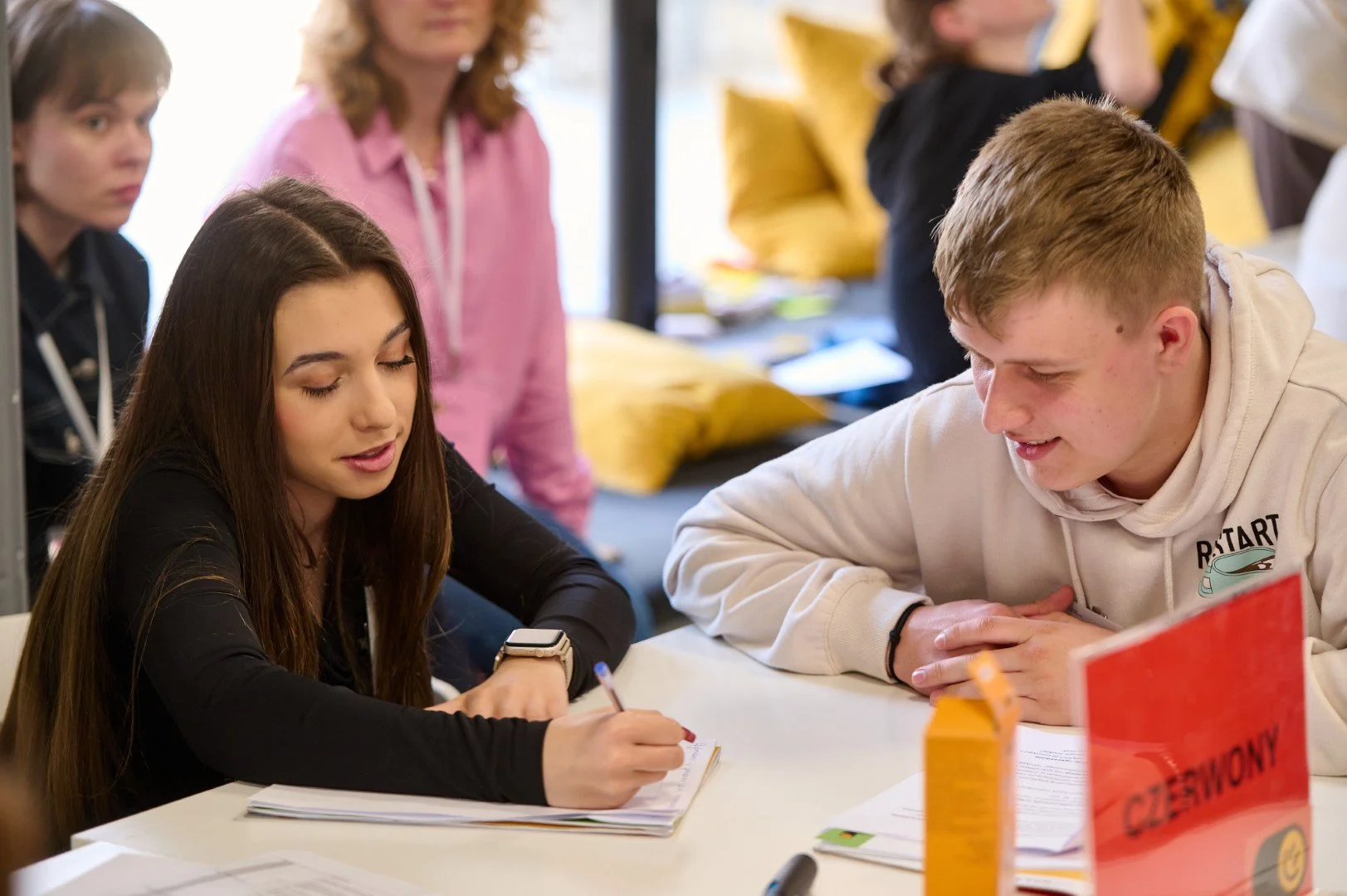
Children and Youth Citizens' Panel on online safety (PODiM) 2025 © Fundacja Pole Dialogu
Looking ahead, Kasia emphasises the importance of tailoring deliberative practices to smaller, resource-constrained environments without compromising on quality. “The second wave of deliberation should be more deliberate, tailored to smaller cities' capabilities. Simpler, cost-effective models like citizens' juries can responsibly meet these needs," she argues.
Eva further emphasises the necessity of retaining knowledge and avoiding practitioner burnout. "Practitioners often leave after a few years due to high demands, making it hard to progress without retaining their expertise", she warns.
Ensuring institutional memory within administrations and continued capacity-building is vital. Permanent assemblies can retain knowledge, bridge silos and build capacity within the administration. According to Eva, they may seem more far-fetched than they actually are: "Conversations are happening at both the local and national level to make permanent citizens’ assemblies a reality in Poland. We are in the initial stages, and we need to find further support, but things are moving".
The Spring School in Warsaw "comes at a crucial time to provide inspiration and share experiences precisely when the Polish deliberative wave is taking a quieter, more reflective turn," Kasia reckons.
Poland’s deliberative journey showcases a field learning from experience, recalibrating expectations, and strategically utilising resources to build the next generation of citizens’ assemblies. Come to learn more at our upcoming Spring School. — Miguel González.
FIDE – Europe, May 2025
Join the Deep Dive on Involving Children and Young People in partnership with Child Rights International Network.
Permanent Assemblies Workshop
From idea to implementation

On May 8 and 9, we convened practitioners and pioneers around a shared conviction: resilient deliberative practices need permanent infrastructures.
Nabila Abbas, FIDE - Europe’s Research Manager, and Graham Smith, Chair of KNOCA, opened with a presentation on the growing wave of permanent citizens’ assemblies across Europe. Drawing on the cases of Paris and Brussels, they reflected on the diverse roles such assemblies can play – ranging from policy recommendation to participatory agenda-setting and monitoring. Their message was clear: permanence isn’t just about duration, but about structure, integration, and the stories we tell to sustain it.
Nicole De Palmenaer, from the Parliament of the German-speaking Community of Belgium, followed with an in-depth look at Ostbelgien’s model. She outlined its distinctive architecture – Citizens’ Council, rotating Citizens’ Assemblies, and a Permanent Secretariat – and emphasized three pillars that underpin its success: consistency of participation, representativity, and quality of dialogue. We also heard from practitioners from Aachen, Köln, Luxembourg, Esch, Vilnius, Sion, and Turku sharing progress from their cities and regions. While each context is unique, the collective momentum is unmistakable.
What stories must we tell – within institutions, across cities, and to our neighbors – to make the case for permanence? That question lingered throughout the day.
This workshop is part of a longer programme to support and develop permanent assemblies across Europe. Stay tuned for upcoming publications and events. In collaboration with KNOCA and supported by the European Climate Foundation.
Democracy R&D 2025
Brussels | October 15-16
We have received more than 100 workshop proposals! Thank you for supporting us in developing two days that serve the entire deliberative community. We are processing them and will be in touch soon to share more programme details.
In the meantime, don’t forget to get your seat!