Reimagining Governance: Inside DSG’s First International Exchange
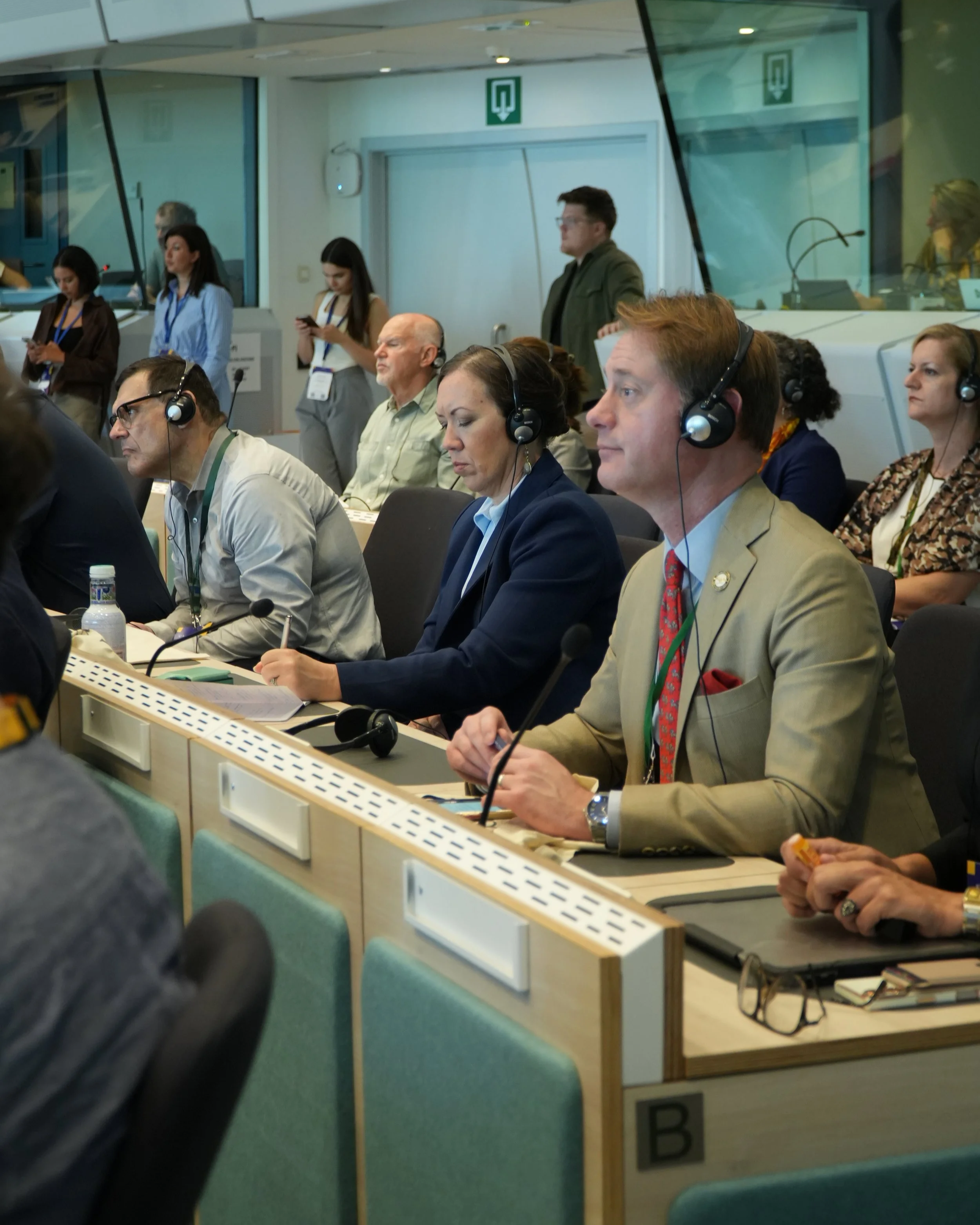
Secretary of State Michael Adams (KY) observing the European Commission’s Citizens Panel on Preparedness alongside DSG cohort members and guests
As confidence in national institutions continues to decline, Citizens’ Assemblies are happening around the world, finding massive success and satisfaction among citizens and policy-makers alike.
This is no surprise. After all, having a sense of voice through fair, informed, representative deliberative platforms increases public trust by up to 47%, and Citizens’ Assemblies give the public a meaningful role in shaping policy. But while the first long-form Citizens’ Assembly was introduced to the United States in 2022, the implementation of this practice has remained limited.
“There is a growing gap between people's preferences…and the policies, regulations, laws they have to abide by,” says FIDE — North America Executive Director, Marjan Ehsassi, “[The United States] may have a rich history of deliberative democracy, but we're still catching up on the work of Citizens Assemblies. Interest is growing and things are slowly but surely shifting in the direction of more assemblies.”
Innovation requires experimentation, and today's most impactful experiments improving our democracy are happening around the world. How can we bring them to the United States?
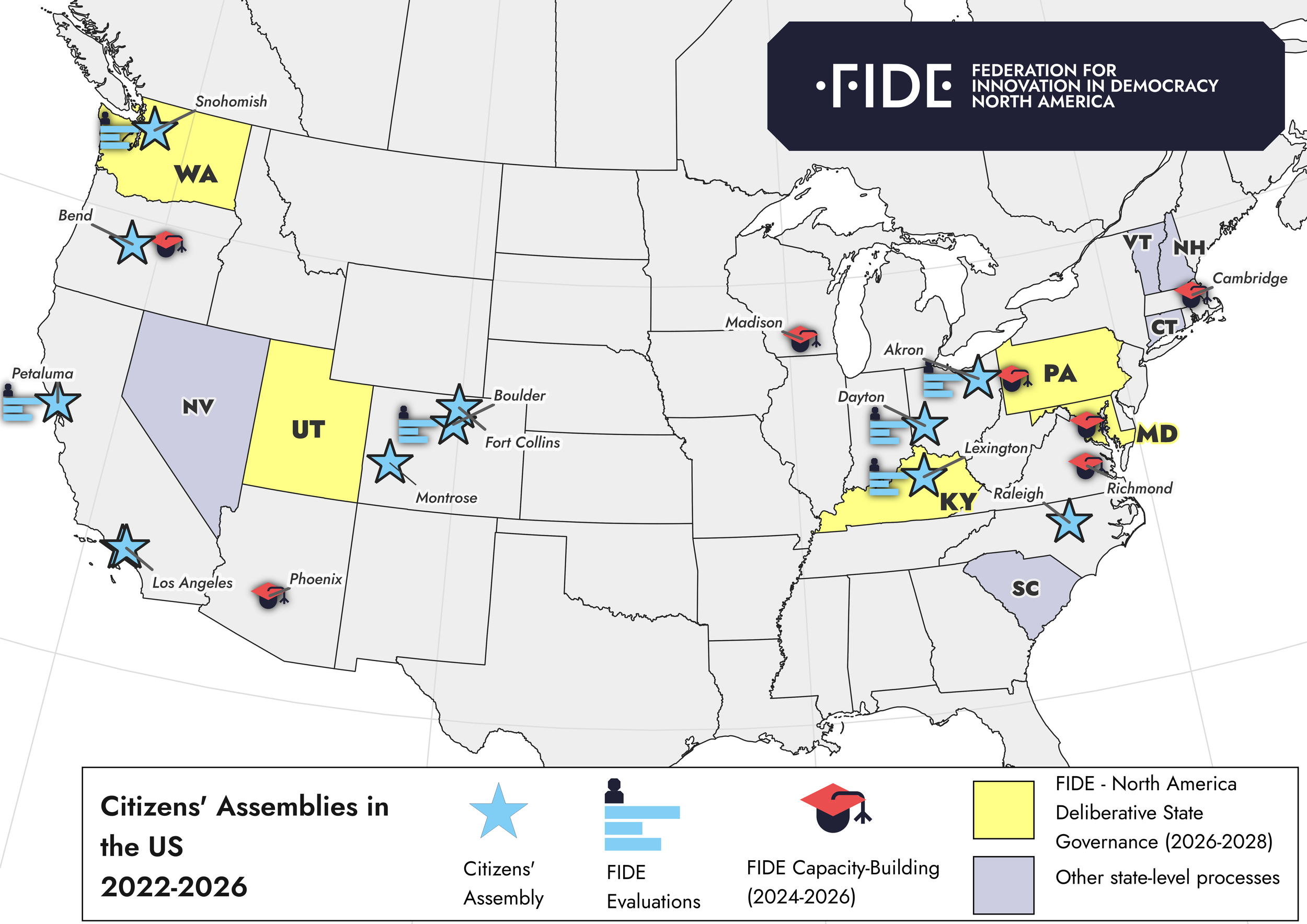
This was the question that inspired the founding of FIDE — North America’s Deliberative State Governance initiative. DSG introduces Governors’ offices as well as Secretaries of State and Policy to models of public engagement, challenging them to consider how those practices might best be applied in their home states.
On May 21-24 the Deliberative State Governance cohort - comprised of cross-partisan state leaders representing Kentucky, Maryland, Pennsylvania, Utah, and Washington – traveled to Brussels, Belgium, for the program’s first-ever international exchange.
The convening’s primary goal was to explore multiple models of Citizens’ Assemblies from across Europe.
Over the course of more than a dozen educational sessions, the DSG cohort met with 31 international experts, practitioners, and elected leaders from numerous levels of government to learn how citizen assemblies and public voice are successfully incorporated into policy-making. Speakers included former Prime Minister of Greece George Papandreou, former German State Councillor of Baden-Württemberg Barbara Bosch, Belgian Senator Liesa Scholzen, Brussels Parliament Vice President Lotte Stoops, author and G1000 founder David Van Reybrouck, Executive Director of We Do Democracy Zakia Elvang, OECD Policy Analyst Ollin Pérez-Raynaud, and Make.org civic tech Research Analyst, Jonas Engel.
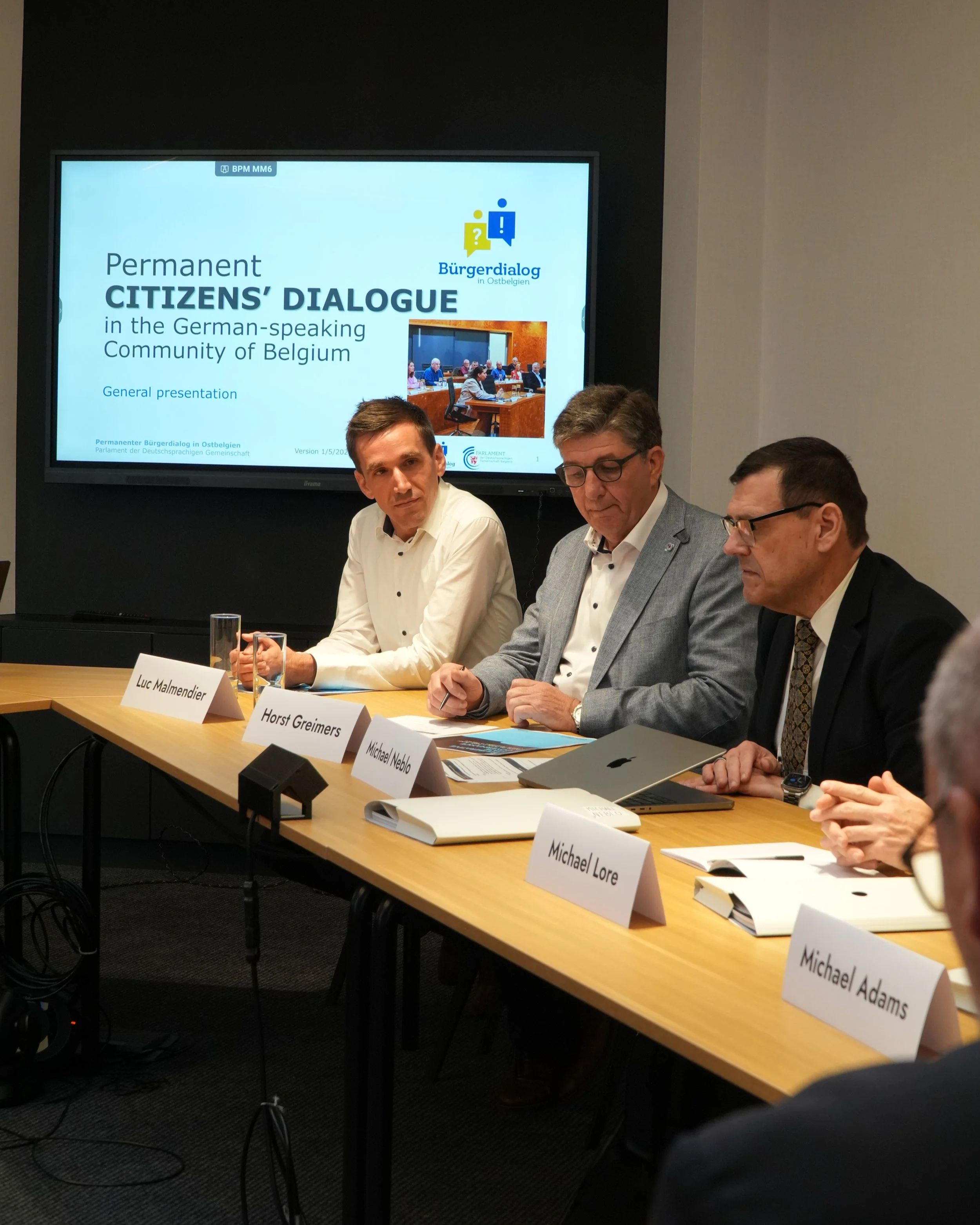
Members of the 8th Citizens’ Council for the German Speaking Community of Belgium explain how the Ostbelgien model for a Citizens’ Assembly increased their understanding and trust in politicians
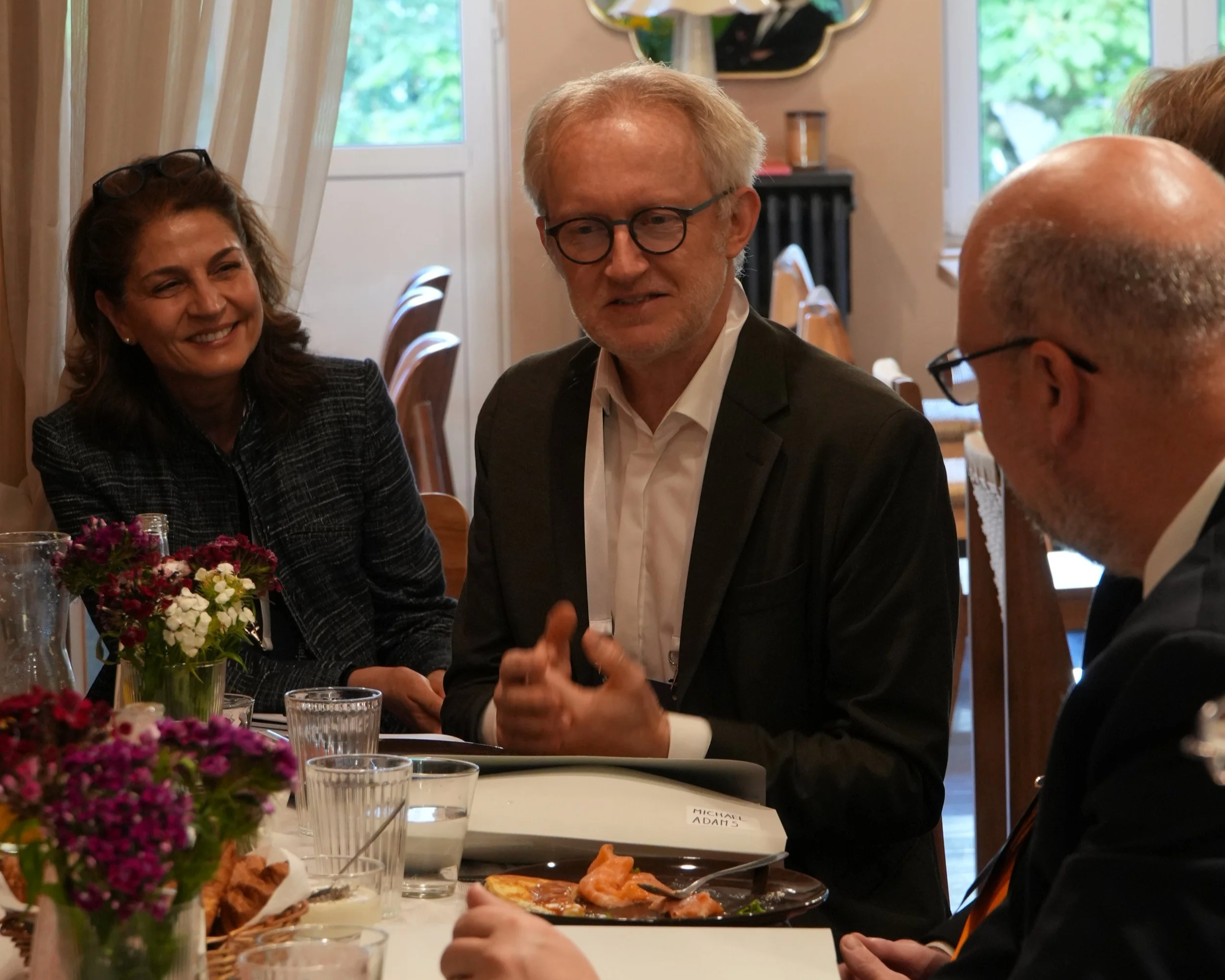
David Reybrouck walks through the long history of European and American democracies learning from each other
Each speaker was chosen with care, adding to a coalition that DSG Strategic Director, Kara Revel Jarzynski, says met the criteria for, “experts and electeds who, with data and first-hand experience, could educate [the cohort] about problems successfully tackled by deliberation and Citizens' Assemblies, to inspire ideas for how problems in their own states could be solved.”
The purpose of the sessions was not just to learn about the past, but to position assemblies as a forward-looking opportunity for the United States.
Cohort member and Kentucky Secretary of State Michael Adams was impressed, “To me, the most powerful takeaway has been the testimony of citizens who have said not just that they felt heard, that they felt they contributed to society, but that once they serve in an assembly, they then went on to volunteer. They went to be a poll worker. They went to volunteer at a school. They want to find some other way to be civically engaged. They want to be in another assembly if they can. That's a powerful muscle that's atrophied in America.”
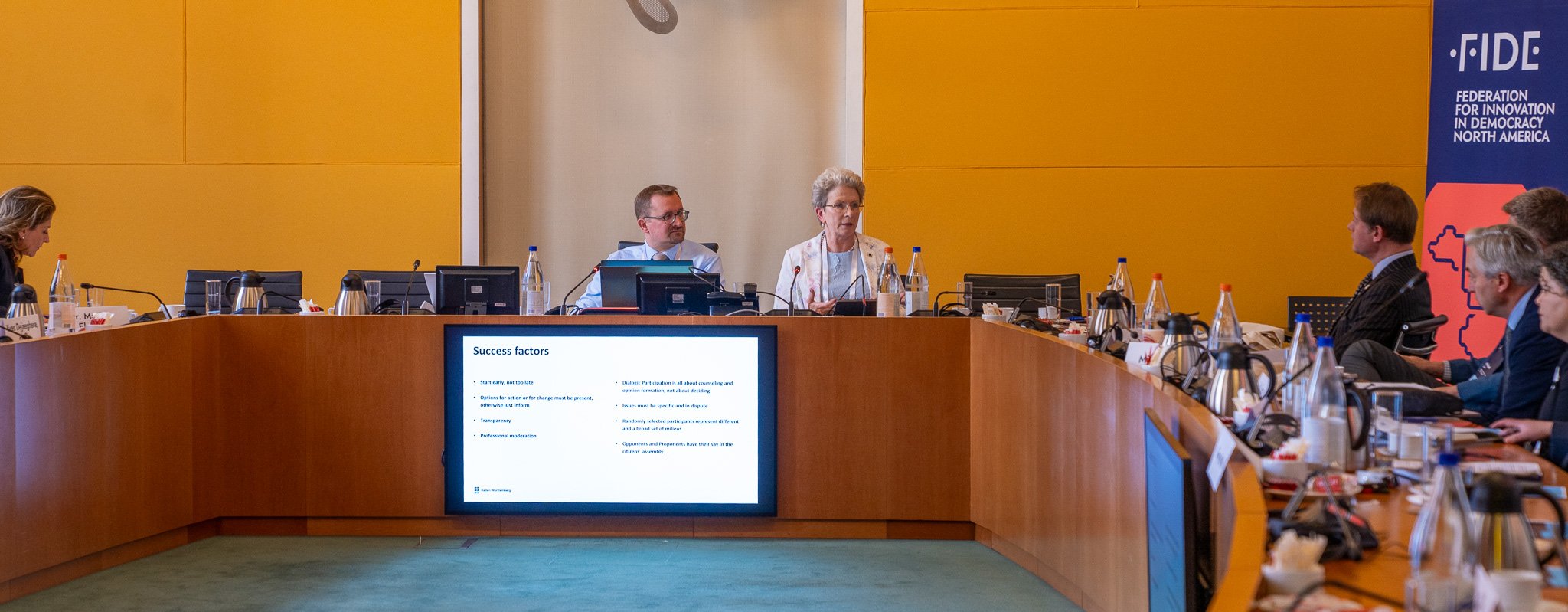
Former German State Councillor, Barbara Bosch, speaks about the relationship between citizens and decision-makers in Baden-Württemberg following Assemblies
In order to illuminate the nuances of the assembly process, comparative case studies from Belgium, Germany, France, and Denmark were presented side-by-side.
“I assumed that I'd be hearing 12 different speakers over three days saying the exact same thing over and over again. That's not been the case at all,” said Secretary Adams, “You change one little factor, whether it's the size of the assembly, the scope of the issue…the jurisdiction where it's happening and its challenges. You change one thing and you get a totally different experience. But all the experiences are positive, and every place [where] this has been tried has been successful.”
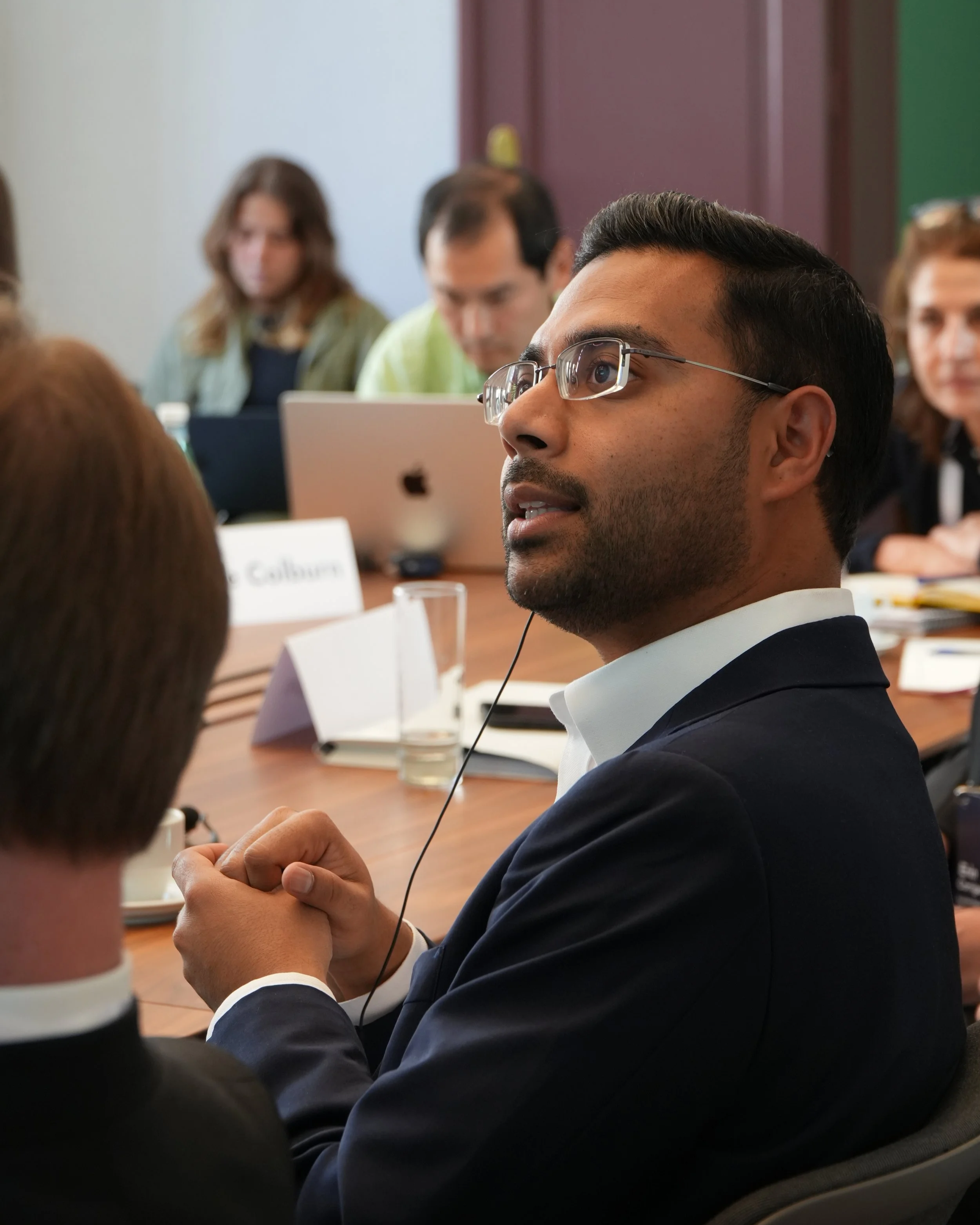
Secretary of Policy and Planning, Akbar Hossain (PA), hears presentation from European Commission leaders on how policy recommendations are implemented, alongside cohort and guests
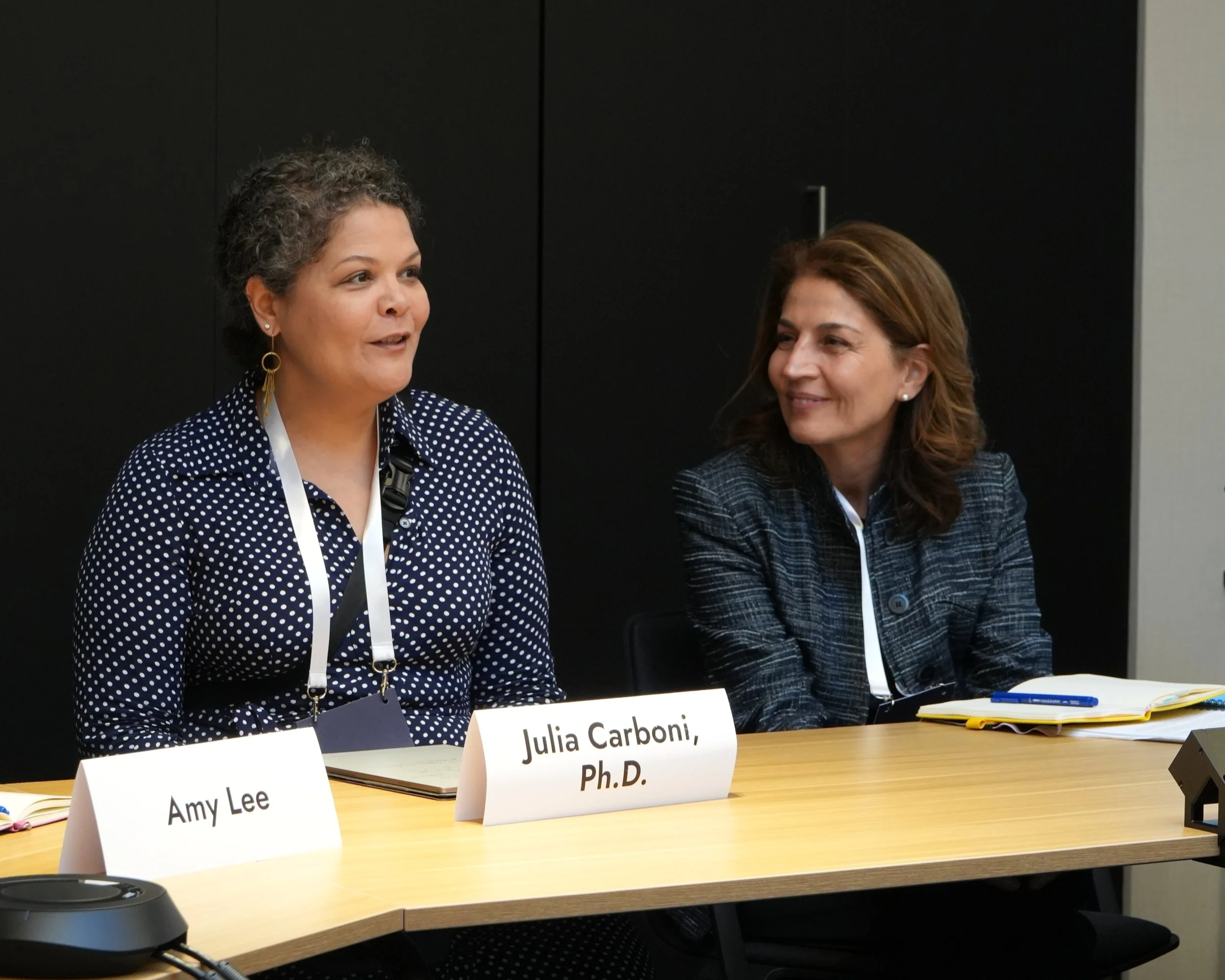
Dr. Julia Carboni (WA) learns about Deliberative Committees in Brussels Parliament alongside FIDE staff and cohort members
Dr. Julia Carboni, PhD, Executive Director of the William D. Ruckelshaus Center and Official Designee of Washington Lieutenant Governor Denny Heck to the DSG cohort, also felt the collection of case studies gave concrete proof to the success of the method, “The key insight of all of the sessions is that providing people with spaces to come together in a structured way is really important, not just for informing policymakers and politicians about what citizens want, but also for creating spaces where citizens can come together, get to know each other, and rebuild trust and civic health.”
The delegation was then given the opportunity to meet with senior leaders from the European Commission and to observe the Citizens’ Panel on Preparedness, a citizens’ assembly comprised of 150 participants from across EU countries gathered to learn, deliberate, and write recommendations on disaster preparedness and resilience. This inclusion wasn’t just an addition to the trip, it was a centerpiece of the convening’s planning and strategy.
“No matter how much you read about an assembly, no matter how much you hear about an assembly, no matter how many capacity building schools you attend, nothing is quite like being in an assembly,” explained Ehsassi, “We really wanted to create this exchange around observing an assembly, and there are few Citizens’ Assemblies quite as grand in scope as the European Commission Citizens’ Panels.”
The decision was a profound success.
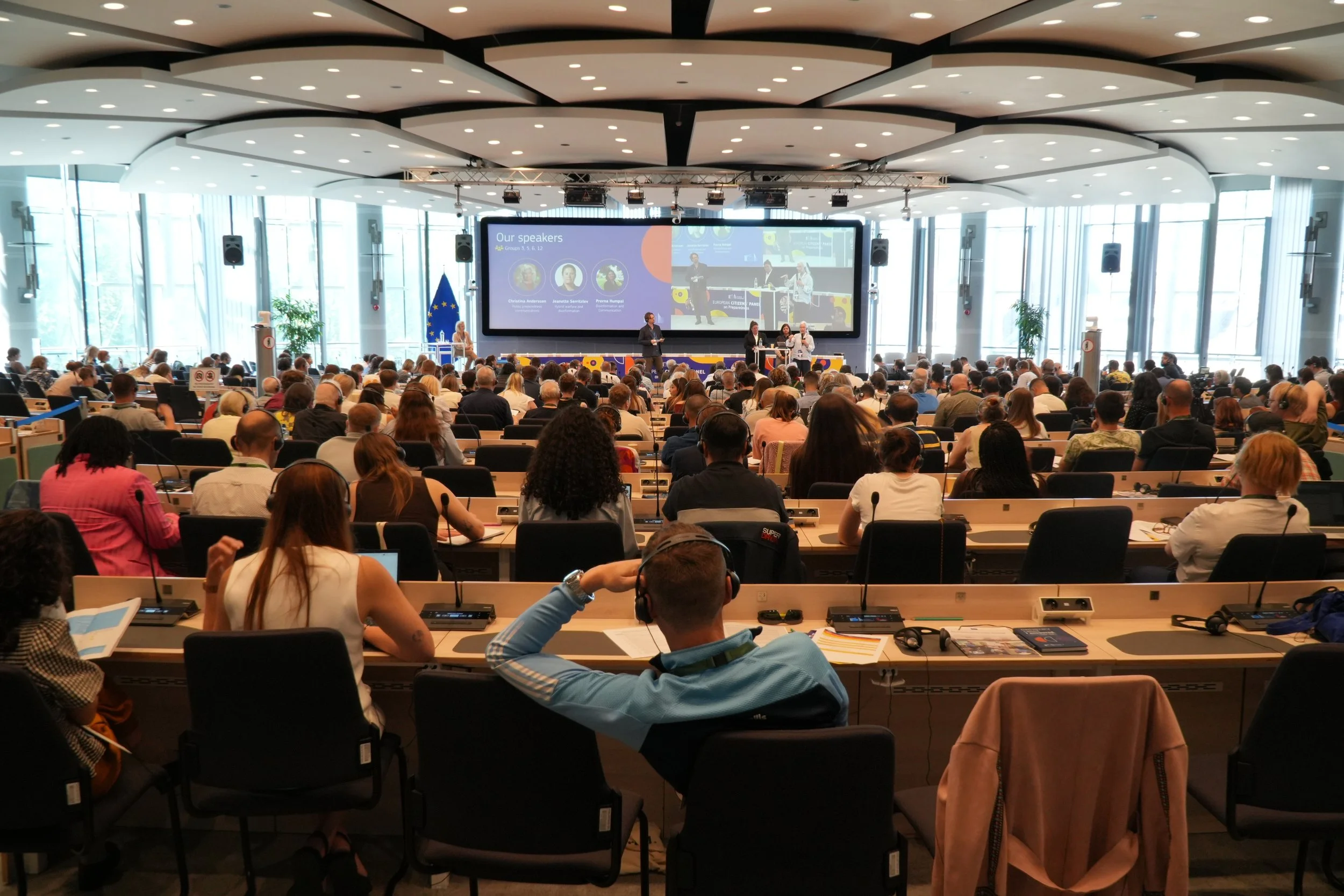
Members of cohort and guests observe citizens delivering final recommendations at the European Commission’s Citizens Panel on Preparedness
Cohort member and Pennsylvania Secretary of Policy and Planning Akbar Hossain, described the visit to the Citizens’ Panel as a highlight of the trip, “Not everybody gets this opportunity, especially as an observer from another country. It's a rare chance to see firsthand how citizens in different democracies come together, deliberate on important issues, and make decisions collectively.”
Dr. Carboni was also inspired by the Citizens’ Panel, “It was incredible to walk into a room where 150 people were gathered to discuss preparedness…people from many nationalities coming together, overcoming language differences - overcoming all kinds of differences - to make these recommendations collectively. There was a magical thing that happened in that room where people felt like they were empowered to be a part of the process.”
While the cohort members could clearly see the proof of concept for Citizens’ Assemblies in Europe, did they think it could be applied back home?
Secretary Adams seems to think so, “The nice thing about this model is it's a seed that can grow anywhere. You may need to customize it to your jurisdiction, to your politics and in your state or your country. But this model works everywhere. It's a model that is the concept that underlies democracy in the first place.”
Secretary Hossain expressed gratitude to the program for presenting that is possible, “I think being part of this program is an incredible way to learn about how other democracies are doing this. And as you learn about this process, it’s not just small cities, not medium sized cities, but how other big countries have done deliberative democracies.”
Reactions like this are exactly why more convenings are necessary between U.S. leaders and international experts on how to move deliberative democracy from theory to practice.
“Deliberative democracy is just another tool in the tool belt,” said Dr. Carboni, “And if our goal is to serve our citizens, we should definitely use all the tools that we can.”
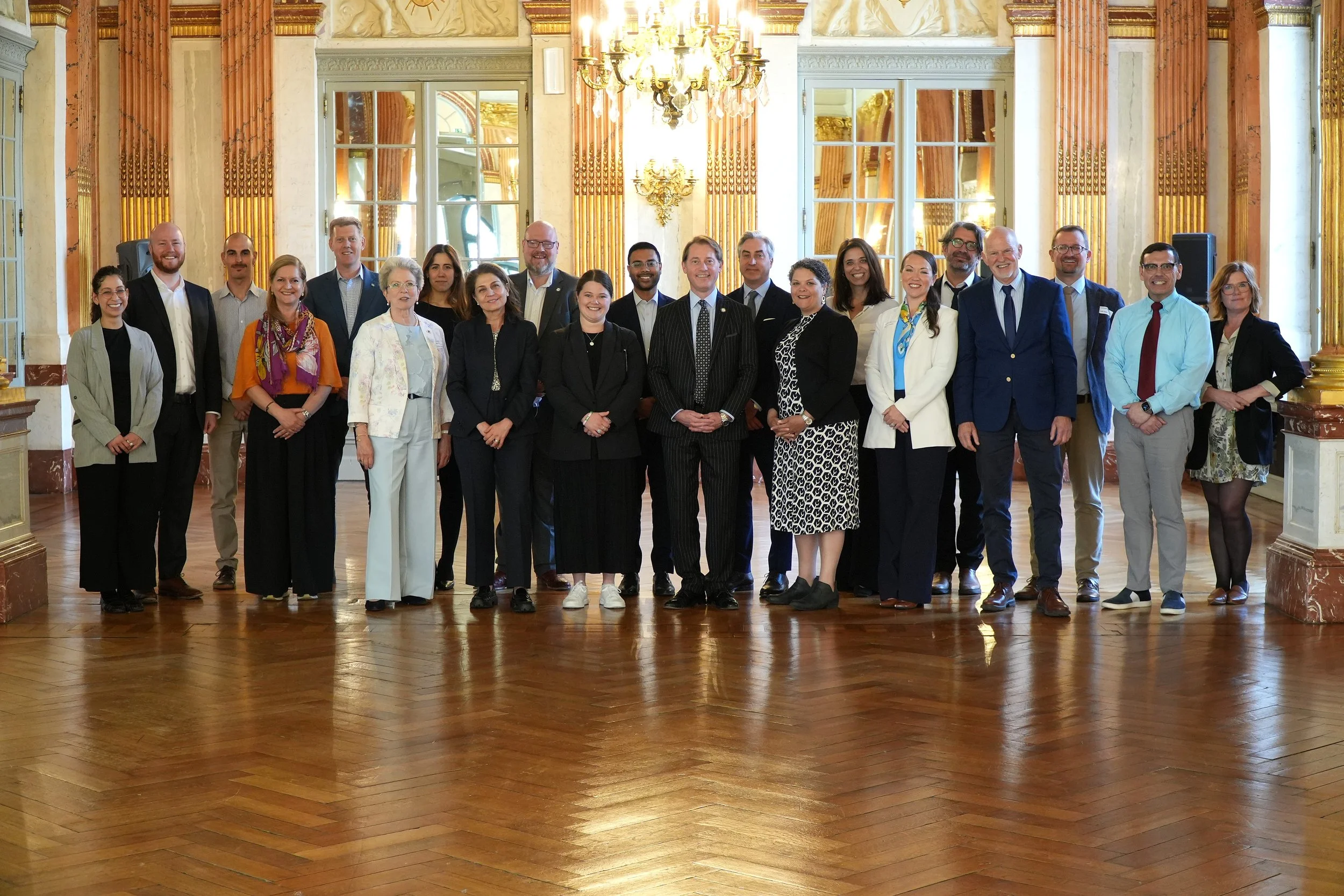
Members of the DSG cohort, FIDE staff, guests, and speakers at the Brussels Parliament building
So, what’s next for DSG?
The third component of the program will be later this year when we’d like to take the bipartisan cohort to observe a Citizens’ Assembly in the United States and to begin deeper workshopping around remit building and macro design elements as they are thinking about how this might apply to each state,” says Ehsassi. But the work does not end there. “Building and strengthening this remarkable network of state leaders is an important goal. In addition, we are already in conversation to organize capacity building schools for states and to begin to involve different stakeholders. FIDE – North America is looking forward to being a trusted partner and advisor in the design and the implementation of each of these efforts.”
“The future is bright,” says Revel Jaryznski, “Citizens’ Assemblies are a solution at the ready, and FIDE is excited to build on its city work to now also partner with states – to train, design, and evaluate.”
We’d like to thank our DSG cohort for joining us, the many speakers who lent their time and expertise, our FIDE - North America and FIDE - Europe teams for their hard work and planning, and our donors, including the Institute for Democratic Engagement & Accountability at Ohio State University, for making this exchange possible.
What We Are Up To
Partnerships with Local Citizens’ Assemblies
A huge congratulations to Akron for concluding their first Civic Assembly on Housing, implemented by Unify America. Since our capacity building school in Akron last June, it has been an honor to watch this process flourish. You can find Unify’s preliminary report here.
On June 2nd, Lexington, KY’s General Government and Planning Committee approved the advancement of recommendations presented by CivicLex’s Civic Assembly regarding Lexington's Urban County Charter. Pending a final vote later this month, the recommendations will be added to the ballot for voters this Fall. Stay tuned for our independent evaluation of the process in the coming months.
We have also partnered with Snohomish County as lead evaluator and technical advisor for the Snohomish County Civic Assembly, which will be concluding in a final session on June 6th-7th. The Assembly brings together 40 randomly selected residents to deliberate on the future of AI use in Snohomish County government.
This past week, our team conducted our Citizens’ Assembly 101 workshop with city leadership and staff in Cambridge, MA. We are in ongoing discussions with cities around North America to build capacity for these processes - and would love to hear from more! Contact us if you are interested.
Our Partners in the News:
— The Guardian, Elected officials don’t always understand their communities. Can civic assemblies bridge the gap? (Published May 21st, 2026)
— Culver City Crossroads, Civic Assembly – Doing Democracy (Published April 9th, 2026)
— WKYT, Lexington city council advances proposal to let voters decide on pay raise (Published June 3rd, 2026)
We’d like to congratulate our partners for the incredible work they are doing putting the public back in public policy. See the full scope of our advisory and evaluation work below.