Citizens’ Assemblies: Revitalizing Cycles of Trust
What is a society without trust? Trust is the foundation of relationships, communities, and nations. Trust has even been named as a lead contributor to stronger economies. For healthy democracies, trust is crucial.
However, across North America, we are currently experiencing an unprecedented crisis in trust. Only 34% of Americans believe most people can be trusted, and just 17% of United States residents trust the federal government to largely do what is right, among the lowest levels recorded since polling began in over half a century ago.
Alongside this downward trend, trust has become deeply polarized. Political identity increasingly shapes individual and public perception, and confidence in government shifts dramatically depending on which party holds power. Overall, public confidence in core institutions has steadily eroded, leaving us to wonder what can be done.
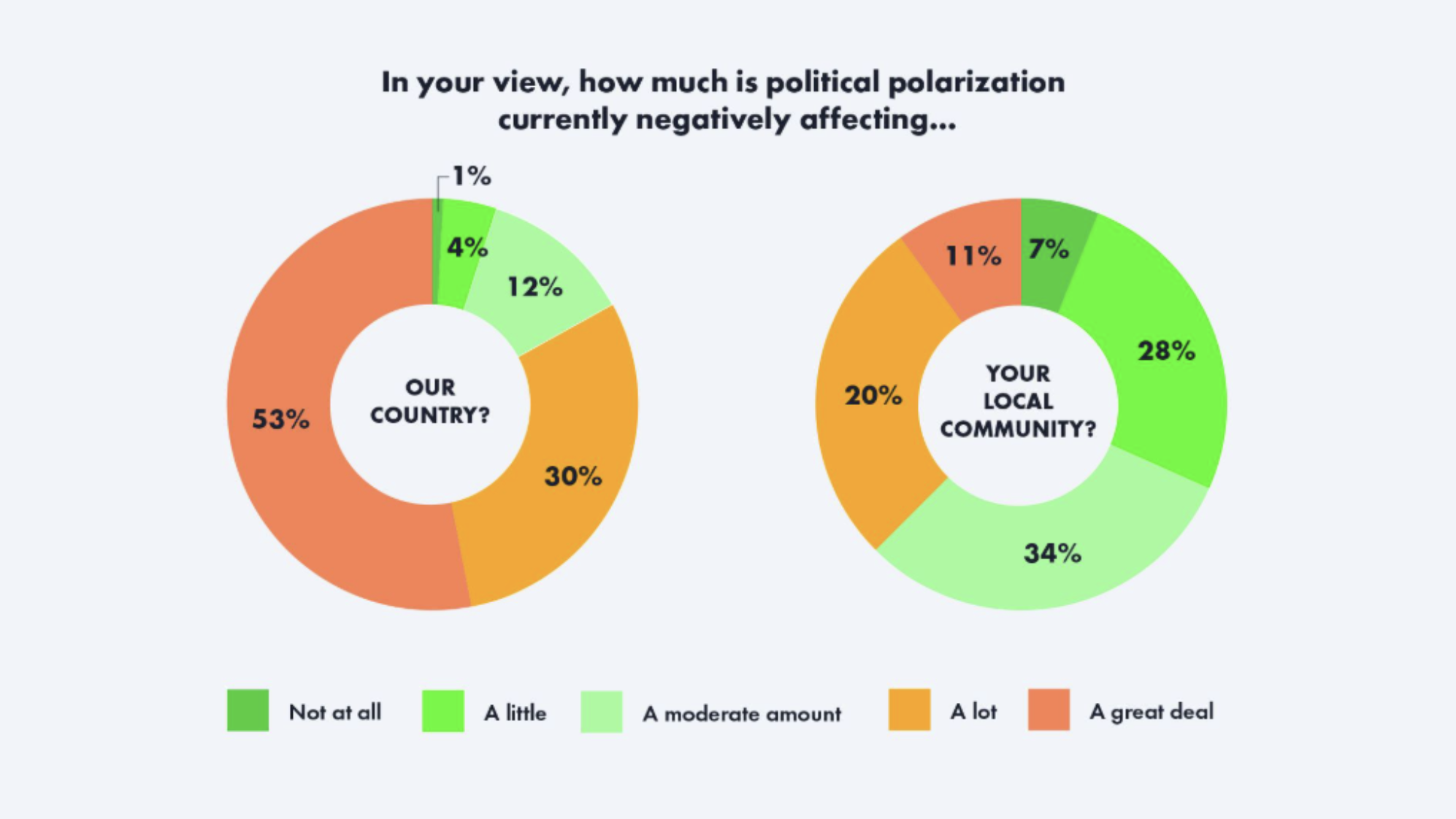
CivicPulse, & Carnegie Corporation of New York. (2024). Polarization in America: Survey of Local Government.
At a time when solutions are desperately needed, Citizens’ Assemblies offer a path forward — and we have numbers to prove it. Survey data from our Learning Series and other evaluations (as detailed in Exec. Director Marjan Ehsassi’s book Activated Citizenship) demonstrates how Assemblies increase trust across four relational vectors.
By convening a representative group of people through civic lottery to learn, deliberate, and develop recommendations on public issues, Assemblies strengthen the cycles of trust that democracy relies upon for success.
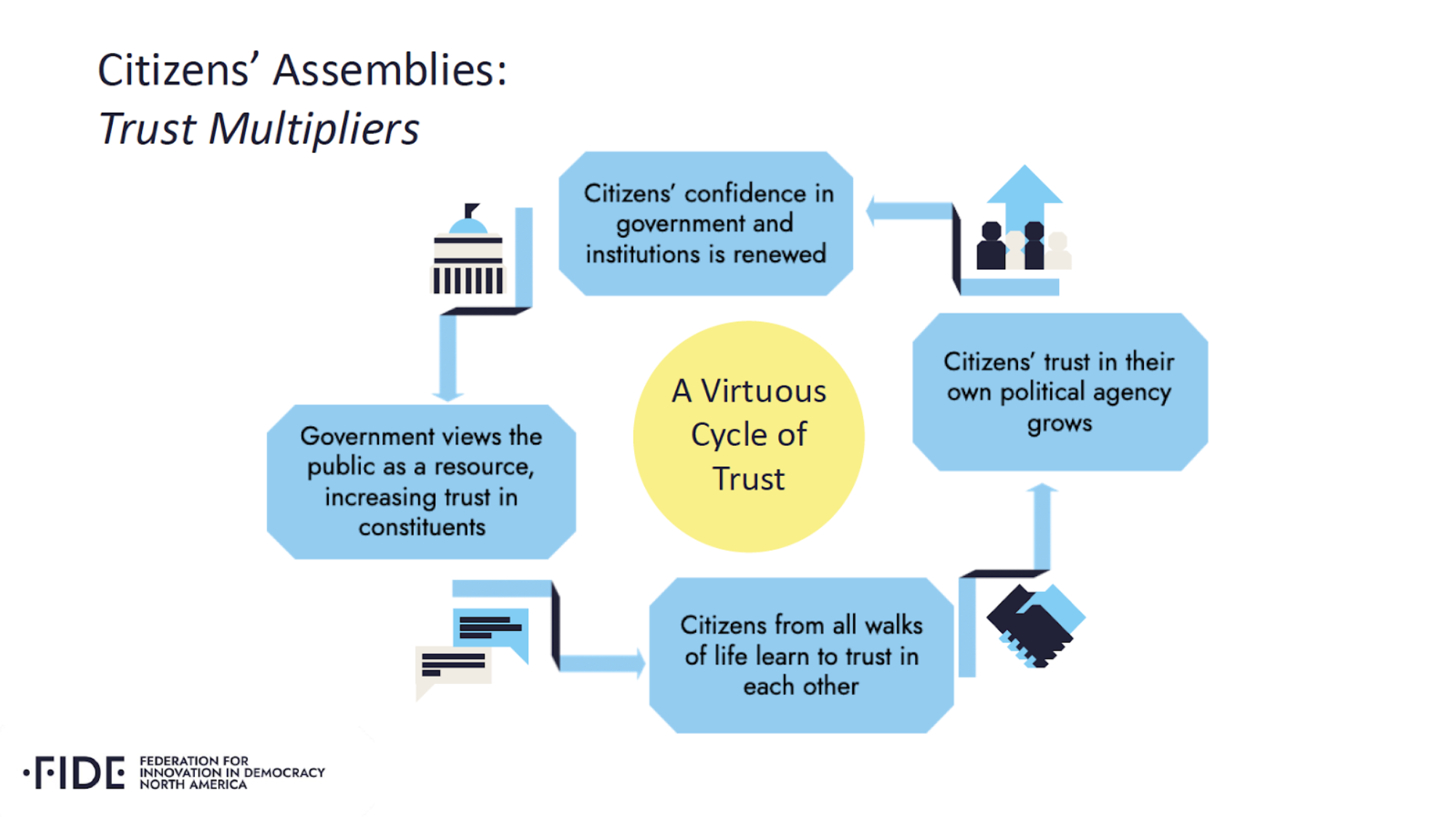
1. Citizens’ trust in their own political agency
Trust cannot be extended outward before one can trust themselves. Many who feel uneasy about public institutions do not know how to engage with them, believing the issues are too complex—or too polarized—for ordinary citizens like themselves to participate in solutions. Citizens’ Assemblies challenge this assumption by giving participants the time, information, and facilitation needed to deliberate carefully about difficult questions.
Evidence from recent assemblies shows that participants quickly gain confidence in their own civic capacity:
In the Yukon Citizens’ Assembly on Electoral Reform, evaluation results found that 94% of members gained a deeper understanding of electoral reform, while 58% reported increased knowledge of government more broadly.
As a result of the Boulder Valley Community Assembly on 15-minute Neighborhoods, endline survey data showed that the average participant’s confidence in their ability to participate in politics increased by more than 15%.
This increased understanding of their governing systems and how they as citizens fit into that system has been so impactful that several past members of Assemblies continued to expand their civic engagement, participating in political campaigns and in some cases even running for Elected Office themselves. When offered the responsibility and adequate support, citizens demonstrate both publicly and to themselves that they are more than capable of engaging thoughtfully in the political landscape.
2. Citizens’ trust in each other
Once trust in oneself has been established, it is then time to break down obstacles that prevent trust in fellow community members. Polarization rests on the belief that meaningful dialogue is not possible between people with different views. However, Citizens’ Assemblies’ learning and deliberative processes allow for humanization and strengthening of bonds across lines of difference. Community forms among Assembly members, facilitating deeper listening and empathy for opposing perspectives.
After the Petaluma Fairgrounds Civic Assembly in California, over 80% of Assembly members reported a “growing sense of community” and planned to stay in touch with fellow members.
During the Yukon Assembly, 91% of participants reported they better understood others’ perspectives, and 76% experienced a strong sense of belonging within the Assembly. Nearly half of the participants said they believe citizen deliberation can reduce polarization.
In Boulder, Colorado, despite 47% of participants believing their views differed from at least half of the Assembly body, 87% of members experienced an increased sense of community, and half the participants were confident that the Assembly reduced polarization in the group.
When citizens are given time, structure, and shared purpose, dialogue can emerge across seemingly intractable differences, allowing for trust to grow between individuals who once deemed it impossible.
3. Government’s trust in the public
Trust is a two-way street, and as governments witness citizens learn to trust one another and their own political capabilities, their own trust in the public can grow. Officials who mistakenly assume that complex issues require purely expert-driven processes are often taken aback by Citizens’ Assemblies, where decision-makers witness ordinary people engaging seriously with evidence, weighing trade-offs, and producing balanced recommendations.
In Brussels, politicians who initially worried that citizen recommendations might threaten their role instead found joint deliberation led to "shared ownership," with many MPs becoming "ambassadors" for the process. One even when so far as to bemoan that parliament is not as thoughtful and deliberative as the assembly.
In Gdańsk, Poland, “Citizen Assemblies were important in building public servants’ receptivity to citizens’ input, to better knowing and understanding their electorate and to developing solutions,” according to a post-assembly report.
In Canada, a 2011 Assembly on medical policy showed officials the inherent value of increased transparency and inclusion of constituent voices.
In Petaluma, California, interviews with politicians revealed that the Assembly process and recommendations increased the respect the local government held for their constituent ideas and perspectives.
For governments, this kind of representative, informed public judgment can become a valuable resource. Rather than fearing public engagement, institutions begin to see citizens as partners capable of contributing to thoughtful policy development. As Peter McLeod discusses in his book Democracy's Second Act, instead of being a risk to avert, the public becomes a trusted resource to utilize.
4. Citizens’ trust in government and elected representatives
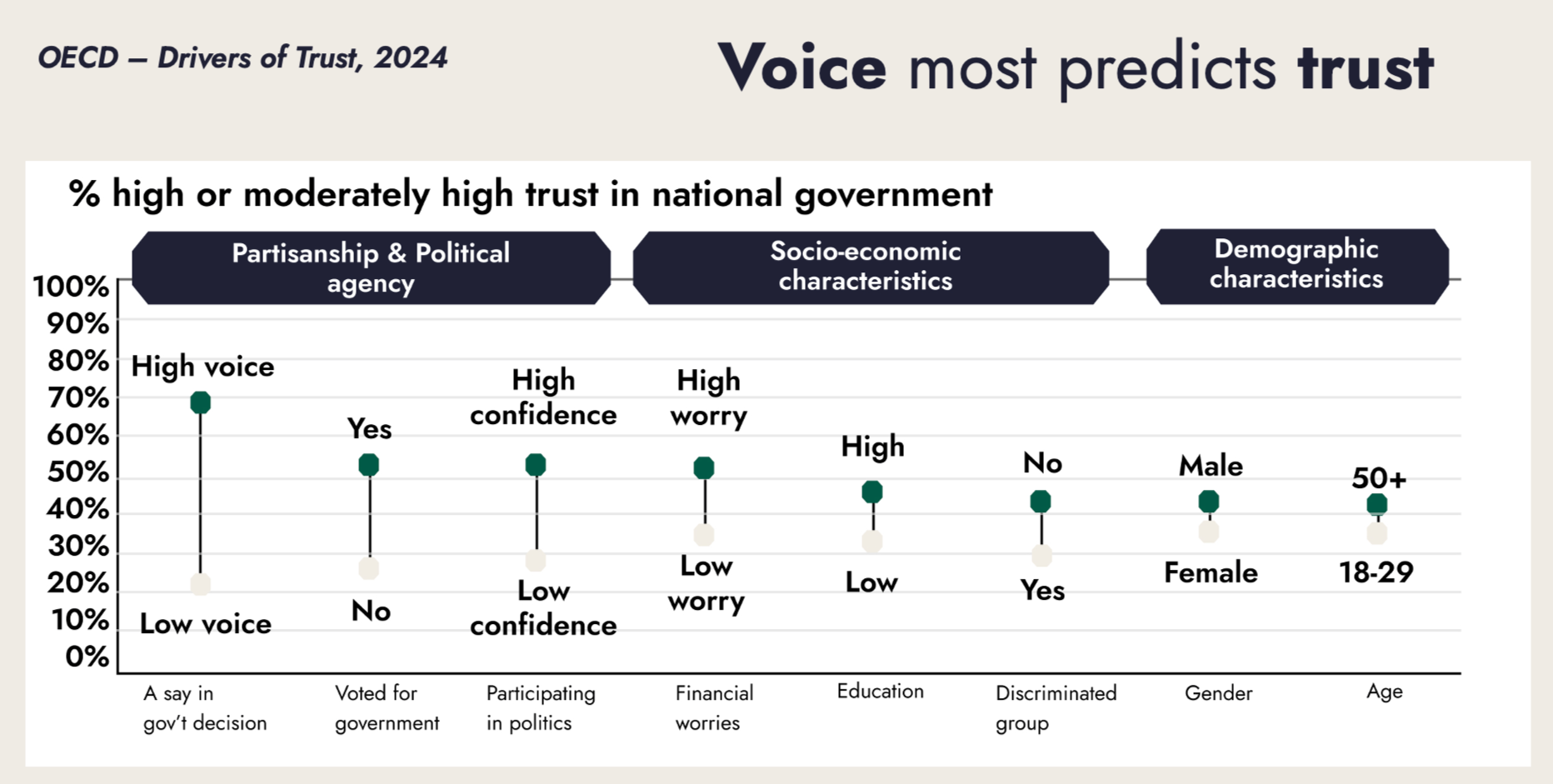
Finally, when governments show their faith and believe in the people they serve, Citizens’ Assemblies can help rebuild trust in democratic institutions themselves. Leaders and policy-makers who invite citizens into meaningful deliberation—and demonstrate that their input matters— send a powerful signal of respect and transparency.
In the Yukon Citizens’ Assembly, trust in government among participants rose from 36% to 63% over the course of the process.
In Boulder, Colorado, 68% of Assembly participants reported that they thought Assemblies could increase trust in government.
Processes like these help bridge the gap between citizens and institutions. By opening the policymaking process and making it more visible and participatory, they fill the void that the loss of trust in recent years has left behind.
Rebuilding trust through democratic practice
Trust is often discussed as something democracies must somehow “restore,” but solutions often feel nebulous or daunting. Citizens’ Assemblies suggest a practical approach: trust grows when institutions create concrete opportunities to learn, deliberate, and meaningfully contribute to decisions.
In a time when democratic systems across North America are searching for ways to rebuild legitimacy, Citizens’ Assemblies revitalize democracy’s trust deficits in one fell swoop.
By strengthening citizens’ confidence in their own political agency, building camaraderie and belonging across communities, demonstrating to governments that the public can thoughtfully participate in policy decisions, and increasing accountability and faith in institutions, Citizens’ Assemblies help rebuild the relationships of trust upon which democracy ultimately depends.
What FIDE - North America is Up To
Learning Series

Between May and October of 2025, the Boulder Valley Community Assembly (BVCA) convened 48 residents over the course of 7 in-person sessions to learn, deliberate and provide recommendations for the implementation of 15-minute neighborhoods in Boulder, Colorado. The residents were selected via democratic lottery to form an Assembly body that was varied and representative of the Boulder Valley community at large.
FIDE – North America’s independent evaluation, based on surveys, interviews, and field observations, found notable increase in sense of community (87%), belonging (21%), empathy for differing perspectives (84%), and a confidence in capacity for civic engagement (15%). The Assembly’s learning and deliberative process, which allowed for reduced polarization and deeper listening across lines of difference, ultimately created an enabling environment for 59% of participants to shift their own beliefs concerning 15-minute neighborhoods.
Overall, participants in Boulder found this Assembly to be a largely positive experience, enough so that there was a clearly stated desire for more Assemblies in the future.
Cities Program
Looking Back:
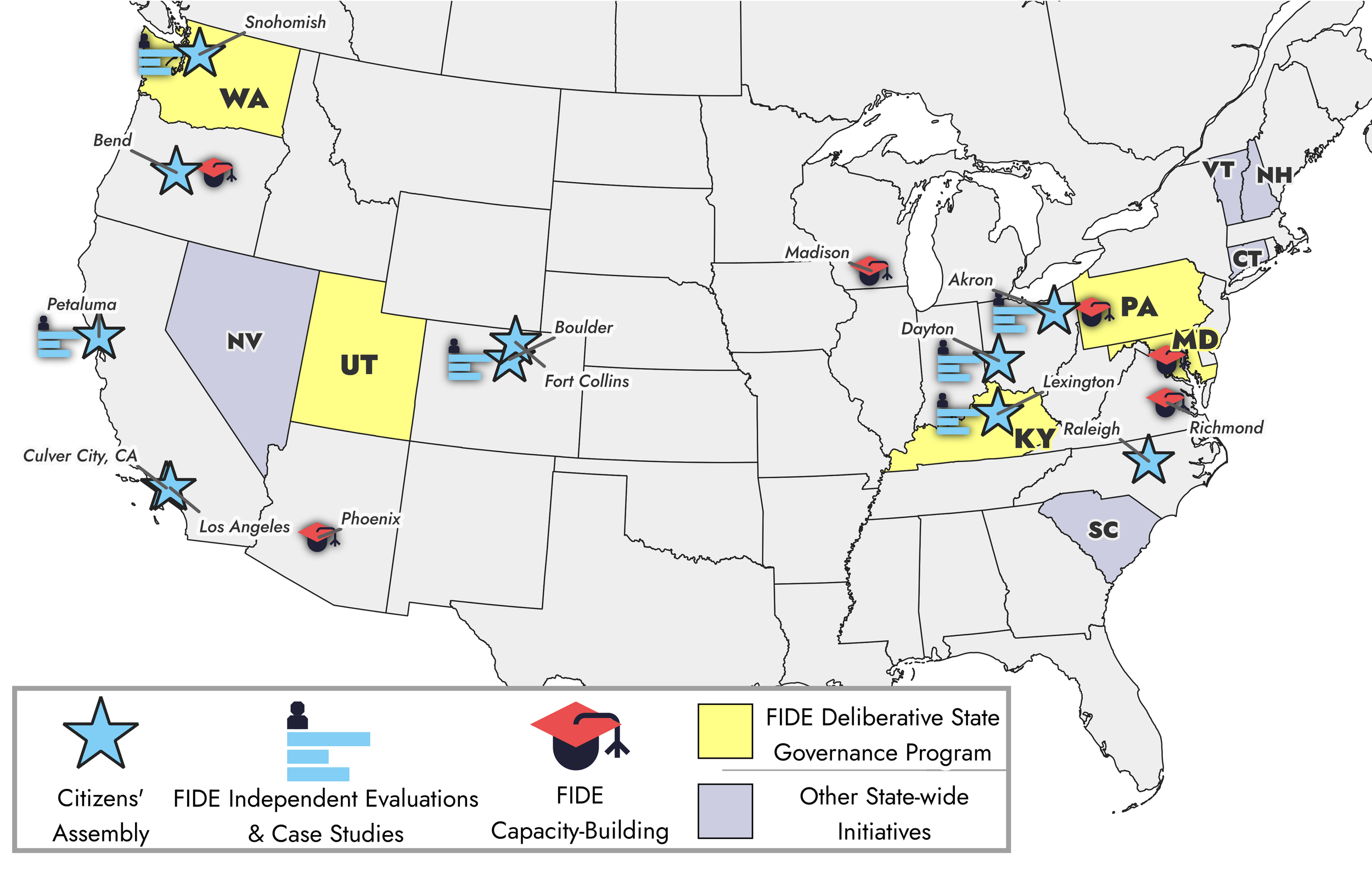
Last March, FIDE - North America co-facilitated a half-day training workshop introducing Citizens Assemblies, concluding with a dedicated workshopping of Richmond-specific remits. The event was hosted by PlanRVA, and attendees included members of local government, community foundations, and universities from the greater Richmond region.
On March 11th, our team traveled to Dayton to present to City Commissioners as part of the Dayton Civic Assembly Advisory Board. The Board presented the design and remit of the Civic Assembly planned for this May-June. Other members of the Advisory board include community and government leaders, plus Assembly implementer Unify America.
Lexington, Kentucky’s first Civic Assembly also concluded in March - implemented by CivicLex - with 36 Assembly members issuing recommendations around the city charter, including council member compensation and public review. FIDE has been proud to support this process, including offering technical guidance and conducting an independent evaluation led by our Lead Evaluation Fellow, University of Kentucky PhD student Ken Docekal.
Looking Forward:
Coming up in April, FIDE will be hosting a two-day workshop on Assemblies on April 7-8 in Bend and Redmond, Oregon. Co-hosted with Central Oregon Civic Action Project and Central Oregon Intergovernmental Council, the workshop will be part of FIDE’s training series.
Snohomish County, Washington, will also be kicking off their first Citizens’ Assembly this month, implemented by CivicGenius and the National Civic League. The project is currently in the recruitment phase and FIDE will be supporting the process with technical guidance and an independent evaluation to be led by Cory Struthers, Assistant Professor at the Evans School of Public Policy & Governance, University of Washington.
Deliberative State Governance (DSG)
FIDE - North America is hard at work preparing for our upcoming trip to Brussels with a delegation of US state principals and leaders. While in the administrative heart of the European Union, the cohort will learn about Citizens’ Assemblies and deliberative democratic processes that have had such success among European governments - including France, Germany, and Belgium - and how they can be properly implemented in the United States.
The delegation will observe sessions of the Citizens’ Panel at the European Commission, attend lectures, and engage in meaningful exchanges with officials, practitioners, and world-class experts including:
— The Right Honourable George Papandreou, former Prime Minister of Greece
— The Honorable Barbara Bosch, State Councillor for Civil Society and Citizen Participation, Baden-Wüttemberg, Germany
— The Honourable Liesa Scholzen, Senator, Ostebelgien, Germany
— Anna Stuers, Permanent Secretary of the Citizens’ Council, Ostbelgien, Germany
— Leon Klinkenberg, Counsellor of Minister-President Oliver Paasch, Ostebelgien, Germany
— The Honourable Bertin Mambaka Mankamba, President, Brussels Parliament
— David Van Reybrouck, Writer, Co-Founder of G1000 and FIDE
— Gaëtane Ricard-Nihoul, Senior Expert and Deputy Head of Unit, responsible for citizen engagement, European Commission
— Jacob Birkenhäger, Scientific Director, Managing Director, Head of Unit Civil Society, European Commission
— Min Reuchamps, Professor of Political Science, UCLouvain
— Yves Dejaeghere, Executive Director, FIDE - Europe
We are proud to have such an auspicious list of confirmed guests taking part in what will be an incredible learning experience for DSG’s inaugural cohort.
Thank you to our colleagues, partners and Advisory Council who have made this endeavor possible, including the Berggruen Institute, IDEA at OSU, and FIDE - Europe.
Stay tuned for some very special announcements on the way!
If you have any questions about DSG please contact our Strategic Director of Deliberative State Governance, Kara Revel Jarzynski (kara@fidemocracy.org)
Upcoming Events:
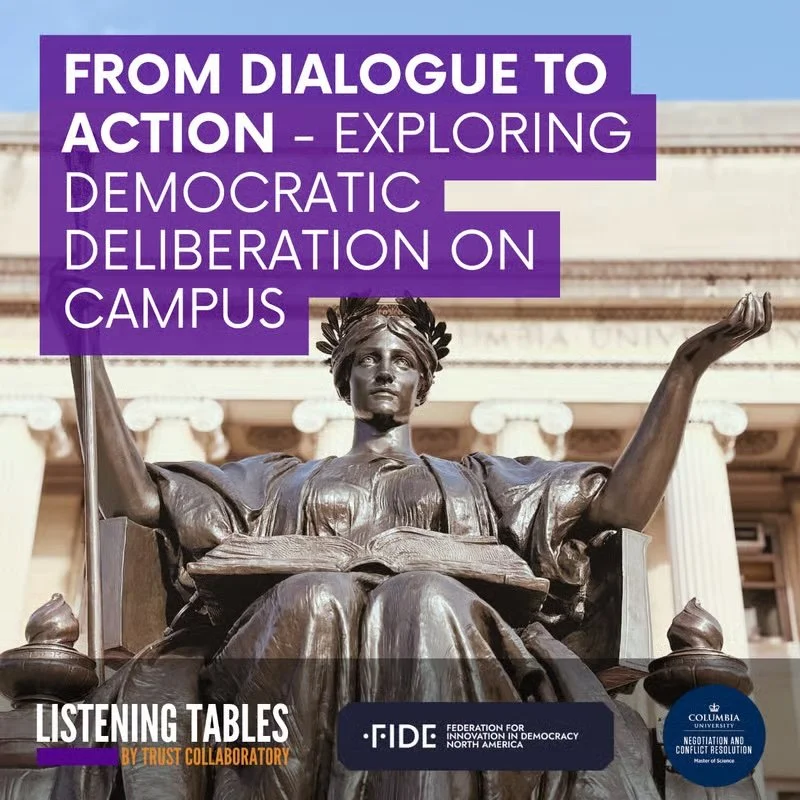
Location: Columbia University, New York City
Date: April 10, 2026
Time: 3:30 PM - 5:00 PM
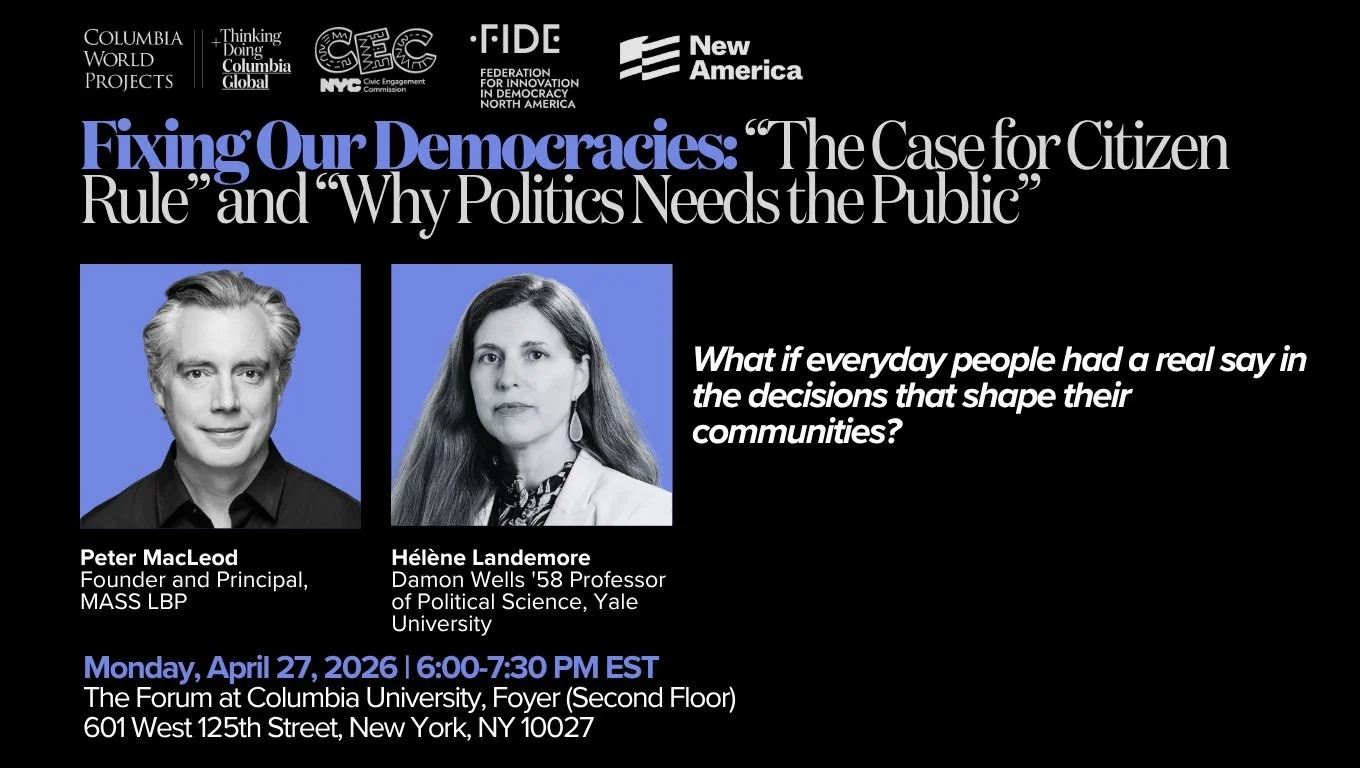
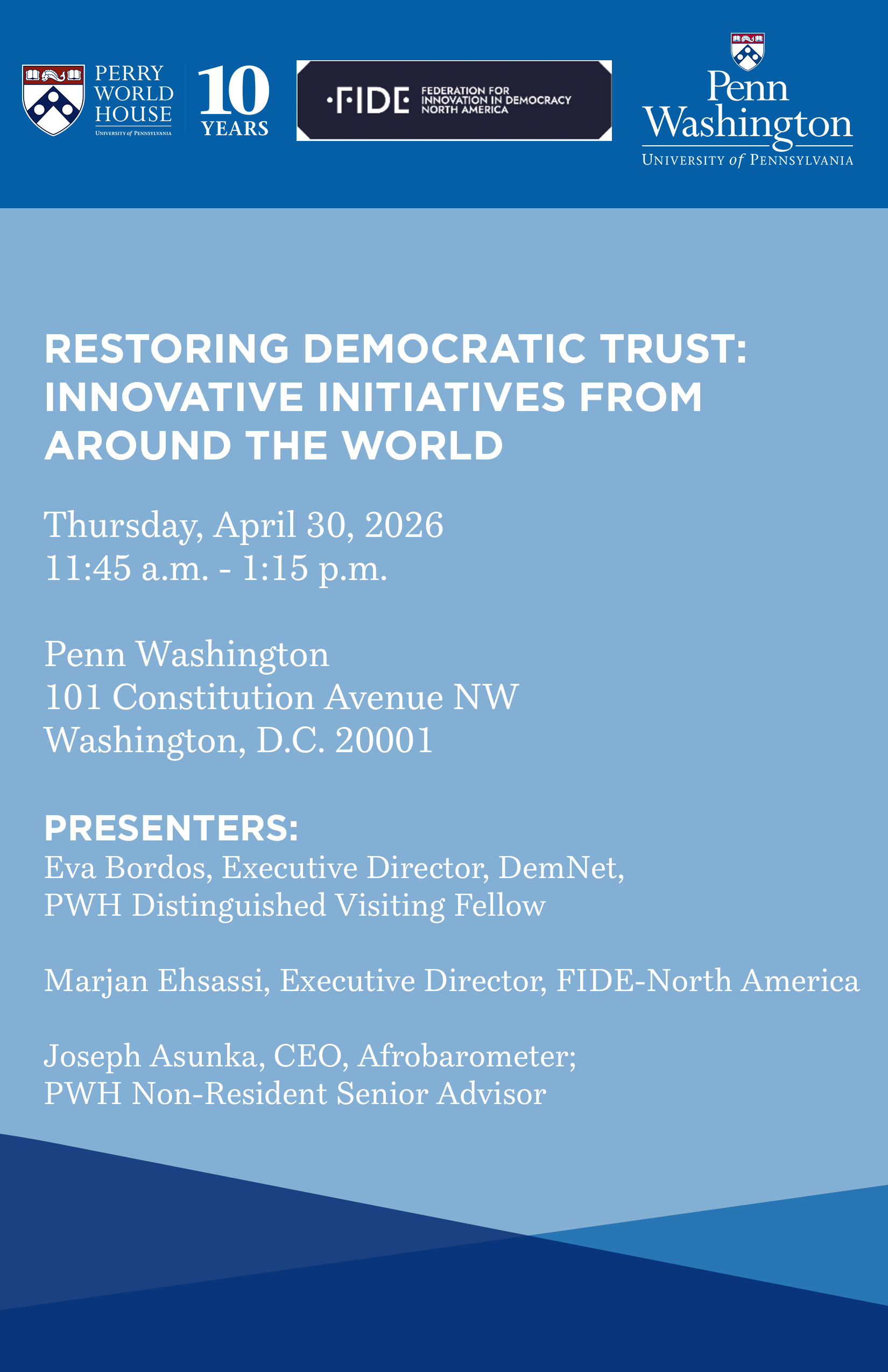
Our Partners in the News:
— WEKU, Lexington civic assembly finalizes resolutions after month-long process (Published March 31st, 2026)
— The Bulletin, Editorial: A win for more public input into Deschutes government (Published April 1st, 2026)
— Las Vegas Today, New Bipartisan Forum Aims to Tackle Nevada's Biggest Issues (Published April 2nd, 2026)
We couldn’t be more proud of our partners for the incredible work they are doing putting the public back in public policy. See the full scope of our advisory and evaluation work below!