
Deliberation during wartime
Ukraine residents kick off assembly to address youth retention amid air raid alert
At the end of February, despite the heavy snow and freezing temperatures, 5,000 invitation letters were delivered to households in Rivne and Kvasyliv. Each letter invited residents aged 18 and over to take part in the city’s first-ever Citizens’ Assembly, answering the question: “How can we make our community a place where young people want to stay and build their future?”
This marked the beginning of the first of three Ukrainian citizens’ assemblies in 2026, organized by the Council of Europe with our technical assistance. Read more on how the assemblies in Kyiv’s Obolon district and Lviv agglomeration came into life in the previous edition of our newsletter.
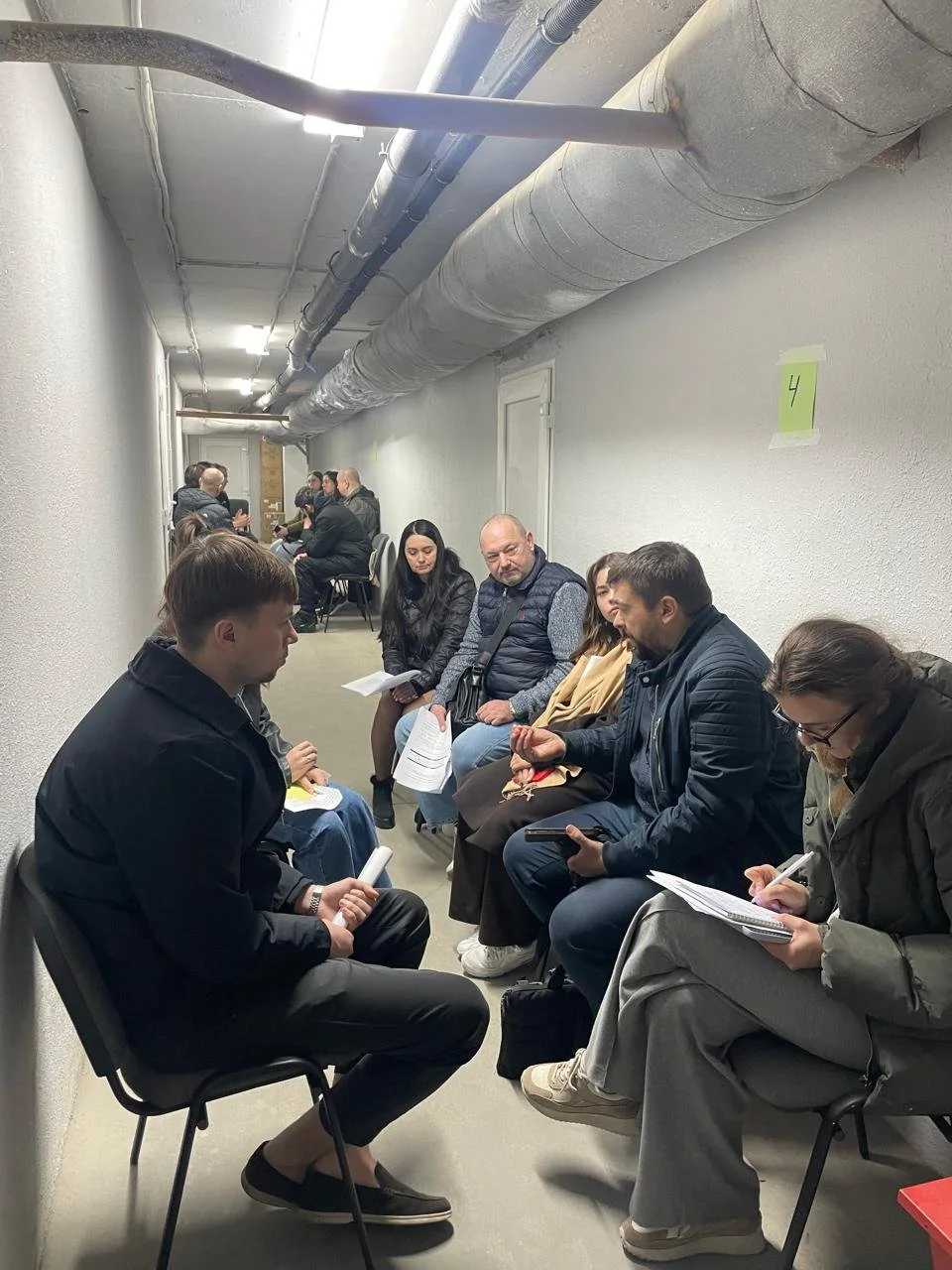
Assembly members continuing their work in a shelter
A record-high response rate
To build trust and visibility for the upcoming process, the invitations were backed by a wide and enthusiastic public information campaign. Billboards, posters, and flyers were distributed across the city in shops, healthcare facilities, public transport stops, and municipal buildings, ensuring residents understood the initiative and how to get involved.
Residents were able to register in two streams: (1) people who received a random invitation, and (2) anyone interested could sign up through an open online form. This approach helped ensure that organizers would receive enough registrations to meet the required demographic quotas, while also balancing the self-selection biases of people who might sign up to the open call. The effort of the information campaign was rewarded.
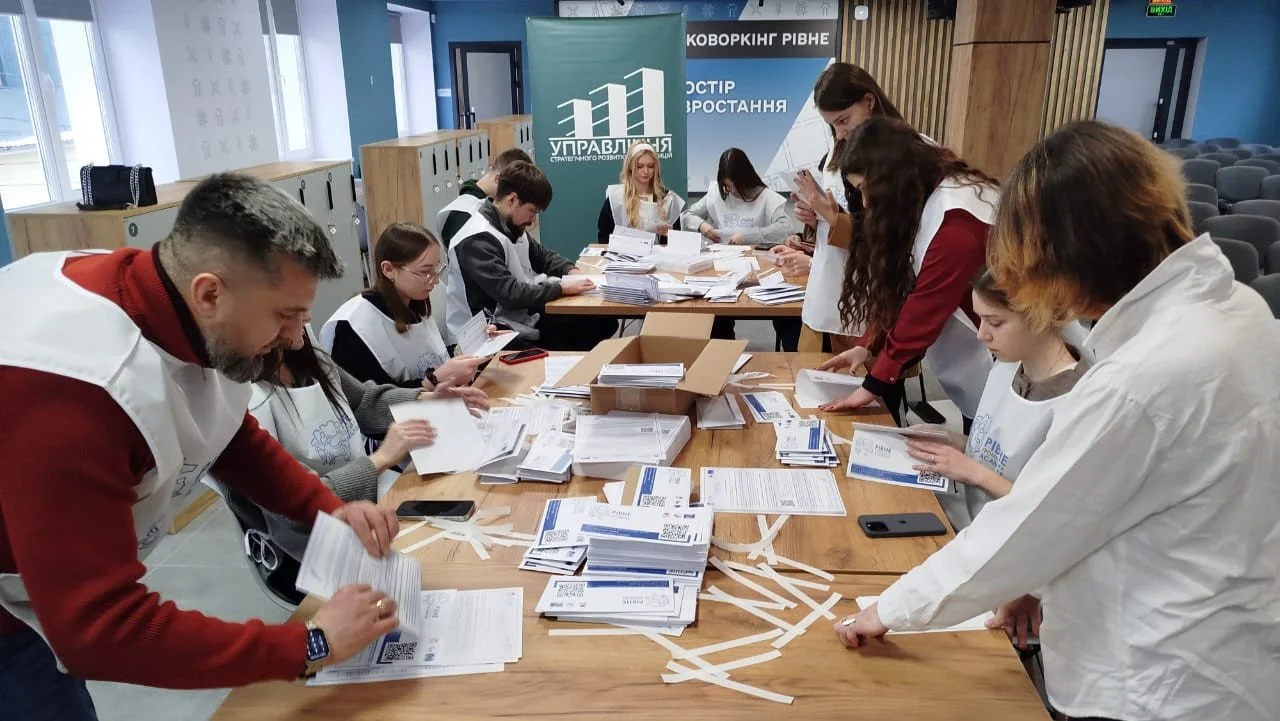
A total of 772 people registered, including 448 via the invitation letters, resulting in an 8.96% response rate to 5,000 letters. A high level of engagement compared to the average 2-3% for assemblies in Europe.
From this pool, 45 participants were selected through a sortition process using Panelot’s Goldilocks random selection algorithm, matching the local population by the usual parameters of age, gender, location, and education. As the war has made millions of Ukrainians leave their homes, a question concerning applicants' internal displacement status was added to the registration form. To ensure inclusive participation, members receive financial compensation for their time and engagement in the process.
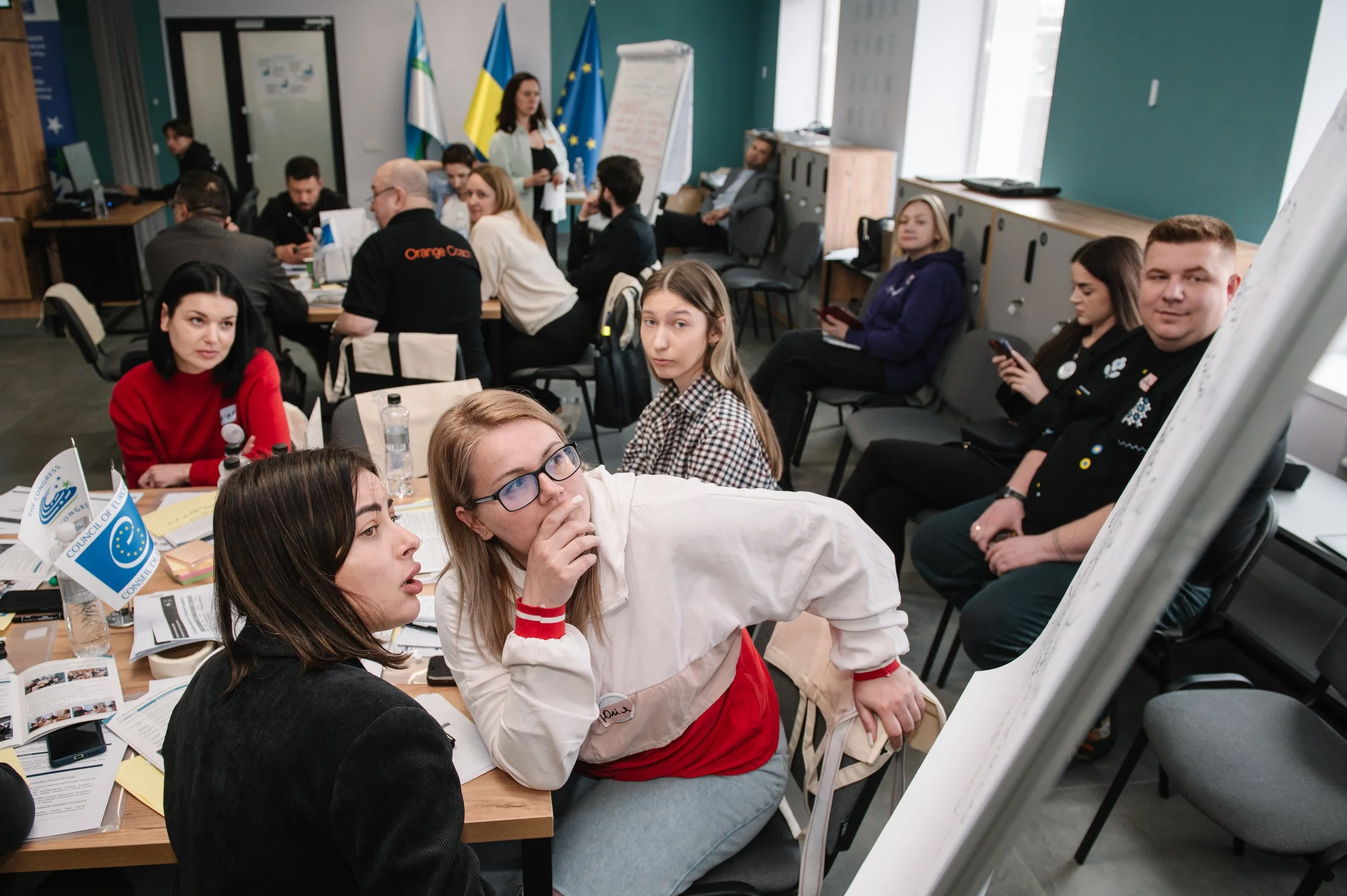
Assembly members getting background information about the topic on retaining youth in Rivne
Assembly’s first meeting continues amid air raid alert
Their first meeting started last weekend, March 28–29. The assembly was opened by Cecilia Dalman Eek, Vice-President of the Congress of Local and Regional Authorities of the Council of Europe. Participants worked in seven small groups, getting to know each other, learning about the purpose and process of a citizens’ assembly, and beginning to explore the topic in greater depth with the support of independent experts.
The project team and facilitators noted that although some members of the assembly had never previously taken part in civic life in their community, all participants showed a high level of motivation. They engaged actively in discussions and were eager to share their ideas and personal experiences.
The second day brought an additional challenge: an air raid alert in Rivne lasted for the first half of the day. Nevertheless, participants and experts continued their work from the shelter. Together, they aimed to gain a deeper understanding of the implications of youth leaving the area and what policies had already been implemented to address this issue.
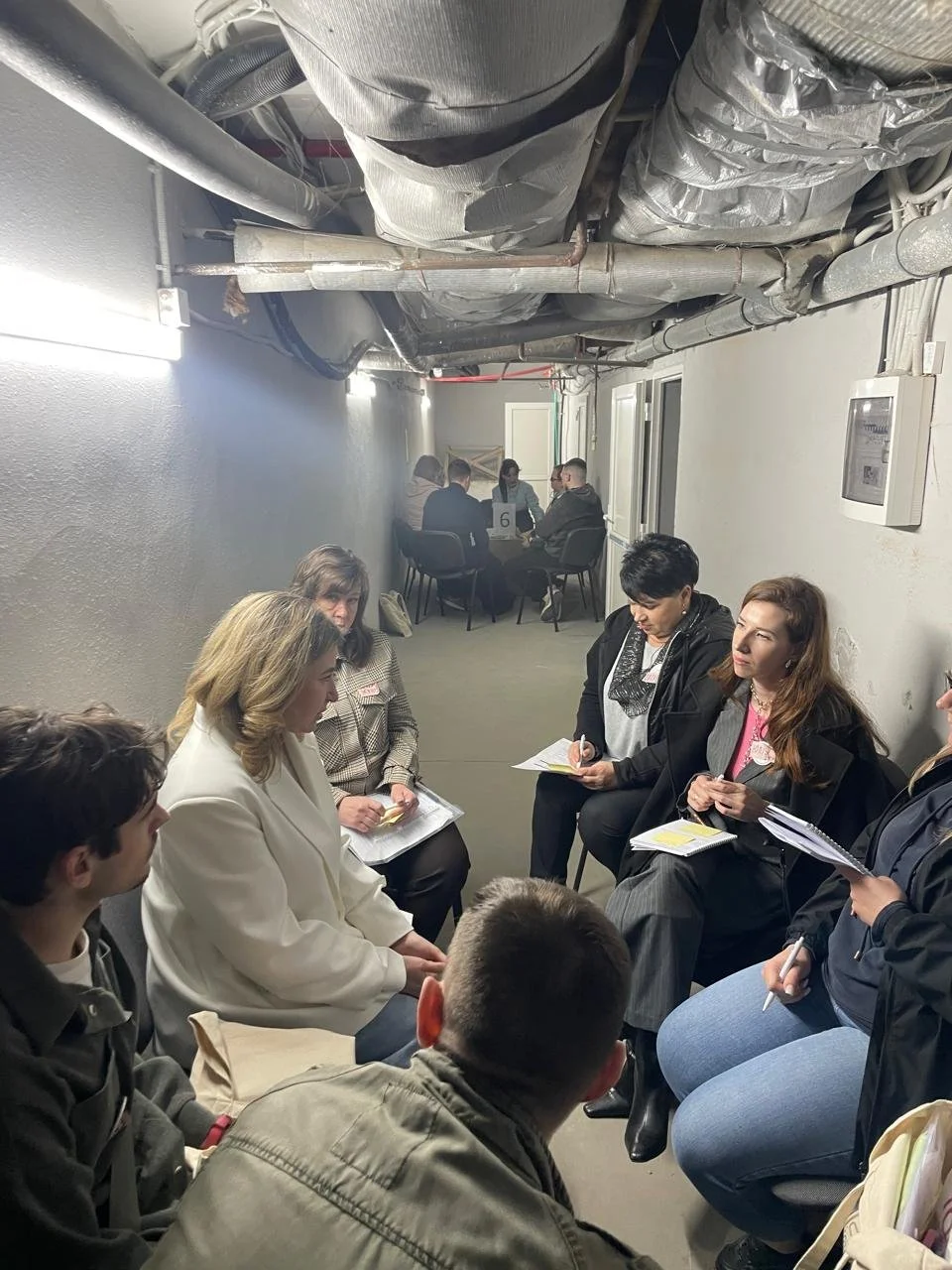
Participants found the speed dialogue format particularly engaging, as experts moved between the tables every 10 minutes. During these exchanges, they discussed topics such as education, the economy, the socio-political environment and civic engagement, youth policy, security, and the consequences of the war, generational characteristics, as well as culture, leisure, and sports in the context of the citizens’ assembly’s topic.
What’s next for assemblies in Ukraine?
In Kyiv’s Obolon district, the preparations have also passed the key milestone of drawing the participants in the third week of March. 45 participants have been chosen and are in the process of being confirmed. There, citizens will be invited to address the challenge of reintegrating veterans into society. Their first weekend of meetings will be held on April 18–19.
The citizens’ assembly of Lviv is commissioned by the Lviv Agglomeration, an Association of Local Authorities uniting 13 municipalities. There, the assembly, over three weekend meetings, will address the question: “What can we do to preserve and use our water resources sustainably?” The agglomeration is currently preparing to send out 10,000 invitation letters and launch a large-scale information campaign across all 13 municipalities, starting on April 13.
Across all these assemblies, FIDE – Europe plays a key training, supervising, and advisory role. We’ve held a training session for lead facilitators, supported the design of process runsheets and activities, guided the development of background information kits, and trained experts in how to design and conduct civic lotteries. This work will continue throughout each of the assemblies until the conclusion of the Lviv agglomeration assembly in July.
The preparation and implementation of the citizens’ assembly take place within the Council of Europe Action Plan for Ukraine “Resilience, Recovery and Reconstruction” for 2023-2026 and the project “Strengthening multilevel governance and local democracy to support Ukraine’s recovery”, implemented by the Council of Europe Centre of Expertise for Multilevel Governance at the Congress of Local and Regional Authorities.
Recordings of Past Events
The Ostbelgien Model by Nicole De Palmenaer
Seven years ago, the Parliament of the German-speaking Community of Belgium established a “Permanent Citizens’ Dialogue,” embedding deliberation into its political system with cross-party support. Rather than challenging representative democracy, it was designed to respond to its limits, from declining trust to polarization. Nicole De Palmenaer, Study Service Advisor of the process, describes the different bodies of this unique design.
The recording was made during a workshop co-organised with the European Climate Foundation and KNOCA - Knowledge Network on Climate Assemblies for early adopters of permanent assemblies in May 2025.
Communicating Deliberation Webinar
Communicating citizens’ assemblies beyond the room remains a key challenge for their impact and legitimacy. In this webinar, practitioners (Lucile Duclaux, CESE France, Rosalind Grisnigt, Dutch Citizens’ Assembly on Climate) share practical lessons from their experience. They give insight into setting clear objectives and understanding audiences to working with media, and empowering citizens to tell their own story.
Watch the recording from the webinar of the Network on Citizen Participation and Deliberation in Europe.
Children and Democracy Network by CRIN

We are in a critical moment for our democracies and collaboration is required to ensure children’s rights are part of its reimagining.
This is why Children Rights International Network is launching the Children and Democracy Network: a global community of practice with online gatherings to learn from one another, amplify others' experiences, and increase the momentum to advance children's rights in democracy.
This network will be a space to bring together practitioners, advocates and researchers working in children's rights, democracy, civic education and intergenerational fairness.